Last reviewed: November 2026 · Lisa Craven, Managing Director, FridgeSmart
A blast freezer is a cabinet that freezes food fast by blowing very cold air over it. A blast chiller does the same job but stops at fridge temperature. Most commercial cabinets, including the Tefcold BLCB range, do both: the BLCB5X1 takes 18kg of food from +70°C to +3°C in 90 minutes, or 14kg from +70°C to −18°C in 240 minutes. A blast freezer is not for storage. Once the food is frozen it goes into an ordinary freezer that holds −18°C.
- What it does: pulls heat out of food quickly with fan-driven cold air; the Tefcold BLCB range runs from −30°C to +70°C
- Blast freezing: +70°C to −18°C in 240 minutes (BLCB5X1, 14kg)
- Blast chilling: +70°C to +3°C in 90 minutes (BLCB5X1, 18kg)
- The law: cooked food must be cooled “as quickly as possible”; no law names 90 minutes or requires a blast chiller
- Sizes: 3, 5 or 10 gastronorm trays, from around £1,700 ex. VAT
- Not storage: the manual says to use it for storage for short periods only
For restaurant, café, pub, bakery and production kitchen owners who cook ahead and need to freeze or chill it safely.
1. What is a blast freezer?
An ordinary freezer is built to keep frozen food frozen. Put a tray of hot food in it and it will take hours to freeze, and it will warm everything around it while it does. A blast freezer is built for the opposite job: taking the heat out of fresh or cooked food as fast as possible.
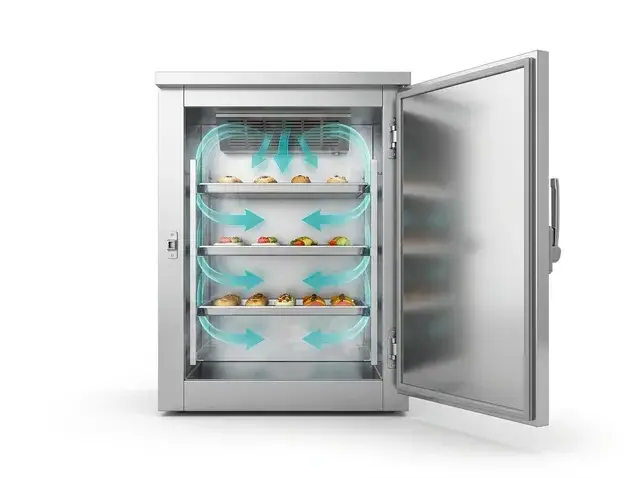
It does it with a powerful refrigeration system and a fan that drives very cold air across the trays. That is why you will also see it called an air blast freezer: the air is the blast. Tefcold says of its BLCB range that using a blast chiller for chilling or freezing retains the colour, texture and taste of the food.
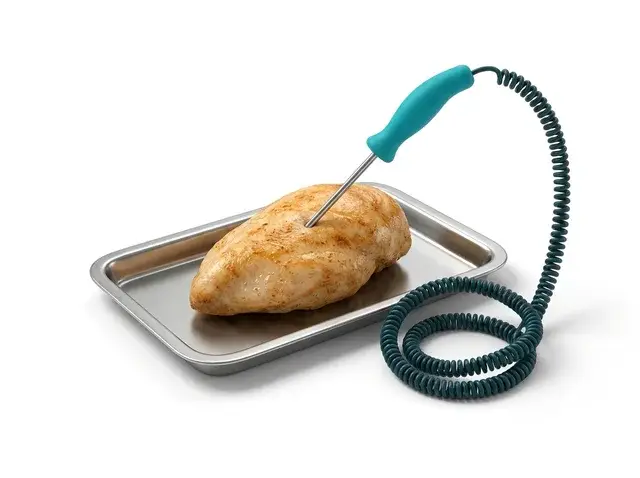
A cabinet blast freezer looks like a small stainless steel fridge with tray runners inside. It takes gastronorm trays, has a probe that goes into the food to read its core temperature, and runs a timed programme that ends when the food reaches the target.
2. Blast freezer, blast chiller or storage freezer: what is the difference?
Three jobs, and the names describe where the food ends up:
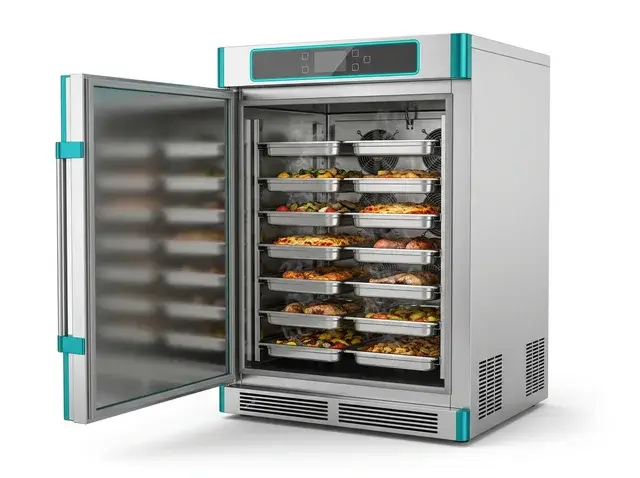
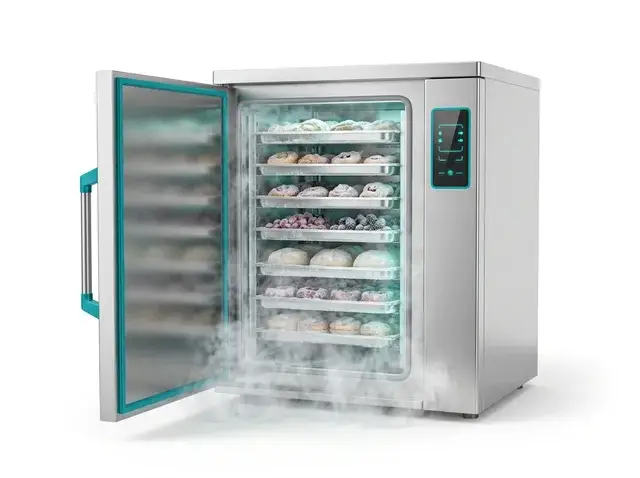
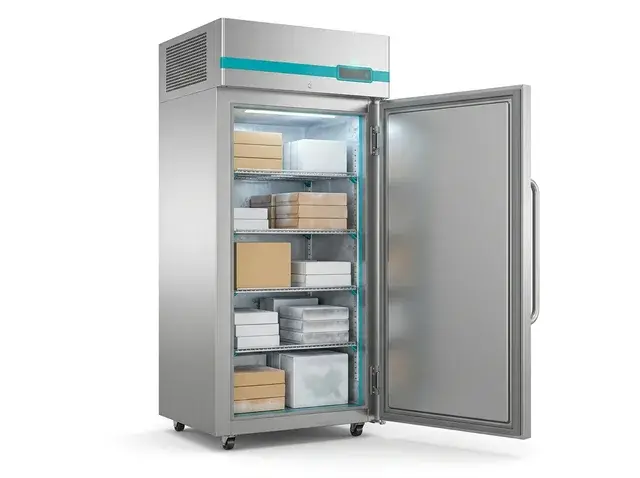
Most commercial cabinets are sold as a blast chiller/freezer and do the first two jobs from one control panel. That is why the same three Tefcold models appear in both our blast chiller and blast freezer categories. If you only ever chill, read our blast chiller buying guide.
| Blast chilling | Blast freezing | Storage freezer | |
|---|---|---|---|
| Food ends at | +3°C | −18°C | Stays at −18°C or colder |
| Time (BLCB5X1) | 90 minutes | 240 minutes | Not a timed process |
| Load (BLCB5X1) | 18kg | 14kg | Depends on the cabinet |
| Where the food goes next | A fridge | A storage freezer | It stays put |
3. Do I need one by law?
No. The law says what you must achieve, not which machine you use. Cooked food that will be held or served chilled must be cooled “as quickly as possible” after cooking (retained Regulation (EC) 852/2004, Annex II, Chapter IX). GOV.UK’s guidance for food businesses says to cool cooked dishes before putting them in the freezer.
The 90 minutes you will see quoted is council guidance, not a legal limit. It is also the time Tefcold rates the BLCB range to chill a full load, which is why the two figures sit together so often. Frozen food at −18°C is the industry standard, not a statutory figure for your kitchen.
4. What size blast freezer do I need?
Size on the weight you need to freeze in one go, not on the size of the kitchen. The three Tefcold cabinets take 3, 5 or 10 gastronorm 1/1 trays, or 60 × 40 Euronorm trays. The trays are not supplied.
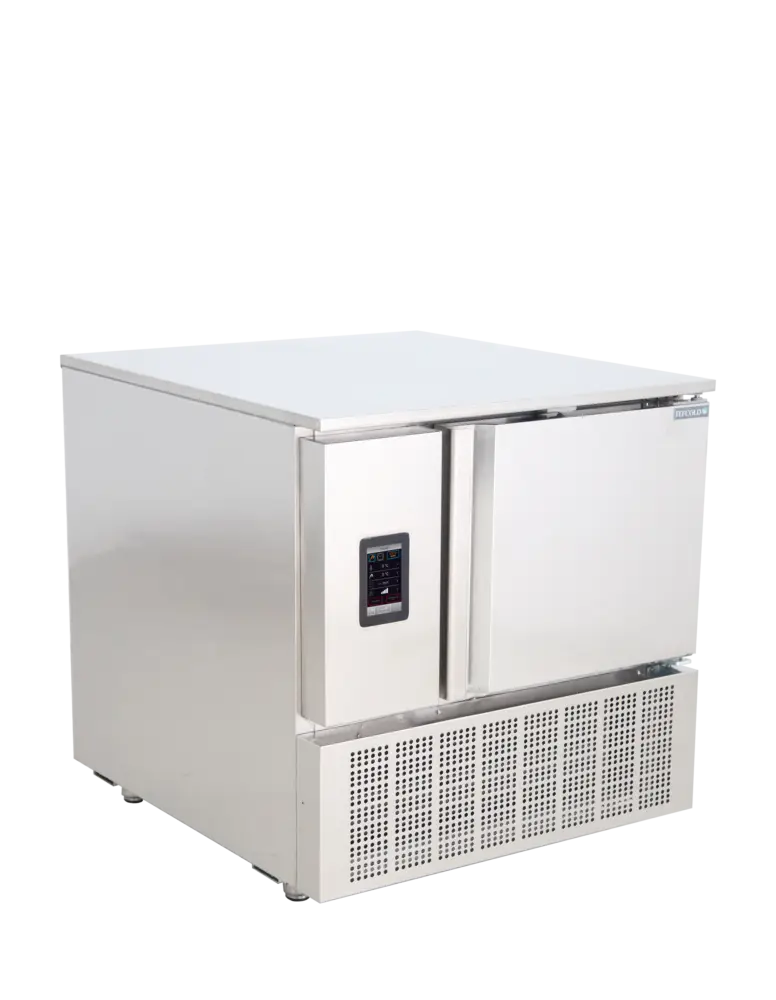
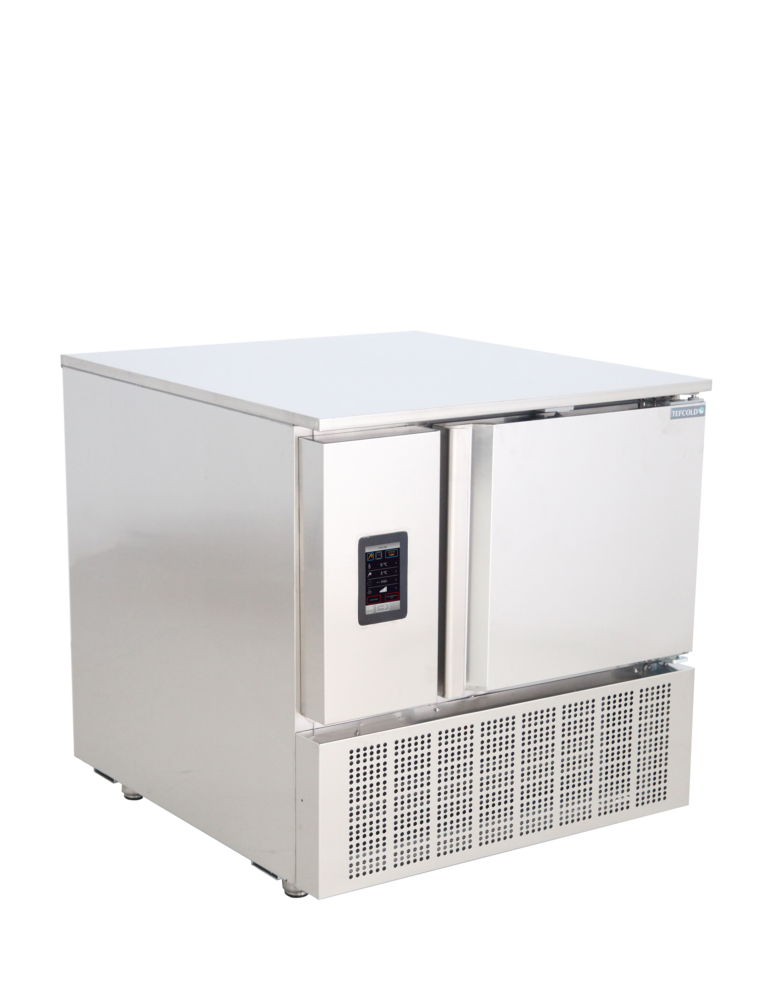
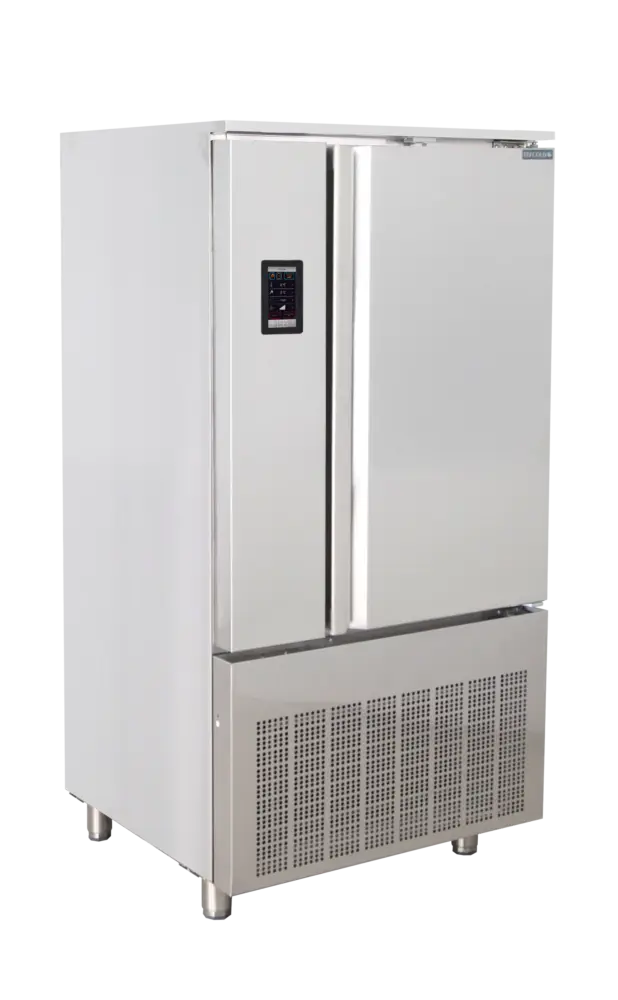
| Model | Trays | Chills per cycle | Freezes per cycle | Price (ex. VAT) |
|---|---|---|---|---|
| 3 × GN 1/1 | 12kg | 8kg | £1,695 | |
| 5 × GN 1/1 | 18kg | 14kg | £2,004 | |
| 10 × GN 1/1 | 40kg | 28kg | £2,418 |
A worked example. A kitchen that batch-cooks 40kg of sauce and stew on a Monday and wants it all frozen that day needs three freeze cycles on a BLCB5X1 (14kg each, four hours each), or two on a BLCB10X1 (28kg each). If the cabinet has to finish inside one shift, the larger one is the answer. The step up from 5 trays to 10 doubles the load for around £400 more.
On running cost, Tefcold publishes no kWh figure for the BLCB range, so here is an upper limit instead. The BLCB5X1 is rated at 720 watts. If it drew full power for a whole four-hour freeze cycle it would use 2.88 kWh, which is about 78p at 27p/kWh. A compressor cycles on and off, so the real figure is lower.
5. Air blast, portable and home blast freezers
Three searches bring people to this subject, so here are straight answers.
Air blast freezer. This is the same thing. “Air blast” describes how it freezes: cold air, driven by a fan. The cabinets on this page are air blast freezers. Larger air blast freezers are walk-in rooms or tunnels used by food manufacturers, which is a different purchase.
Portable blast freezer. A cabinet blast freezer is free-standing, so it can be moved, but it is not light. The BLCB5X1 weighs 116kg. It stands on adjustable legs, and needs at least 15cm of free space between the cabinet and the wall.
Blast freezer for home. Nothing stops a home cook buying one, but these are commercial cabinets: 800mm wide, stainless steel, and from around £1,700 ex. VAT. If you want one for a home kitchen, ring us first so we can check the space and the electrical supply with you.
6. How do you use a blast freezer properly?
The cabinet only reaches its rated times if the cold air can get round the food. These points come from Tefcold’s blast chiller manual; check the manual for your own model.
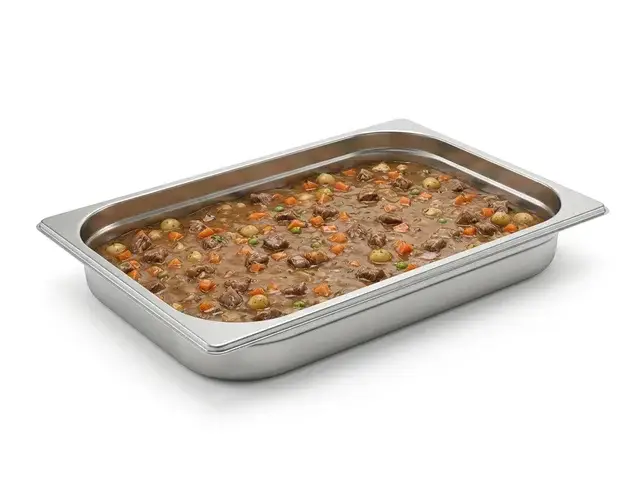
Keep door openings to a minimum during a cycle, and clean the condenser from time to time, without jets of water. For the storage end of the job, see what temperature a commercial freezer should be.
If you only store bought-in frozen food, a storage freezer is all you need. If you cook in batches and freeze portions, a blast chiller/freezer does the freezing properly and gives you the temperature record to prove it.
ex. VAT
- Chills 12kg or freezes 8kg per cycle
- Touch screen, core probe, USB data export
The smallest of the three, for a café or small kitchen.
ex. VAT
- Chills 18kg in 90 minutes
- Freezes 14kg in 240 minutes
Counter height, and the size most kitchens start with.
ex. VAT
- Chills 40kg in 90 minutes
- Freezes 28kg in 240 minutes
Double the load of the 5-tray cabinet in the same floor space.
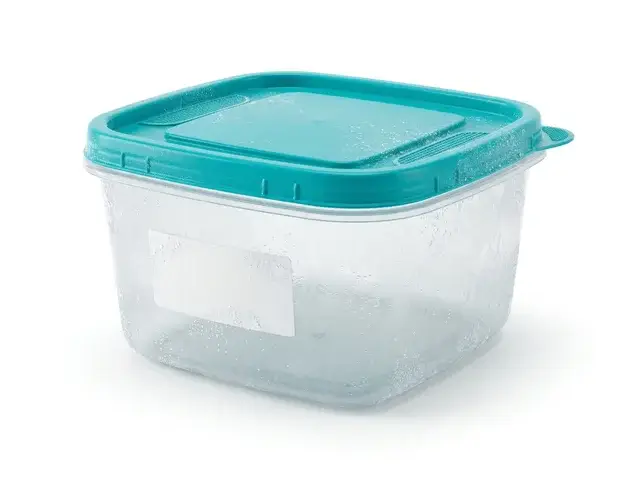
A blast freezer freezes food quickly by driving very cold air over it, which is why it is also called an air blast freezer. A blast chiller does the same but stops at fridge temperature, and most commercial cabinets do both. The Tefcold BLCB5X1 chills 18kg from +70°C to +3°C in 90 minutes, or freezes 14kg from +70°C to −18°C in 240 minutes. A blast freezer is not a storage freezer: frozen food is moved to a cabinet that holds −18°C. No law requires one. The law says cooked food must be cooled as quickly as possible, and the often-quoted 90 minutes is council guidance. The Tefcold range comes in 3, 5 and 10 tray sizes, from around £1,700 to around £2,400 ex. VAT. Use shallow trays, leave space for the air, use the core probe, and label food before it goes into storage.
Frequently Asked Questions
▼
▼
▼
▼
▼
▼