Blast Chillers: The Complete UK Buying Guide (2026)
- Lisa Craven
Last reviewed: October 2026 · Lisa Craven, Managing Director, FridgeSmart
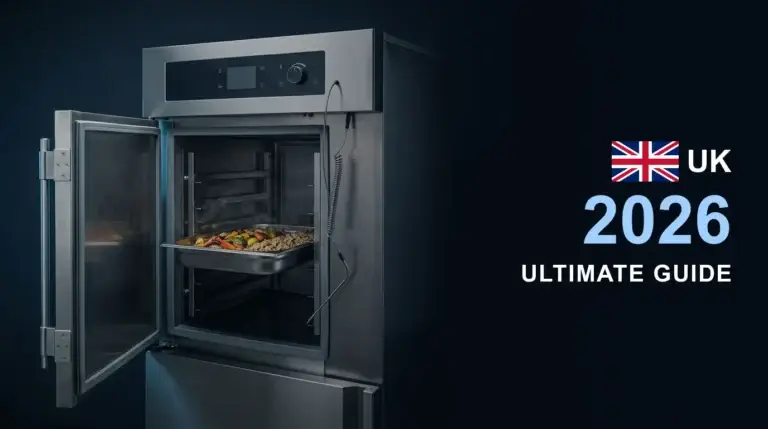
A blast chiller takes cooked food from 70°C to 3°C in 90 minutes or less — the industry rating every manufacturer specifies against, and comfortably inside the FSA guidance to get cooked food to 8°C or below within 90 minutes. This guide covers every TEFCOLD model, the ROI calculation, and which size suits your kitchen.
- Legal chilling requirement: UK food law (retained Regulation (EC) 852/2004 and the temperature-control rules in England and Wales) requires cooked food to be cooled as quickly as possible; FSA guidance is to reach 8°C or below within 90 minutes — a standard refrigerator cannot do this with a hot batch
- Blast chill cycle: Reduces food from 70°C to 3°C in 90 minutes or less (the industry rating); blast freeze cycle reduces to −18°C in under 4 hours
- Food safety zone: The temperature danger zone is 8°C–63°C — blast chilling moves food through this zone too quickly for bacteria to multiply to unsafe levels
- Who needs one: Any UK food business that batch cooks and stores food for later service — catering, restaurants, schools, care homes, hotels, and food production
- Installation: Runs from a 13A single-phase socket (the 3- and 5-tray units draw around 700W), needs the ventilation gap in the manual — typically 100mm for plug-in cabinets — and a drain or drip tray for condensate
- TEFCOLD range: BLCB combination chiller/freezers from 3 to 10 GN1/1 trays (12kg to 40kg chilling per cycle) — models available from FridgeSmart with UK-wide delivery
- HACCP records: Blast chillers with integrated probes and data logging support HACCP temperature record requirements — critical for Environmental Health inspections
A blast chiller is the piece of kit most often missing from kitchens that batch cook. It’s also one of the most misunderstood — people assume it’s only for large hotels or food factories. It isn’t. If you cook in bulk, prep ahead, or serve anything that needs to be cooled safely before storage, a blast chiller isn’t a luxury. In the UK, it’s often the difference between passing a hygiene inspection and failing one.
This guide covers everything — what blast chillers actually do, UK food safety law, how to choose the right size, what they cost, and how quickly they pay for themselves. No fluff.
What a Blast Chiller Actually Does
A blast chiller rapidly drives the temperature of hot or warm food down through the bacterial danger zone — between 8°C and 63°C — as fast as possible. Standard refrigerators aren’t designed to do this. Putting a tray of hot lasagne in your display fridge doesn’t just fail to cool it safely, it raises the temperature of everything else in the cabinet and potentially puts your entire stock at risk.
A blast chiller blows high-velocity cold air across the food from multiple directions, dropping the core temperature from +70°C to +3°C in under 90 minutes. A blast freezer takes it further — down to -18°C in under 240 minutes.
The law says cooked food must be cooled as quickly as possible; FSA guidance is 8°C or below within 90 minutes. The FSA chilling and cooling guidance recommends blast chilling as the preferred method. Leaving a large batch to cool slowly at room temperature will not get there in time — bacteria can double every 20 minutes between 8°C and 63°C.
The Numbers That Make the Case
to cool food from 70°C to 3°C — the industry rating, inside the FSA 90-minute guidance
lost by UK hospitality to avoidable food waste every year (WRAP estimate)
saved on average for every £1 invested in cutting food waste (Champions 12.3 / WRAP restaurant study)
WRAP estimates UK restaurants alone throw away over £682 million worth of food a year. A blast chiller extends the high-quality shelf life of prepped food to up to 5 days — meaning batch cooking on Monday covers Wednesday and Thursday service without quality loss. That’s less purchasing, less prep time, less pressure on staff during peak service, and dramatically less binned food.
Worked example: a mid-sized caterer binning £80,000–£120,000 of food a year who cuts that by 25% saves £20,000–£30,000 in purchasing and disposal alone. A blast chiller costing under £3,000 pays for itself in well under a year.
Blast Chiller vs Blast Freezer — What’s the Difference?
These terms get used interchangeably and they shouldn’t. They do different things.
Feature
Blast Chiller
Blast Freezer
Combination Unit
Target temperature
+3°C
-18°C
Both
Time from 70°C
90 minutes
240 minutes
90 or 240 min
Food shelf life after
Up to 5 days
Weeks/months
Both
FSA compliant cooling
✓ Yes
✓ Yes
✓ Yes
Preserves texture/quality
✓ Excellent
✓ Very good
✓ Very good
Best for
Daily prep, batch cooking
Long-term storage, portioning
Full flexibility
Typical price range
£1,600–£3,500
£1,600–£3,500
£1,695–£3,430
For most catering operations — restaurants, cafes, contract caterers, school kitchens — a combination blast chiller/freezer is the practical choice. You get both modes in one unit and one footprint.
FridgeSmart’s TEFCOLD Range — Which One Fits Your Kitchen
Every unit in the FridgeSmart range is a TEFCOLD BLCB combination chiller/freezer — touchscreen controlled, HACCP compliant with USB data export, stainless steel, GN compatible, and supplied with a core temperature probe. The difference is capacity.
TEFCOLD BLCB3X1 — £1,695
3 × GN1/1 trays — TEFCOLD rates the 3-tray cabinet at 12kg chilling / 8kg freezing per cycle. The entry-level unit — ideal for small cafes, delis, and bakeries doing small daily batches. Compact footprint, same HACCP-compliant touchscreen controls as the larger models. Perfect for operations that prep one or two dishes ahead daily.
TEFCOLD BLCB5X1 — £2,004
5 × GN1/1 trays — 18kg chilling / 14kg freezing per cycle. The right size for most small-to-medium kitchens — restaurants up to around 50 covers, cafes with a cook-ahead menu, or any operation batch-cooking soups, sauces, and proteins. GN 1/1 compatible.
TEFCOLD BLCB10X1 — £2,418
10 × GN1/1 trays — 40kg chilling / 28kg freezing per cycle. The workhorse for busy kitchens — restaurants with 50–100 covers, hotel kitchens, contract caterers doing daily bulk prep. Handles ten full GN1/1 trays in one cycle.
What Size Do You Actually Need?
The standard rule of thumb used by equipment specifiers: your blast chiller should handle the largest single batch you’ll ever need to cool in one cycle. Don’t underspec — a chiller that’s consistently overloaded won’t hit the required temperatures in time, which means you’re not legally compliant even if you own the machine.
Take your largest single cook — e.g. a 10kg batch of bolognese. Add 20% safety margin. You need a unit rated for at least 12kg chilling capacity per cycle — exactly what TEFCOLD rates the 3-tray BLCB3X1 at. Don’t go by cabinet size alone — go by rated kg per cycle at 70°C to 3°C in 90 minutes, which every manufacturer specifies.
A quick reference by operation type:
| Operation type | Recommended capacity | Unit type |
|---|---|---|
| Cafe / small restaurant (covers under 30) | Up to 12kg | TEFCOLD BLCB3X1 (3 × GN1/1) |
| Restaurant (30–80 covers) | 12–18kg | TEFCOLD BLCB5X1 (5 × GN1/1) |
| Busy restaurant / hotel kitchen | 20–40kg | TEFCOLD BLCB10X1 (10 × GN1/1) |
| Contract catering / banqueting / production | 90kg+ | Roll-in / trolley units — not a stock line, call us to spec |
What It Costs — and When It Pays Back
Blast chillers have a reputation for being expensive. The reality is the entry point is lower than most people think, and the payback period is faster than almost any other kitchen equipment investment.
TEFCOLD BLCB3X1 — entry 3kg combination unit
TEFCOLD BLCB10X1 — mid-range 10kg unit
📈 Payback Example — Mid-Range Restaurant
+£10,000/yr
+£3,000–£6,000/yr
+£1,500–£3,000/yr
£14,500+
On those numbers the unit pays for itself in about two months: £14,500 a year is roughly £1,200 a month against a unit costing under £2,500.
UK Food Safety — What the Law Actually Says
This is the section most guides gloss over. The UK legal framework is clear and the consequences of getting it wrong are serious.
Failure to comply can result in fines, closure notices, and up to 2 years imprisonment. Environmental Health Officers can attend unannounced. Compliance isn’t optional.
The 90-Minute Guidance
The law says cool cooked food as quickly as possible; the FSA’s guidance is to reach 8°C or below within 90 minutes of cooking. The FSA chilling and cooling guidance confirms blast chilling as the preferred method — a blast chiller gets a full load to 3°C in that time, well past the 8°C target.
The Danger Zone
Between 8°C and 63°C, bacteria double approximately every 20 minutes. Slow cooling at room temperature will not meet the 90-minute guidance for anything but small portions. The FSA explicitly names blast chilling as the preferred method.
HACCP Temperature Logging
You must monitor and record temperatures as part of your HACCP plan — the temperature limits sit in the UK Food Safety (Temperature Control) Regulations 1995, and the HACCP duty itself comes from retained Regulation (EC) 852/2004. Most modern blast chillers have digital controls with automatic cycle logging — this doubles as your compliance record; keep it for at least 12 months (good practice, not law). EHOs will ask to see it.
Frozen Food Storage
Blast-frozen food must be stored at -18°C or below. The blast freezer gets it there — but your storage freezer must maintain it. Don’t assume your standard upright freezer holds -18°C consistently. Check and log it.
Installation Requirements
- Drainage: Blast chilling produces condensation. The unit requires a drain connection — countertop models typically have a removable drip tray; reach-in and roll-in units need a floor drain. Factor this into your installation cost and kitchen plan.
- Power supply: The TEFCOLD BLCB range runs on a standard 13A single-phase supply (around 700W input on the 3- and 5-tray units) — no electrician required for the plug, but confirm the socket is on a dedicated circuit with no shared heavy loads.
- Rear clearance: Allow the gap in the manual, typically 100mm for plug-in cabinets, at the rear and sides for airflow. Blocking the condenser vents reduces chilling performance and can cause the unit to overheat and trip.
- Ventilation: Blast chillers reject heat from the condenser. Install in a well-ventilated area — ideally where the kitchen extraction system draws air across the unit. In a sealed plant room, you may need supplementary ventilation. Check the maximum ambient on the datasheet — chilling times stretch in a hot kitchen.
5 Things to Check Before You Buy
Some cheaper units advertise capacity in litres (meaningless for chilling) rather than kg. Always check the rated chilling capacity in kg per cycle at +70°C to +3°C in 90 minutes. That’s the only metric that matters for compliance.
Check which gastronorm sizes the unit accepts. If your kitchen runs on GN 1/1 trays, make sure the blast chiller takes them. Mixing tray sizes creates operational chaos and wasted space.
For HACCP compliance, you want a unit with digital cycle logging — it records the time and temperature automatically. Manually logging is error-prone and an EHO can tell immediately if records are fabricated.
Buy R290 (propane, GWP 3) — the TEFCOLD BLCB range runs on it. Avoid any unit still on R404A: new equipment using refrigerants with a GWP of 2,500 or more has been banned in GB since 2020, and servicing with virgin R404A is restricted, so repairs get dearer every year.
Blast chilling produces condensation. The unit needs a drain connection — check this before you plan your kitchen installation. Countertop units often have a removable tray; larger units need a floor drain. Factor this into your installation cost.
For long-term cold storage alongside your blast chiller, see our walk-in cold room buying guide. Looking to reduce running costs across all your refrigeration? Read our guide to cutting commercial fridge energy bills.
The Models at a Glance
Model
Chilling (per cycle)
Freezing (per cycle)
Price
TEFCOLD BLCB3X1
12kg
8kg
£1,695
TEFCOLD BLCB5X1
18kg
14kg
£2,004
TEFCOLD BLCB10X1
40kg
28kg
£2,418
All models include: touchscreen controller, HACCP-compliant USB data export, core temperature probe, programmable thermostat, stainless steel construction, GN compatibility. Browse the full range →
Browse FridgeSmart’s Blast Chiller Range
TEFCOLD BLCB combination units from 3 to 10 trays — models available for UK-wide delivery, expert advice, competitive pricing.
Not sure which unit is right for your kitchen? Call us on 01792 677169 — we’ll spec it properly.
A blast chiller takes cooked food from 70°C to 3°C within 90 minutes — the industry rating, and well inside the FSA guidance to cool cooked food to 8°C or below within 90 minutes that any business batch cooking and storing food has to meet under its HACCP plan (retained Regulation (EC) 852/2004). A standard refrigerator or freezer cannot achieve this chilling speed and must not be used as a substitute. TEFCOLD BLCB combination chiller/freezers (3 to 10 GN1/1 trays, 12kg to 40kg chilling per cycle) are available from FridgeSmart; they run from a 13A single-phase socket and need the ventilation gap in the manual (typically 100mm) and a drain or drip tray for condensate. Blast chillers with integrated temperature probes and data logging support HACCP record-keeping requirements.
Frequently Asked Questions
▼
▼
▼
▼
▼
▼
Questions about blast chillers or need help specifying the right unit for your kitchen? Call the FridgeSmart team on 01792 677169 or email [email protected].