Last reviewed: November 2026 · Lisa Craven, Managing Director, FridgeSmart
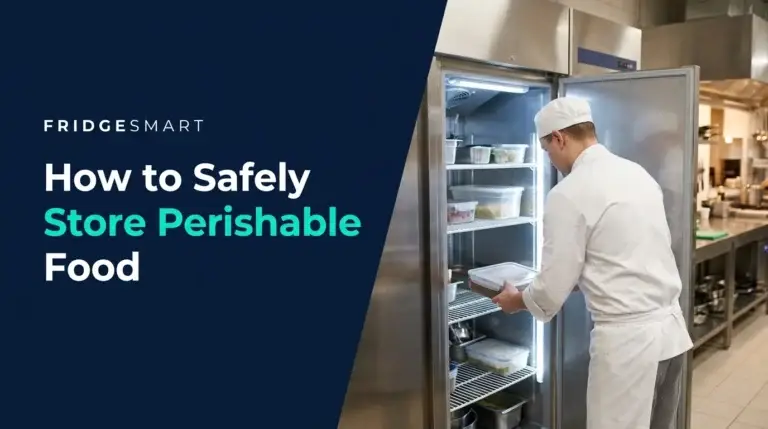
Store perishable food safely by keeping it in a fridge set to 5°C or below, covered, labelled with its date, with raw food below ready-to-eat food.
The legal limit for chilled food is 8°C in England, Wales and Northern Ireland, so 5°C leaves a margin. Check each delivery before it goes into stock, use the oldest stock first, and write your temperature checks down.
- Where it goes: in a fridge set to 5°C or below (GOV.UK advice)
- The legal limit: chilled food at 8°C or below (England: Schedule 4 of the 2013 Regulations; Wales: Schedule 4 of the 2006 Regulations)
- The danger zone: bacteria grow between 8°C and 63°C
- A delivery above 8°C: probe it, decide under your HACCP procedures, and record the reading and the decision
- Raw food: stored below ready-to-eat food, covered or sealed, or in its own fridge
- Out of the fridge: under four hours, once only, then it is thrown away
- Use-by dates: about safety. Best before dates are about quality
For restaurants, cafés, takeaways, pubs, shops and mobile caterers who take in chilled deliveries and need to know where the food goes, how cold it must be and what to do when it turns up warm.
Badly stored food lets bacteria grow, and food poisoning is most dangerous to the very young, the elderly and people with underlying health conditions. For the wider picture, see the importance of refrigeration in maintaining food safety.
1. What are perishable goods?
Perishable goods are foods that spoil or become unsafe to eat unless they are kept cold. Raw meat, poultry, fish, dairy, cooked food and cooked rice are the everyday examples in a commercial kitchen.
The law does not list foods by name. The temperature rules apply to food that is likely to support the growth of harmful bacteria, and the hygiene regulation says perishable foodstuffs are “not to be kept at temperatures that might result in a risk to health” (retained Regulation (EC) 852/2004, Annex II, Chapter IX).
Cold slows bacteria but does not stop them. GOV.UK is clear that some, listeria for example, keep growing in a fridge. That is why perishable food carries a date as well as a storage temperature.
2. Where should perishable foods be stored?
Perishable foods should be stored in a fridge set to 5°C or below, or in a freezer if they are frozen. GOV.UK gives the 5°C setting because it leaves room for some fluctuation before the legal limit of 8°C is reached.
In England the 8°C limit is in the Food Safety and Hygiene (England) Regulations 2013, Schedule 4. Wales has the same rule in the Food Hygiene (Wales) Regulations 2006, Schedule 4. GOV.UK says 8°C is the legal figure in England, Wales and Northern Ireland and the recommended one in Scotland.
Treat 8°C as a ceiling, not a target. One fridge at 5°C or below suits meat, fish, dairy and prepared food alike.
3. What action should be taken if a perishable food is delivered within the danger zone?
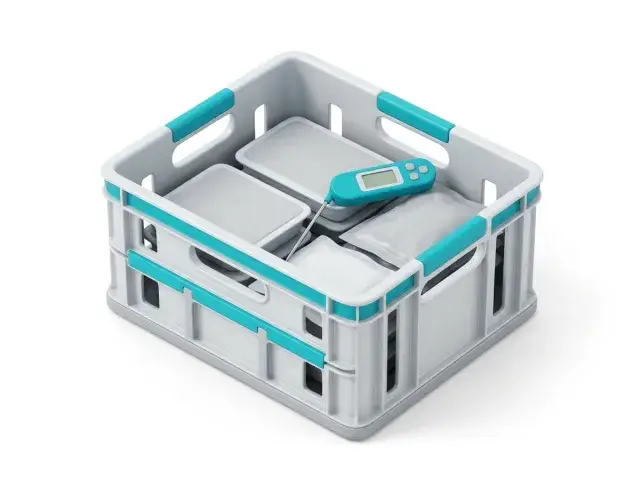
If a perishable food is delivered within the danger zone, meaning above 8°C, do not put it into stock as normal: probe it, decide whether to accept or reject it under your own HACCP procedures, and record the reading and the decision. If you cannot be sure the food is safe, do not use it.
The law sets the limit and leaves the decision to you. Chilled food must be kept at 8°C or below, and the hygiene regulation says the cold chain “is not to be interrupted”, with only limited periods outside temperature control allowed. You must also run procedures based on HACCP principles and keep records of them. Your delivery check is one of those procedures.
Neither the regulations nor the GOV.UK pages we checked say that every delivery above a set figure must be refused. Your written procedure should say what your business does. These three checks belong in it:
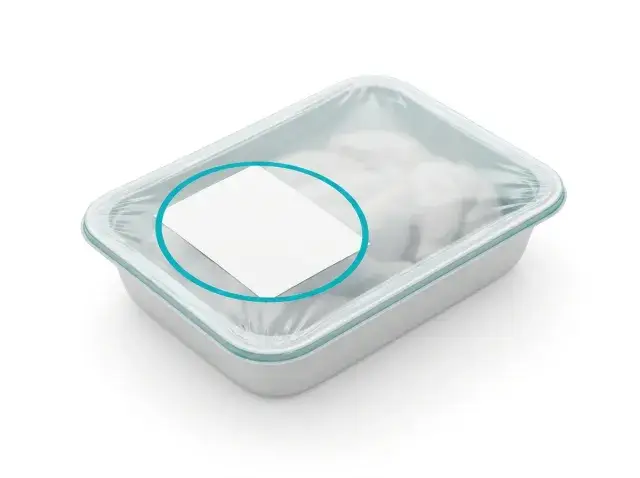
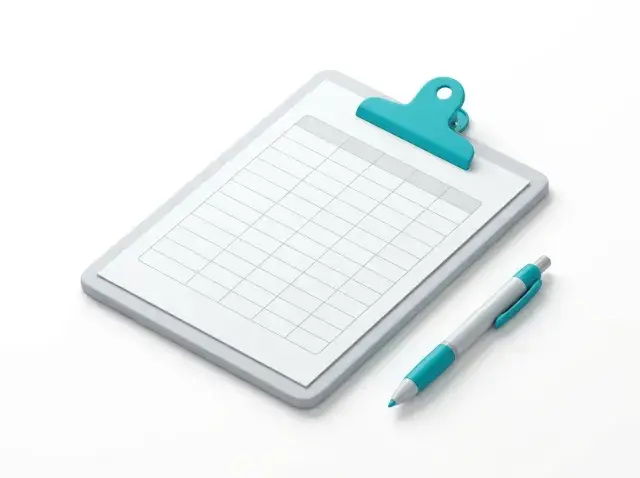
Do not lean on the four-hour allowance for a warm delivery. It is a defence for food on display or being served that has not been above 8°C before, and with a delivery you rarely know how long it has been warm.
Food that passes the checks should go straight into the fridge or freezer. GOV.UK has more on storing and transporting food.
4. Where should high risk foods be stored?
High risk foods should be stored in the fridge at 8°C or below, covered, and above raw food, never below it. We use “high risk” here for chilled ready-to-eat food, which gets no further cooking before it is eaten.
The rule from GOV.UK is to store raw food below ready-to-eat food in the fridge. If you have the space, use separate fridges for raw and ready-to-eat food.
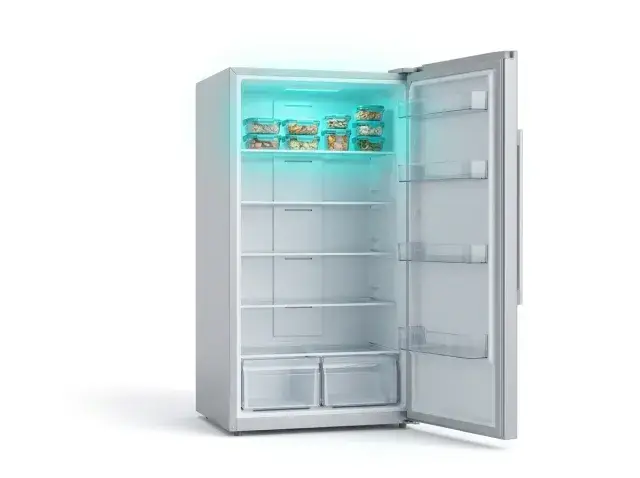
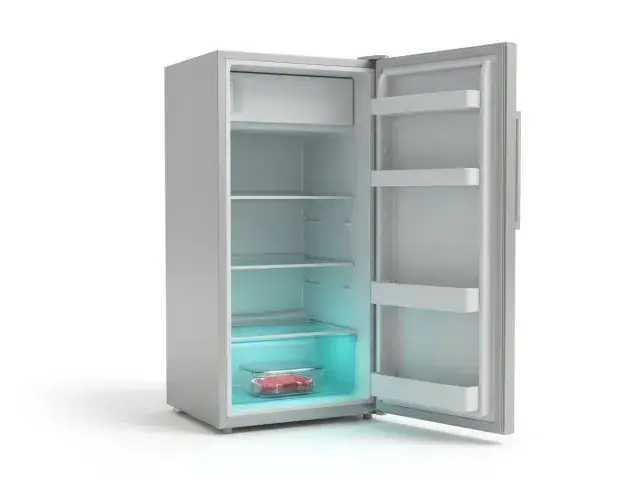
Sources disagree on where fruit and vegetables go, so there is no fixed shelf for them. What matters is that raw meat and fish cannot drip onto salad or anything else eaten without cooking.
5. Perishable food storage: how should food be packed, labelled and rotated?
Good perishable food storage means every item is sealed, dated and used in order.
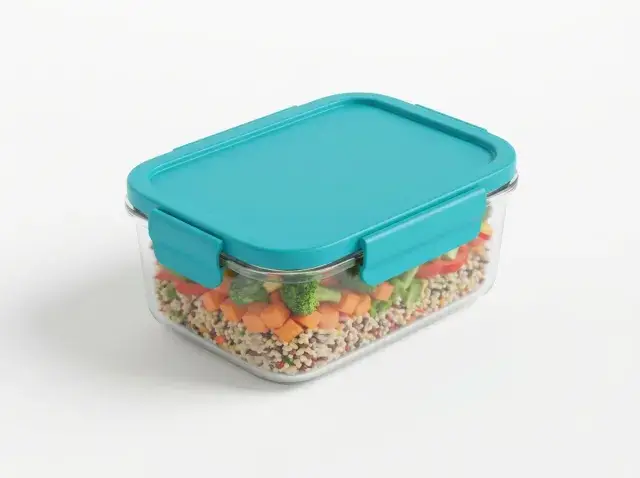
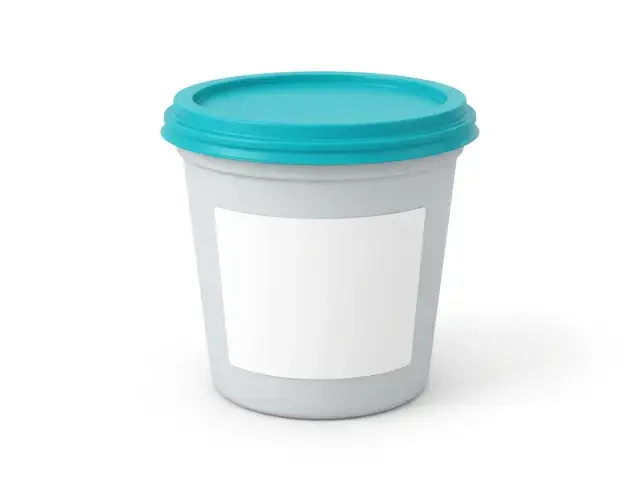
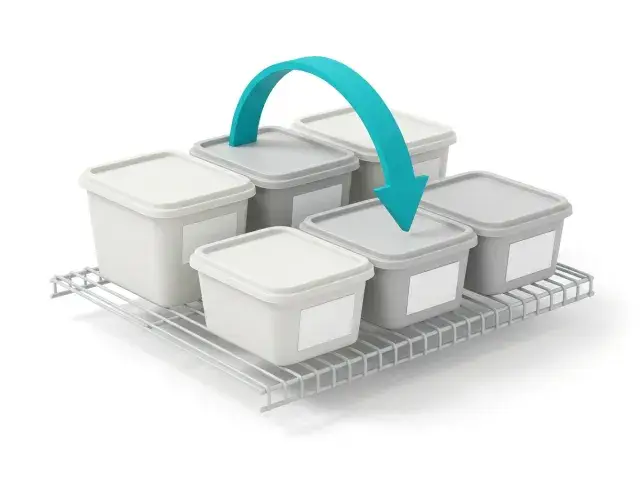
- ✓Empty opened tins. Do not store food in an opened tin. Decant it into a container and cover it.
- ✓Do not overload. An overfilled fridge struggles to hold its temperature. More in Does having less stuff in your commercial fridge make it colder?
- ✓Clean on a schedule. Wipe up spills and food debris, and clean the fridge at set intervals, as GOV.UK expects.
6. How long can perishable food stay out of the fridge?
Perishable food can stay out of the fridge for less than four hours, once only. After that GOV.UK says to throw it away. Food that has been out for less than four hours can go back in the fridge, but it cannot have a second spell out.
In law the four hours is a defence, not a target. A limited period above 8°C is also allowed for unavoidable reasons, such as a defrost cycle or a temporary breakdown, as long as it is consistent with food safety.
Cooked food that is going to be chilled must be cooled as quickly as possible. Do not put hot food straight into a storage fridge. Split it into shallow containers, stand the pan in an ice bath, or use a blast chiller.
Rice needs extra care. The Food Standards Agency says to cool it within one hour, keep it in the fridge for no more than a day, and reheat it once only, until it is steaming hot.
7. Use-by or best before: which date matters for perishable food?
The use-by date is the one that matters for safety. GOV.UK says food past its use-by date is no longer safe to eat. A best before date is about quality: the food is at its best before it, and can still be eaten after.
- 1Use, cook or freeze by the use-by date. Food cooked or frozen on or before its use-by date can be eaten after it. Cooked food then needs cooling and a date of its own.
- 2Use defrosted food within 24 hours. Once it has thawed, the clock is short.
- 3Set your own shelf life in writing. For food you make or open, your HACCP plan sets how long it is kept. The figure for leftovers at home is 48 hours.
If stock keeps reaching its date unused, review what you order. WRAP puts edible food waste from UK hospitality and food service at 800,000 tonnes a year, worth £3.21 billion at 2021 prices.
8. Perishable goods storage: which fridge, and how do you check it?
For perishable goods storage you need a commercial fridge that holds 5°C or below when the kitchen is busy, and a way to prove that it does. Storage must be built so that temperatures can be monitored and, where necessary, recorded.
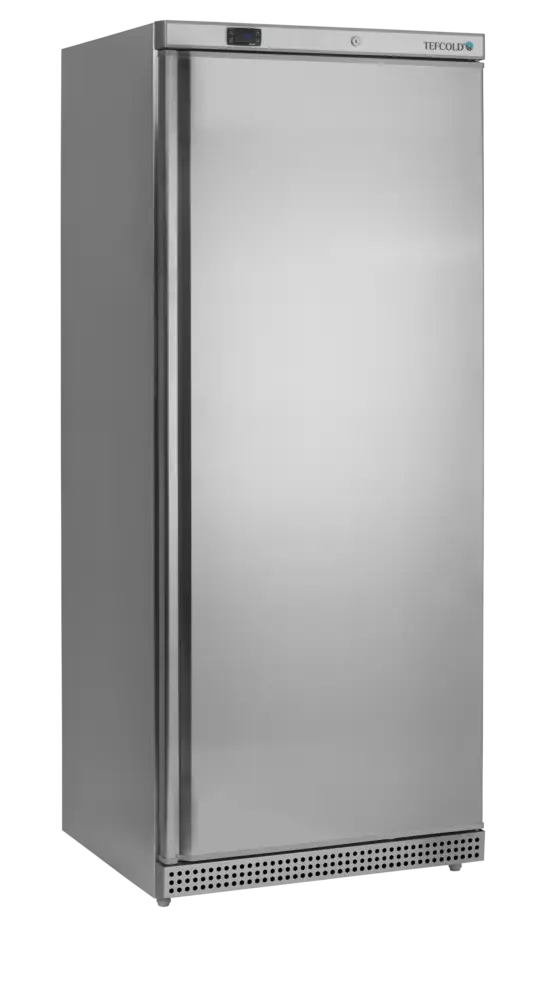
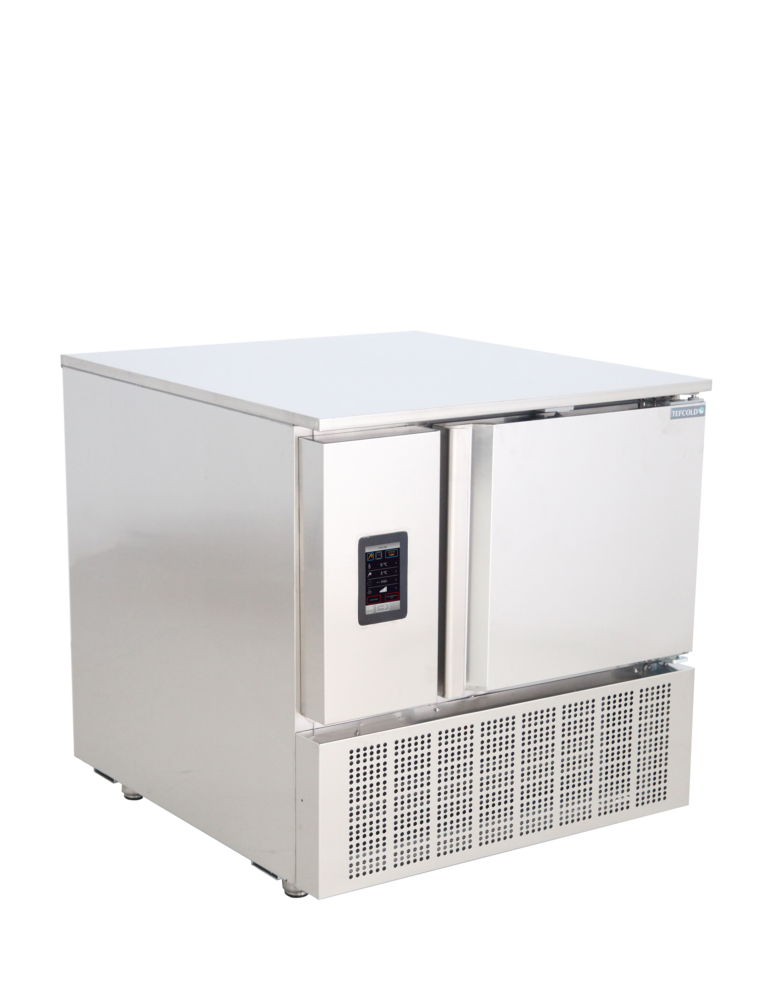
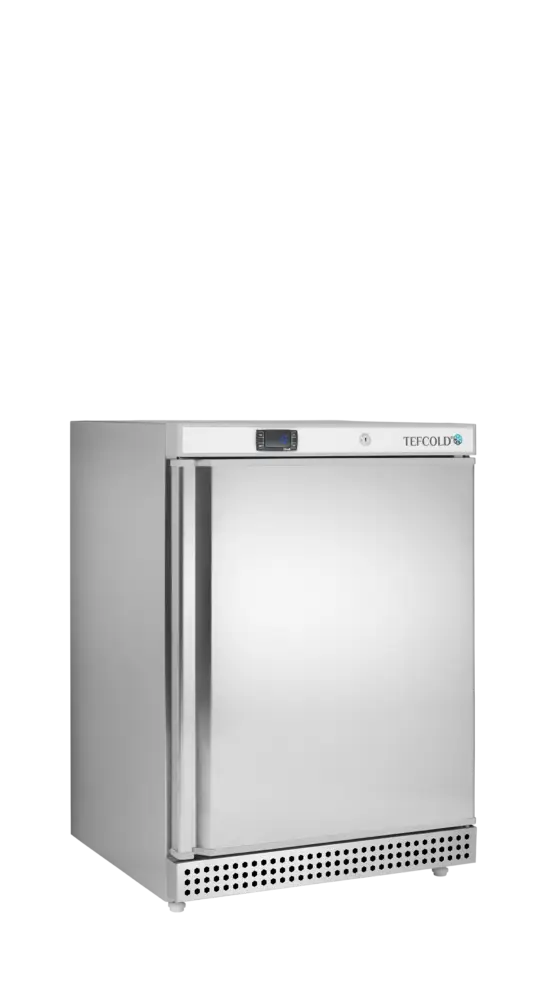
The UR600X1 can be set anywhere from −2 to +8°C. The top of that range is the legal ceiling, so set it to 5°C or below. Prices load live on each product page.
Running cost is kWh a day × 365 × £0.27. For the UR600X1 that is 0.79 × 365 × 0.27, about £78 a year at 27p/kWh. The 27p rate is our assumption, not your tariff.
Check the temperature regularly and record it. A reading that keeps drifting must be dealt with quickly, because you may not notice when it crosses 8°C. How to take the reading is covered in Do you need a thermometer in your commercial fridge?
If the fridge breaks down, move the food to another fridge and work out how long it has been above 8°C. If you cannot tell, err on the side of caution and throw the food away. Regular servicing by a qualified refrigeration engineer makes a breakdown less likely.
Shops that sell chilled food from the shop floor need display cabinets that hold the same temperatures. Browse commercial display fridges, or call 01792 677169 to talk through what your business needs.
To store perishable food safely, keep it in a fridge set to 5°C or below, covered, date-labelled and used oldest first, with raw food below ready-to-eat food. Chilled food must be kept at 8°C or below by law in England, Wales and Northern Ireland, and bacteria grow between 8°C and 63°C. If a perishable food is delivered within the danger zone, probe it, decide whether to accept or reject it under your own HACCP procedures, and record the reading and the decision. Perishable food can be out of the fridge for less than four hours, once only, and is then thrown away. Use-by dates are about safety and best before dates are about quality. Check and record fridge temperatures regularly.
Frequently Asked Questions
▼
▼
▼
▼
▼
▼
▼
▼