
Last reviewed: November 2026 · Lisa Craven, Managing Director, FridgeSmart
No: an emptier commercial fridge is not colder, because the thermostat sets the temperature and the amount of stock only changes how steadily the fridge holds it.
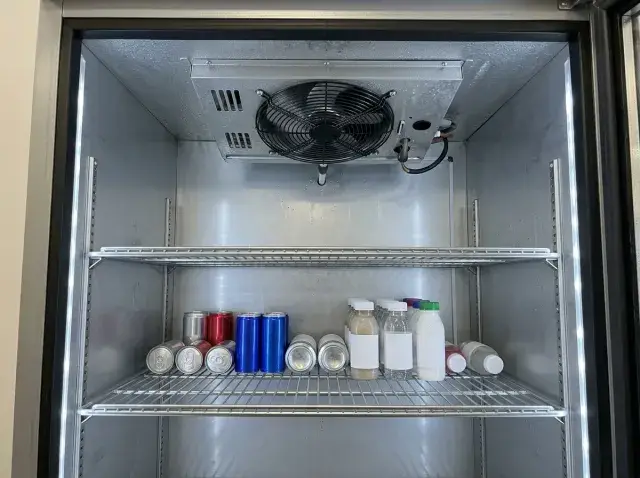
A stocked fridge stays cold through door openings, while an empty one swings and recovers more slowly. The fridge that struggles is an overfull one, where food blocks the vents.
- Same set point: an empty cabinet is no colder than a full one; stock changes how steadily it holds the temperature
- Thermal mass: a 350 litre cabinet holds about 0.4 kg of air; 20 kg of food holds roughly 200 times more heat per degree (our arithmetic)
- How cold a fridge should be: chilled food at 8°C or below by law in England, Wales and Northern Ireland; set the fridge to 5°C or below
- Tefcold’s multideck manual: at least 10 cm of free space round the cabinet, and the condenser cleaned at least four times a year
For café, restaurant, takeaway, pub and shop owners who want a commercial fridge to run colder, or to stay cold through a busy service.
Watch: Does Having Less Stuff in Your Commercial Fridge Make It Colder? (1 min 39 sec). Open on YouTube
1. Does having less stuff in a commercial fridge make it colder?
The thermostat decides how cold the cabinet gets. It holds one set temperature, whether there are two crates inside or twenty.
2. Does a fridge get colder with more stuff in it, and does a full fridge stay colder?
A fridge does not get colder with more stuff in it, but a well-stocked fridge does stay cold more steadily. Food holds far more cold than air does.
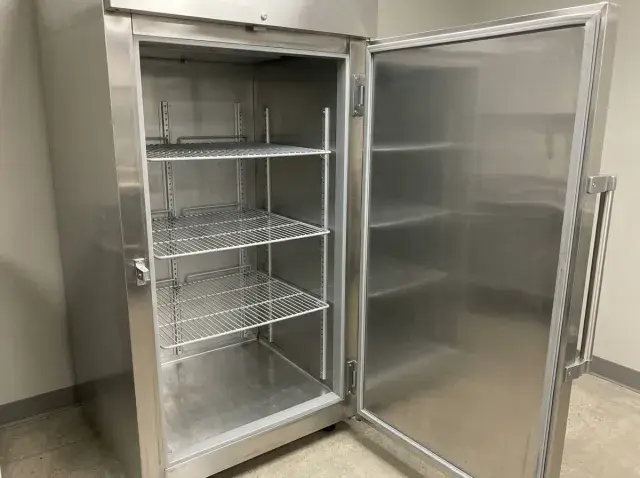
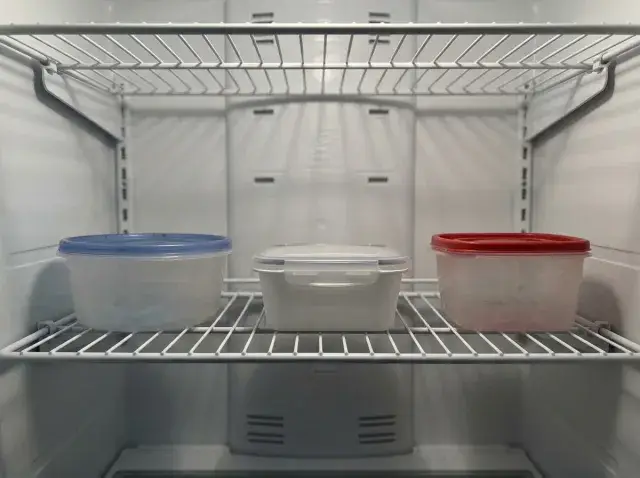

The sum behind it uses standard figures (water-rich food about 4.18 kJ per kg per degree; air about 1.0 kJ and 1.2 kg per cubic metre). It is our arithmetic, not a study.
Cooling that air by 10 degrees takes about 4 kJ. Cooling 20 kg of food by the same amount takes about 836 kJ, roughly 0.23 kWh. A fuller fridge is steadier, but do not bank on it as an energy saving. Door openings matter more.
3. Will an empty fridge get cold?
Yes, an empty fridge will get cold, and it reaches the same set point as a full one. There is very little air to cool.
Let a new cabinet reach its set temperature empty before the first big load, then fill it with chilled stock. An empty cabinet will not hold steady once the door starts opening, because nothing inside holds the cold.
4. Does a fridge work harder when it is full?
Not when it is full of stock that is already cold, but a fridge does work harder in two cases: when the load goes in warm, and when the cabinet is overloaded.
A warm load. On the sum above, bringing 20 kg of food down by 10 degrees is about 0.23 kWh of heat for the fridge to remove. It can also warm the food beside it. Cool cooked food quickly first; GOV.UK gives no cooling time, so we state none.
An overloaded cabinet. Tefcold’s overloading guidance lists the signs: temperatures regularly above 5°C, thick frost, a door that will not close and a compressor cycling constantly. Its multideck (MDCA) manual lists excess product load as a fault with one fix: redistribute the load.
No regulator or manufacturer gives a “best” fill percentage, so we quote none. Stay inside the load line or shelf limits in your manual.
5. How does a fridge work?
A fridge works by moving heat from the inside to the outside. Liquid refrigerant evaporates inside the evaporator and absorbs heat from the air in the cabinet. The compressor then pumps the refrigerant round to the condenser, which gives that heat off into the room. That is why it feels warm on the outside. Our guide to which gas is used in commercial refrigerators covers the refrigerant itself.
Tefcold describes three cooling types, and how the air moves decides how much a blocked path matters.
| Cooling type | How the air moves | What it means for loading |
|---|---|---|
|
Static
|
Air is nearly still | Temperatures can differ from top to bottom. Suits rarely opened storage |
|
Fan assisted
|
A fan spreads the cold more evenly | Blocked air paths bite hardest here. Keep stock clear of the fan and vents |
|
Ventilated
|
Fast pull-down for busy kitchens | Can dry out food that is not wrapped or covered |
6. How cold should a fridge be?
A commercial fridge should be set to 5°C or below, so that the food inside stays at 8°C or below, which is the legal limit for chilled food in England, Wales and Northern Ireland. The GOV.UK chilling guidance gives both figures.
The 8°C limit applies to the food, not to the air in the fridge or the number on the dial. It comes from Schedule 4 of the Food Safety and Hygiene (England) Regulations 2013 and Schedule 4 of the Food Hygiene (Wales) Regulations 2006.
As practice and not a rule, put one probe where the cabinet warms first and one in the load, and compare both with the dial. Record the reading daily; council Safer Food, Better Business sheets (Coventry, Bromley, Swindon) expect it. See do you need a thermometer in your commercial fridge.
7. What is colder on a fridge dial?
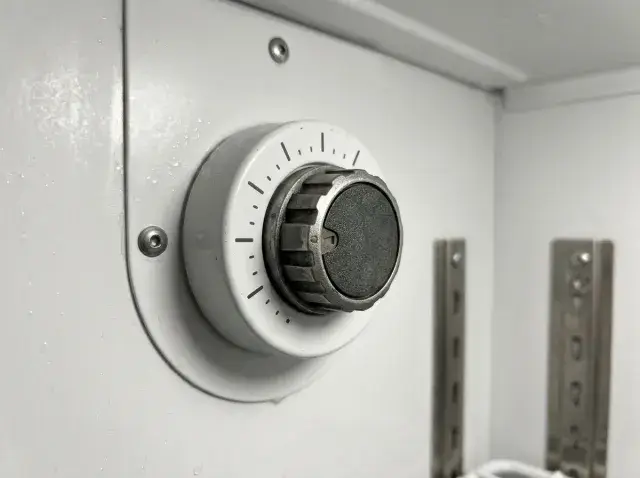
It depends on the control. On a digital controller that shows degrees, a lower number is colder. On a numbered dial the numbers are settings, not degrees, and which way is colder differs from model to model.
The Tefcold documents we checked for this guide do not state which way their numbered dials run, so we will not guess. Look in the manual for your exact model, then confirm with a thermometer inside the fridge.
8. How to make a commercial fridge colder, safely
To make a fridge colder, start with the thermostat, then remove the things that stop the fridge reaching the temperature you have set. Work down this list in order.
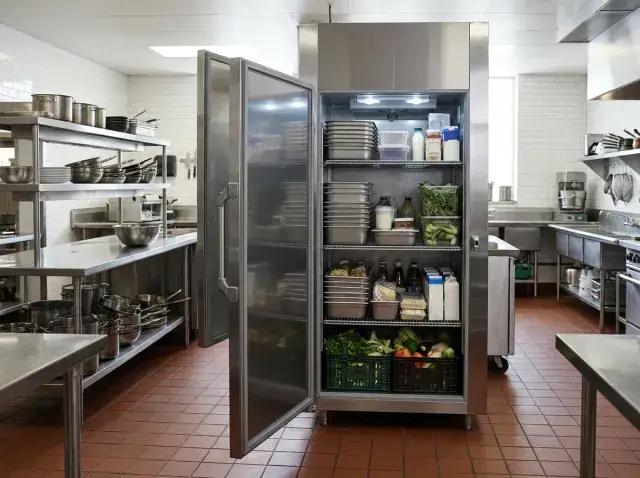

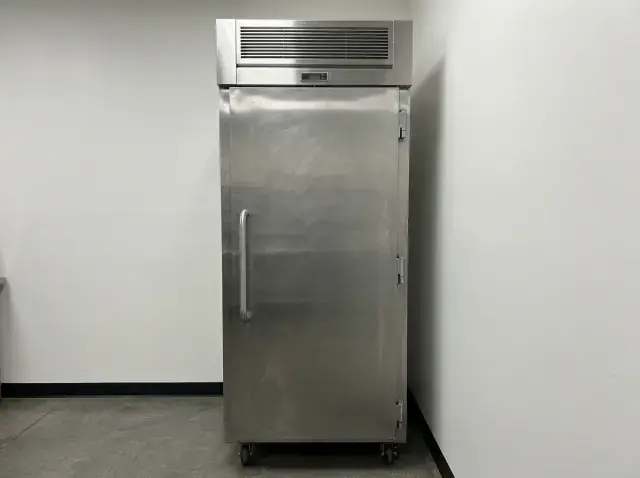
If the fridge will not get cold enough after those checks, call a qualified refrigeration engineer. Our display fridge troubleshooter covers door seals and display codes.
9. How should you load a commercial fridge so it stays cold?
Load it with chilled stock, up to the manual’s limit, with gaps for the air.
- 1Load chilled stock, not hot, and let a new cabinet reach its set temperature first.
- 2Stay under the load line or shelf limit for your model.
- 3Leave gaps and keep vents clear. Tefcold’s small bottle cooler manual asks for 2 cm at the back for circulation.
- 4First in, first out, and food types apart. Gaps between foods limit transfer and let air move. Raw goes below ready-to-eat, or in a separate fridge (GOV.UK).
In a shop display, a crammed fridge looks messy and is hard to reach into safely; a half-empty one suggests little choice.
10. When is it the fridge, not the loading?
It is the fridge when the load is right, the checks in section 8 are done and the cabinet still runs warm. Unload and redistribute first; if the signs stay, call an engineer.
It may then be time to upgrade: see the five signs it is time to invest in more energy-efficient refrigeration, how to cut your commercial fridge energy bills and remote versus integral refrigeration. A cabinet that is often half empty may simply be too big for the job.
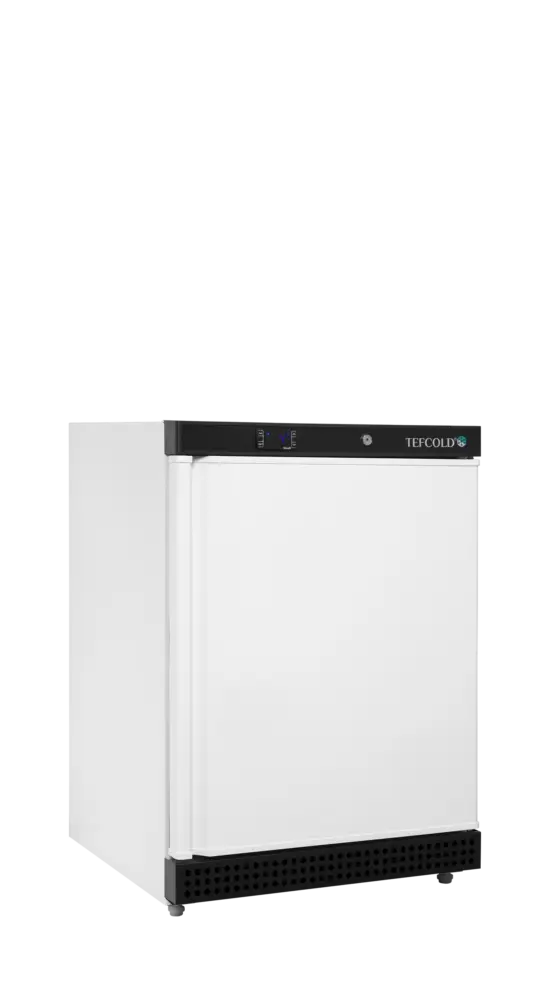
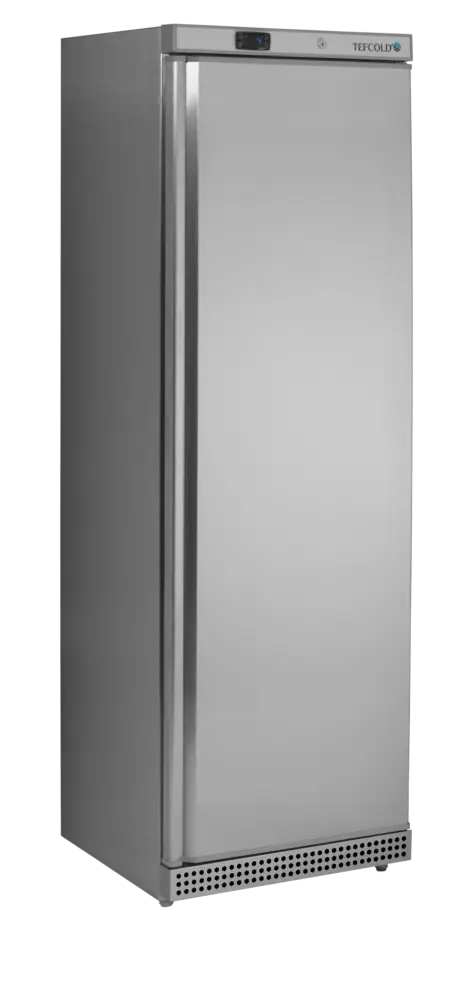
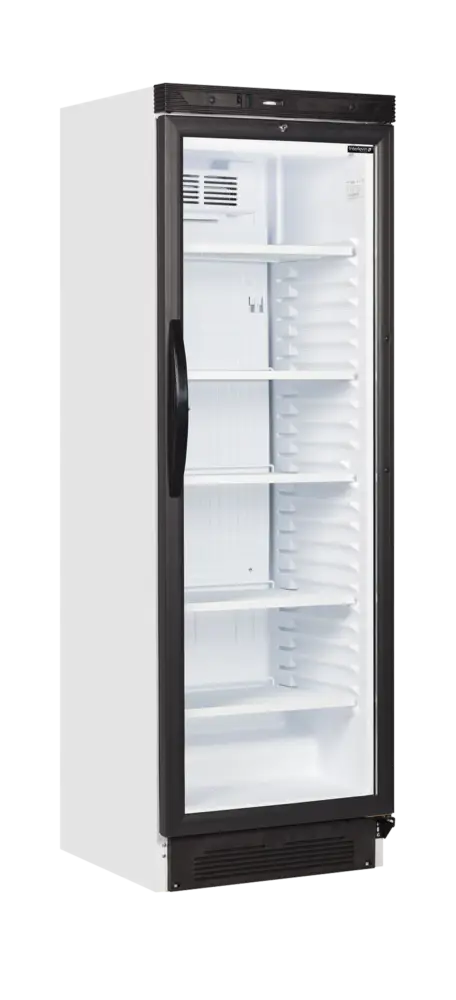
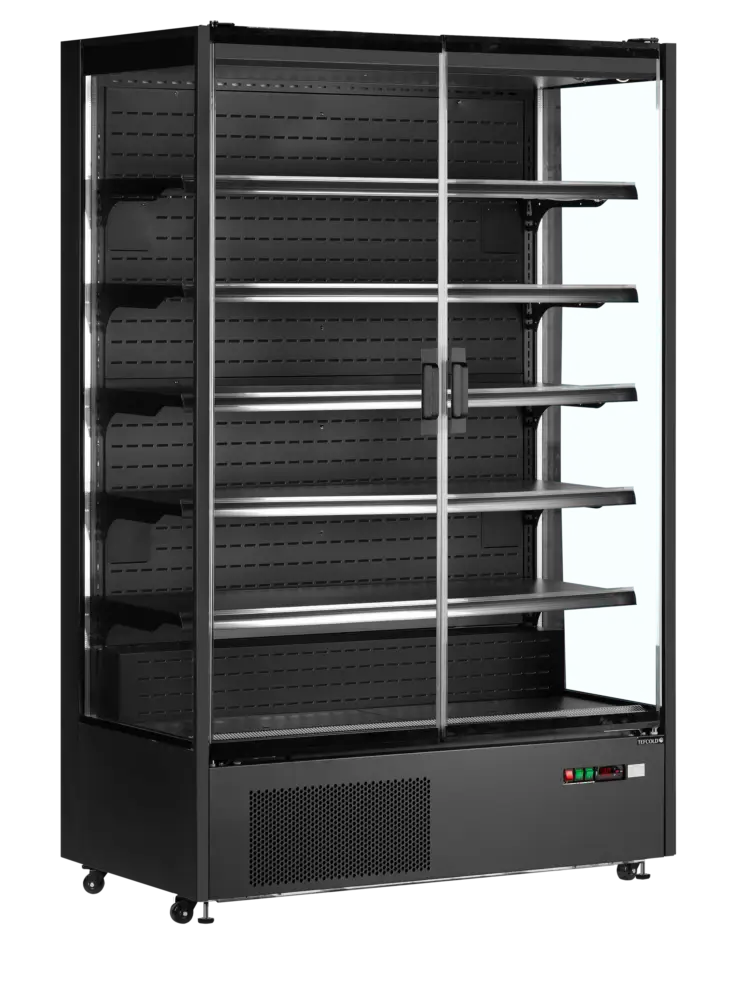
Running cost is the datasheet kWh a day x 365 x £0.27, at 27p/kWh: for the UR400X1, 0.65 x 365 = 237 kWh, and 237 x £0.27 = about £64. The others use the same sum (2.2 and 5.87 kWh a day). See the live price on each product page. The larger TEFCOLD UR600X1 suits a busier kitchen.
Having less stuff in a commercial fridge does not make it colder. The thermostat sets the temperature, and an empty fridge reaches the same set point as a full one. Stock changes stability: 20 kg of food holds roughly 200 times more heat per degree than the air in a 350 litre cabinet (our arithmetic), so a stocked fridge stays cold through door openings. To make a fridge colder safely, set the thermostat, keep the door shut, clear the airflow, clean the condenser and check the clearance. Chilled food must be at 8°C or below, with the fridge set to 5°C or below. If it still will not get cold enough, call a qualified refrigeration engineer.
Frequently Asked Questions
▼
▼
▼
▼
▼
▼