Last reviewed: November 2026 · Lisa Craven, Managing Director, FridgeSmart
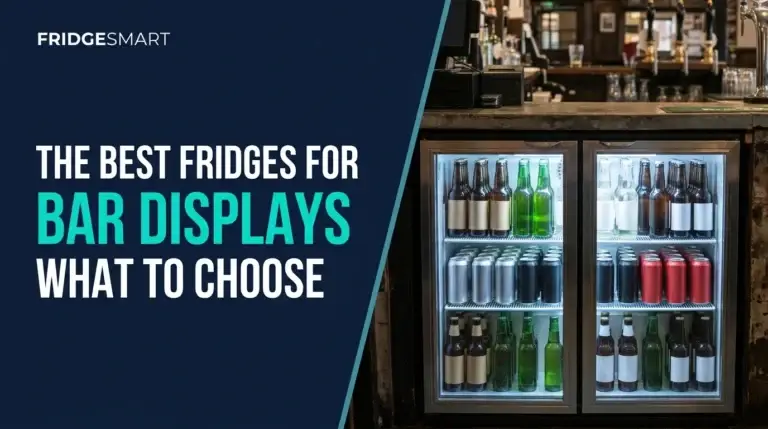
The best fridges for bar displays are a back-bar bottle cooler behind the bar, a glass door upright out front and a counter-top chiller on the bar.
Pick each one on three things: how well it shows the drinks, how much it holds and what it uses in electricity. Compare kWh a year, not the label letter, and if milk or food shares the display, choose a cabinet that stops at +8°C.
- Three things to judge: visibility, capacity and cooling efficiency
- Behind the bar: the DB201S back-bar cooler is 900 mm wide, holds 182 litres and uses 416 kWh a year, about £112 at 27p/kWh
- Customer side: the SC381 glass door upright holds 347 litres and uses 803 kWh a year, about £217
- On the bar: the BC60 counter-top chiller holds 110 cans and uses 204 kWh a year, about £55
- Label trap: the class B LGC2500B uses 1,349 kWh; the class D SC381 uses 803 kWh
- Food law: chilled food at 8°C or below (Schedule 4, England 2013 and Wales 2006); GOV.UK says set the fridge to 5°C or below
- Upkeep: Tefcold’s manual says clean the condenser 2 to 4 times a year
For pubs, bars, cafés and restaurants choosing the fridges customers can see. For everything else a bar needs, read the best commercial fridges for a pub or bar.
1. What are the best fridges for bars?
The best bar fridge depends on where it stands. A bar display has three places to show drinks: behind the bar, on the customer side and on the bar top. Wine is a fourth job with its own cabinet.
The table gives one pick for each job, with the spec fact that earns it the place.
| The job | Our pick | Why, from the spec | Price (ex. VAT) |
|---|---|---|---|
| Behind the bar, under the counter | TEFCOLD DB201S | 182 litres in 900 mm of width, sliding doors, energy class A, 416 kWh a year | £559 |
| Behind the bar, tall | Elstar EM300 | 307 litres gross on a 600 mm wide footprint, +2 to +8°C | £651 |
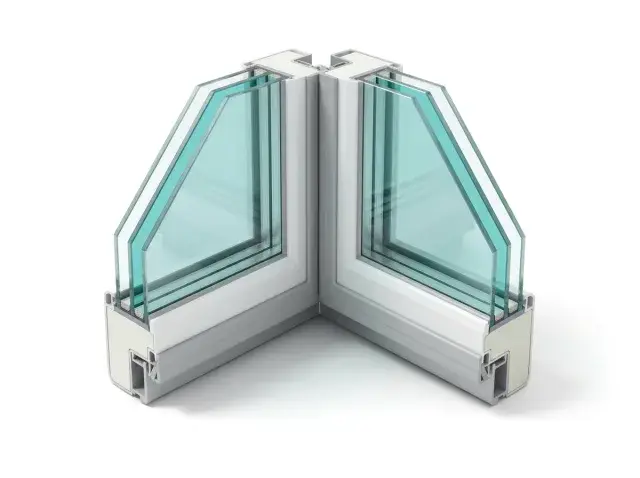
| Customer side, one door | TEFCOLD SC381 | 347 litres, triple glazed anti-mist glass, 45 dB(A) | £452 |
| On the bar top | TEFCOLD BC60 | 110 cans in a cabinet 432 mm wide, self-closing door, 204 kWh a year | £356 |
| Wine on show | TEFCOLD TFW200F | Up to 48 bottles under the counter, frameless tinted glass door, wooden shelves | £556 |
| Drinks and food in one display | TEFCOLD NC5000G | 1,079 litres behind two doors, LED canopy, +2 to +8°C | £1,229 |
All prices ex. VAT.
Looking for fridges for home bars? These are commercial units. They are priced ex. VAT, built for trade use and run at 40 to 58 dB(A), so check the size and the noise figure before you put one in a house.
2. Which bar display chillers go behind the bar?
Back-bar bottle coolers go behind the bar. They are low or tall glass door cabinets that face the customer across the counter, so they chill the stock and show it at the same time. These are the cabinets people mean by pub bottle fridges.
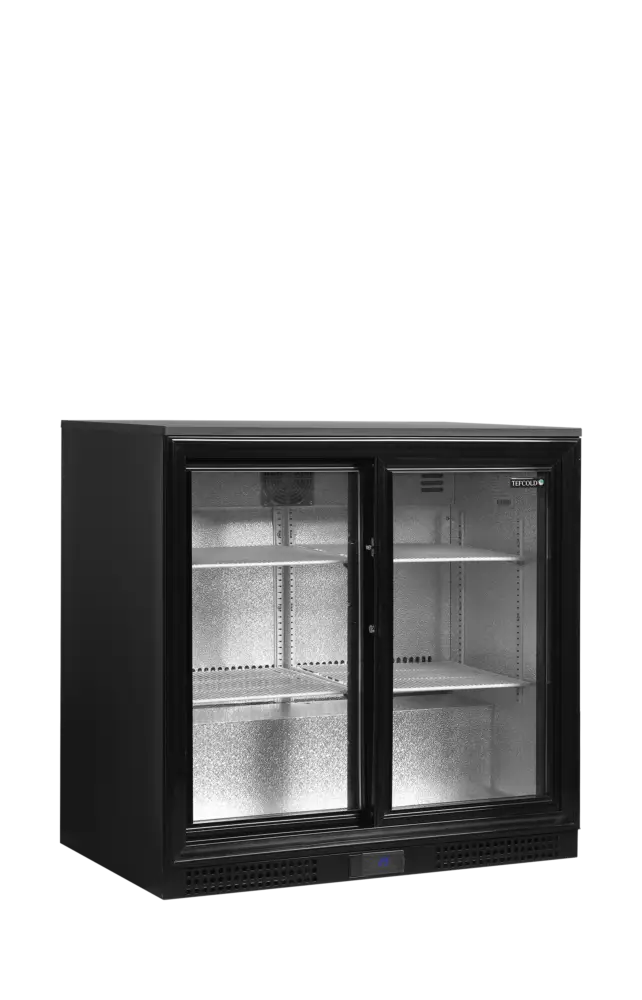
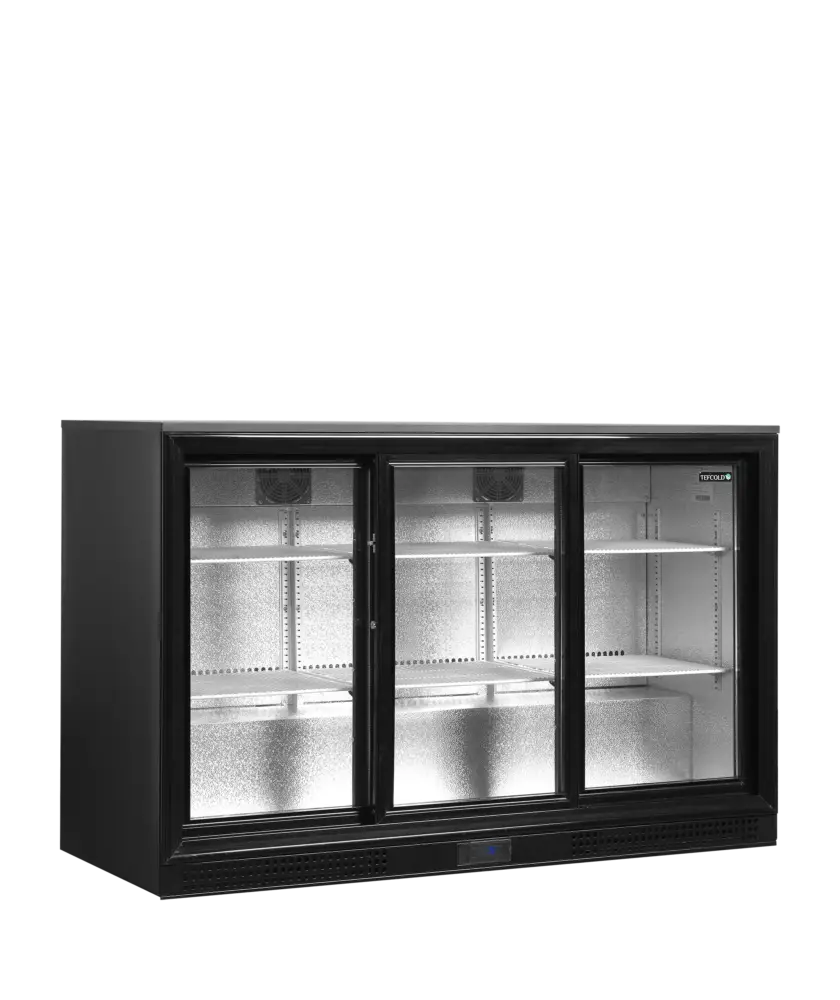
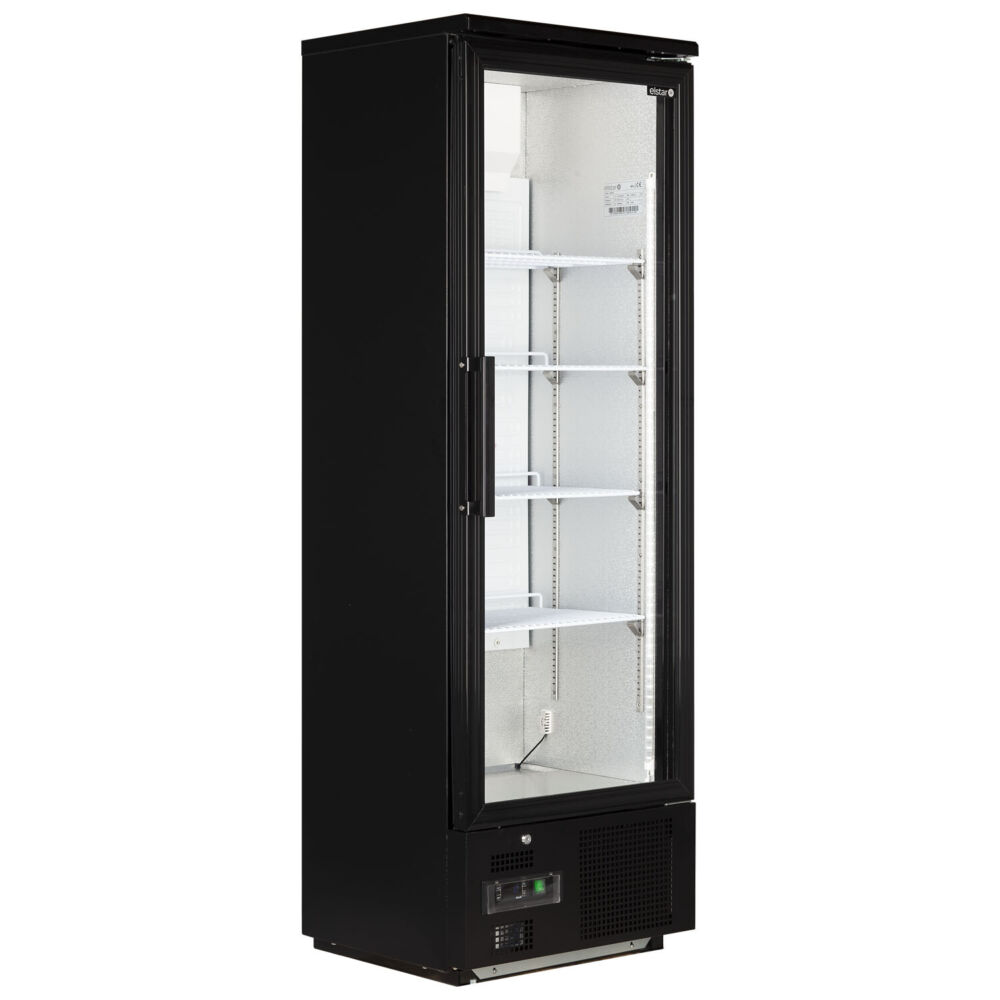
The DB range comes with one, two or three doors, hinged or sliding. All have adjustable shelves, so you can set the space for tall bottles or short mixer cans. A cooler with two or three doors is still one temperature zone. Separate zones come only with the wine range in section 5. For hinged against sliding doors and how to size a cooler, see our bottle cooler buying guide.
Two other cabinets sit behind the bar. The UR200G is an undercounter glass door fridge that holds 119 litres or 112 cans and runs at 40 dB(A). The GF200VSG is a glass froster that runs from -15 to -2°C, for frosted glasses and high-strength spirits such as vodka. Other spirits are not normally chilled.
3. What are the best drinks display fridges for the customer side?
The best drinks display fridge for the customer side is a glass door upright, because it shows the most stock for the floor it takes.
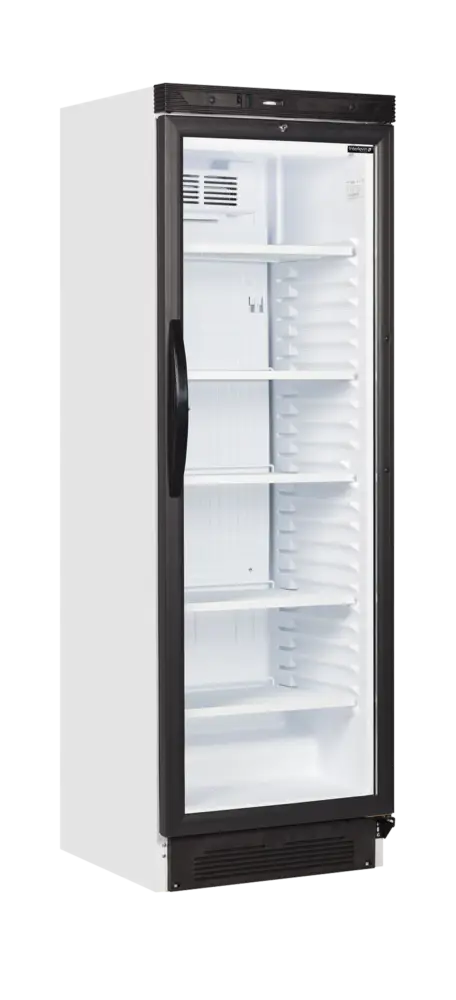
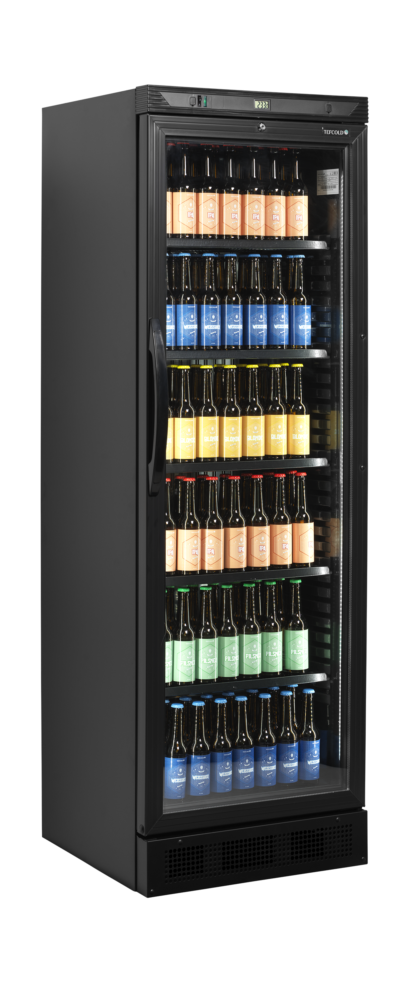
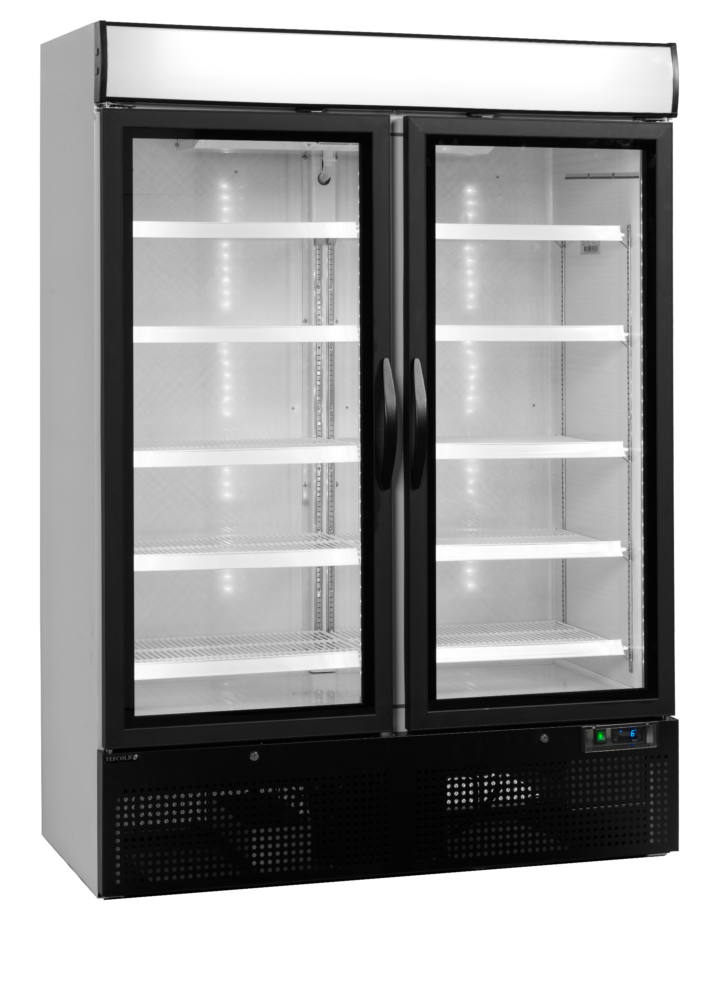
Noise matters more out front than behind the bar. The SC381 and NC5000G run at 45 dB(A). The CEV425, the LGC2500B and the frameless Atom Maxi run at 58 dB(A). In a quiet bar that gap may be heard.
4. Which bar and counter display fridges fit on top of the bar?
Counter-top chillers fit on top of the bar. These top bar fridges are small glass door cabinets that put a few lines at eye level, next to the till. Tefcold calls the BC60 the ideal cabinet to maximise impulse sales.
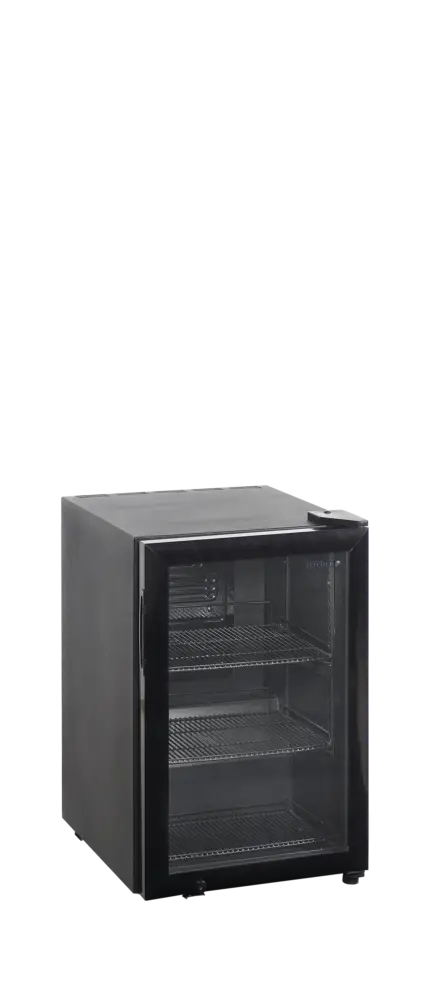
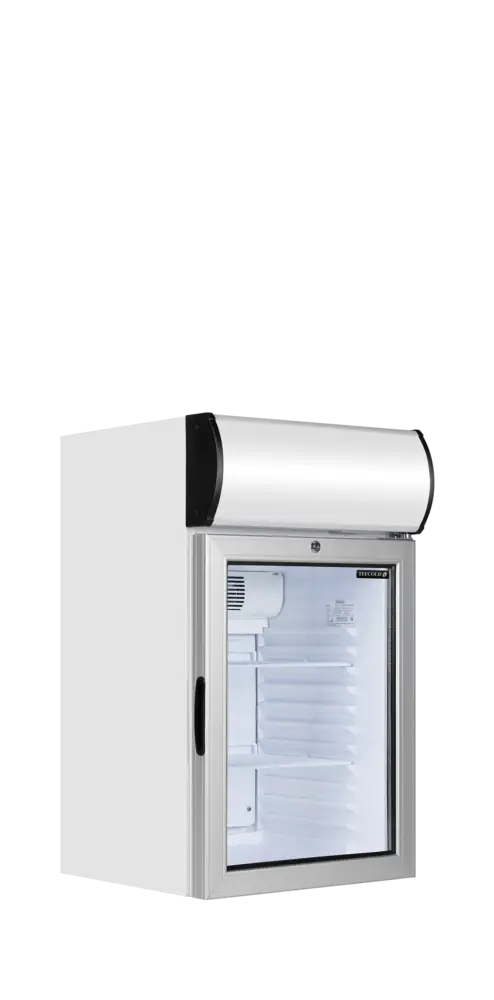
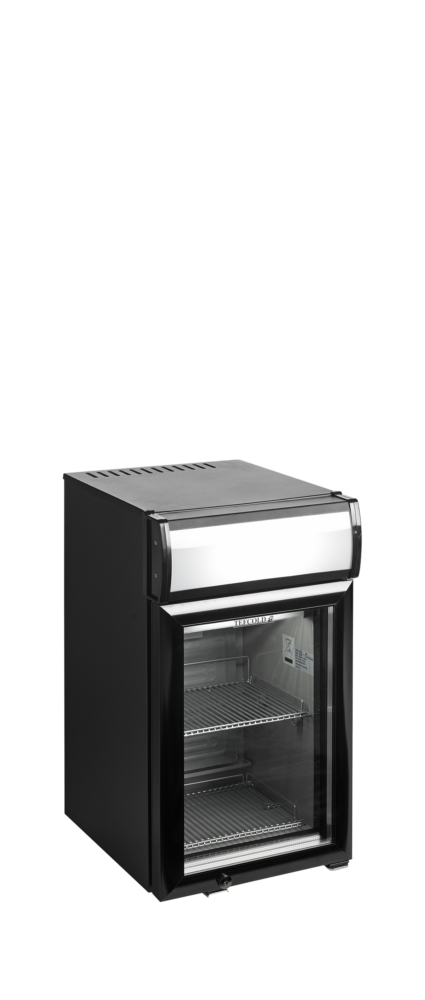
Measure the bar top before you choose: the BC60 needs 533 mm of depth. The BC60 and FS80CP are climate class 3, which section 9 explains.
5. Which fridge shows wine at the bar?
A wine cooler shows wine at the bar. It lays the bottles on shelves behind a glass door and can be set for white or red, which a bottle cooler is not built to do. Our post on bottle coolers vs wine fridges explains the difference.
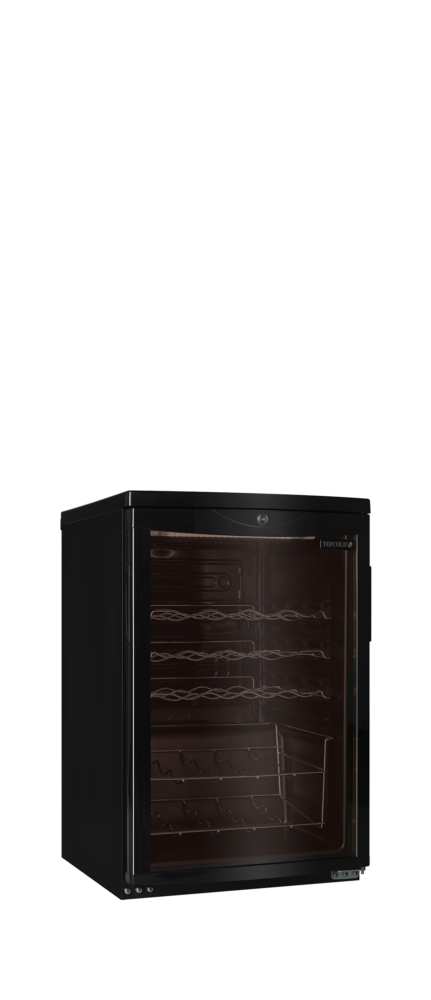
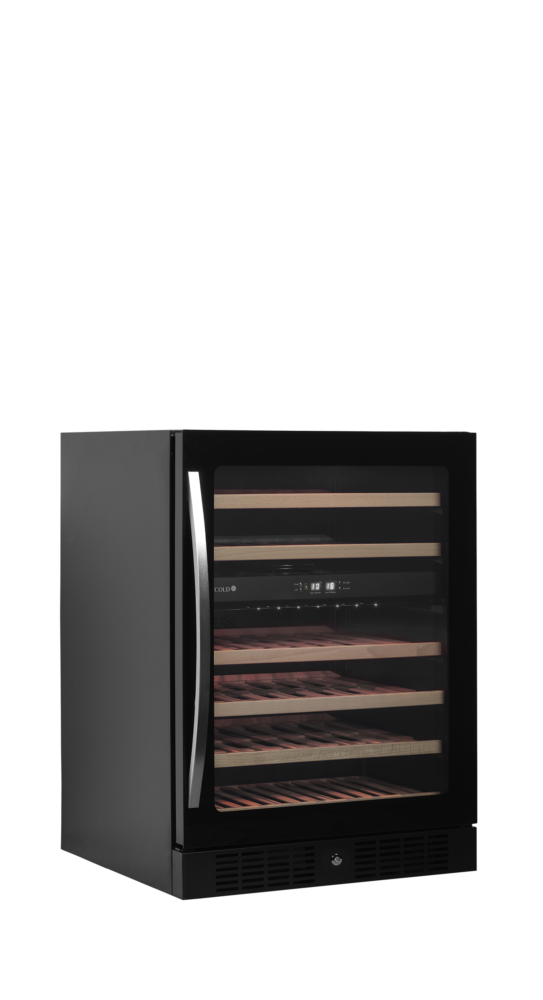
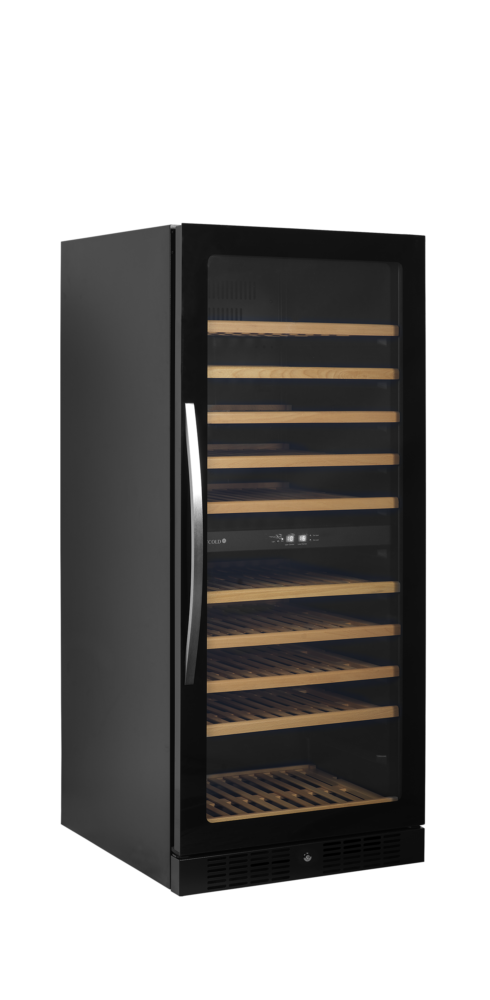
The TFW range runs at 40 dB(A), among the quietest cabinets on this page. For a tall display, the SC381W is the SC381 fitted with wine shelves for up to 78 bottles. Our wine chillers guide covers serving temperatures and the full range.
6. What makes a bar display fridge look good?
Three things decide how a bar display fridge looks: the lighting, the glass and the branding. Every cabinet on this page has LED lighting and adjustable shelves, so those two do not separate them.
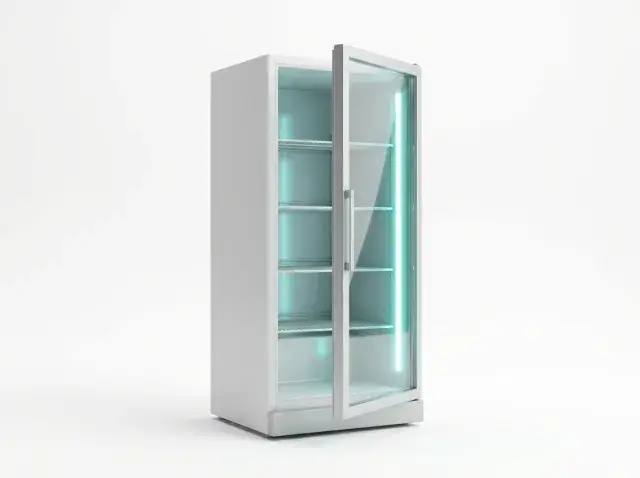
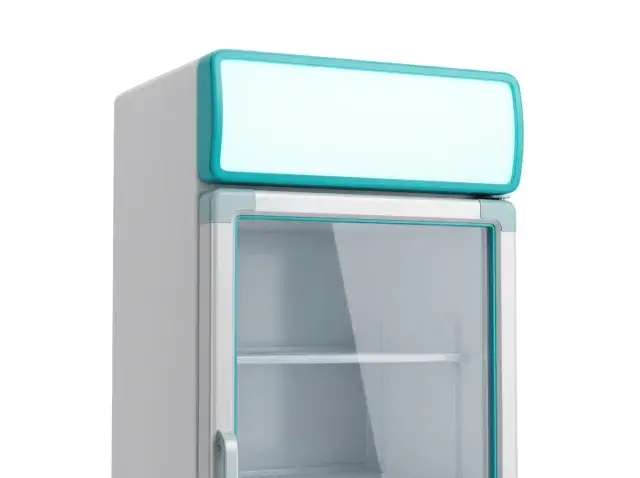
Tefcold UK runs a branding service that covers sign panels, door and end decals, custom headers, light canopies and EPOS strips. What is available varies by model, so ask us before you order.
On colours, the UR200G comes in black, white or stainless steel, and the CEV425 and Atom Maxi are black. We have not found wood-effect finishes in the Tefcold range. For a statement piece, the Serrco SCL-2222GMU+ back-bar cooler has a Skinplate finish and LED colour lighting set by remote control. Check the energy figure first: the Serrco SGD-240GE is class F and uses 2,577 kWh a year, about £696 at 27p/kWh.
7. What does a bar display fridge cost to run?
A bar display fridge costs between about £55 and £364 a year to run on the models below, at 27p/kWh. The sum is kWh a day × 365 × £0.27. The BC60 uses 0.56 kWh a day: 0.56 × 365 = 204 kWh a year, and 204 × £0.27 = about £55. Your own tariff will change the answer.
| Model | Capacity | kWh a year | Cost a year at 27p/kWh | Label |
|---|---|---|---|---|
| TEFCOLD BC60 | 58 l | 204 | about £55 | C |
| TEFCOLD FS80CP | 55 l | 402 | about £109 | D |
| TEFCOLD DB201S | 182 l | 416 | about £112 | A |
| TEFCOLD UR200G | 119 l | 584 | about £158 | B |
| Elstar EM300 | 307 l gross | 730 | about £197 | B |
| TEFCOLD SC381 | 347 l | 803 | about £217 | D |
| TEFCOLD NC5000G | 1,079 l | 1,024 | about £276 | B |
| TEFCOLD LGC2500B | 405 l | 1,349 | about £364 | B |
Figures from the Tefcold datasheets. These are all beverage coolers, so the letters sit on the same A to G scale under Regulation (EU) 2019/2018.
Size and glass area drive the bill. Buy the size your sales need, then pick the lowest kWh at that size.
8. Can milk or food go in a bar display fridge?
Milk or food can go in a bar display fridge only if the cabinet’s range stops at +8°C or lower. Schedule 4 of the Food Safety and Hygiene (England) Regulations 2013 says food likely to support the growth of pathogenic micro-organisms or the formation of toxins must be kept at 8°C or below. In Wales the same schedule of the Food Hygiene (Wales) Regulations 2006 applies. GOV.UK says to set your fridge to 5°C or below.
The cabinets here that stop at +8°C or lower are the EM300, the NC5000G and the LGC2500B (+1 to +8°C). The SC381, BC60 and DB201S reach +10°C, and the CEV425 and FS80CP reach +12°C. Keep those for drinks only.
A ceiling is the top of the range, not the setting. Set a food cabinet to 5°C or below and log the reading. In a mixed display, the strictest product sets the temperature.
9. Where should a bar display fridge go, and how do you keep it looking right?
A bar display fridge should go indoors, out of direct sun and away from heat. Five habits keep it looking right.
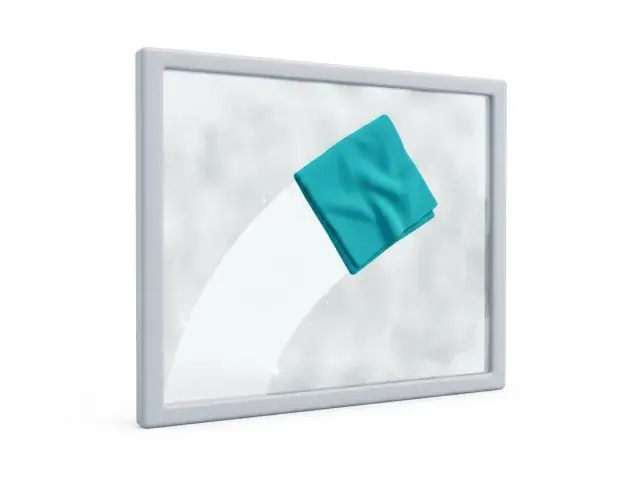
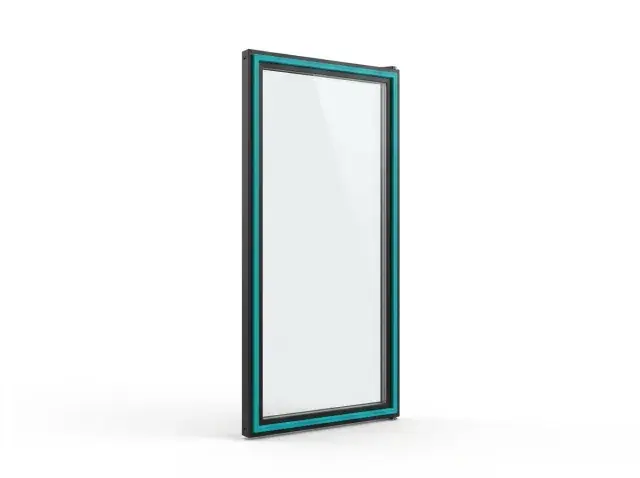

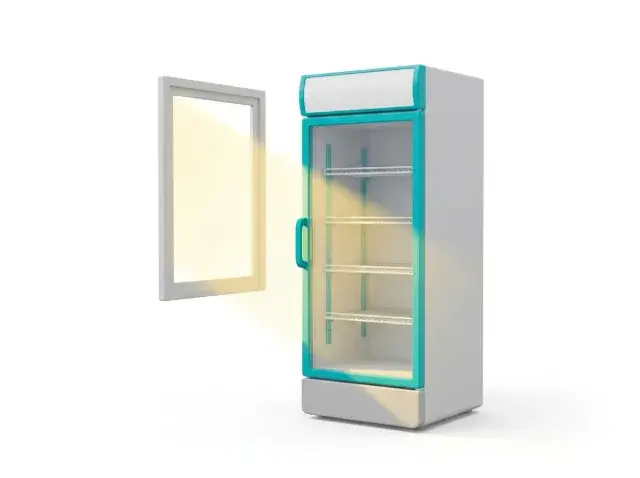
If a cabinet stops holding temperature after these checks, call a qualified refrigeration engineer.
The best fridges for bar displays depend on where they stand. Behind the bar, a back-bar bottle cooler such as the DB201S (182 litres, 416 kWh a year, about £112 at 27p/kWh) or the tall EM300 shows the stock across the counter. On the customer side, a glass door upright such as the SC381 (347 litres, 803 kWh, about £217) shows the most. On the bar top, the BC60 holds 110 cans for about £55 a year. Wine goes in a wine cooler. Do not judge running cost by the label letter: the class B LGC2500B uses 1,349 kWh against the class D SC381’s 803. Milk, sandwiches and desserts must be kept at 8°C or below, so they need a cabinet that stops at +8°C, such as the EM300 or NC5000G. Cabinets that reach +10 or +12°C are for drinks only.
Frequently Asked Questions
▼
▼
▼
▼
▼
▼