Last reviewed: November 2026 · Lisa Craven, Managing Director, FridgeSmart
Frozen food should be stored at −18°C or colder: that is the UK standard, though no general law sets a temperature for a business’s own freezer.
The legal figure of −18°C or colder is in the Quick-frozen Foodstuffs Regulations 2007, and it covers quick-frozen food placed on the market. Beyond the number, good frozen food storage is a handful of habits: check and record the temperature, put deliveries away at once, label and rotate the stock, load below the load line and keep the ice down.
- Storage temperature: −18°C or colder is the standard; business freezers usually run between −18°C and −22°C
- The law: no general UK statutory temperature for a business’s own frozen storage. The Quick-frozen Foodstuffs Regulations 2007 set −18°C or colder for quick-frozen food placed on the market, with −15°C allowed in transport and −12°C in a retail display cabinet
- What every food business must do: store food so it does not deteriorate harmfully or get contaminated, and keep HACCP-based records (retained Regulation (EC) 852/2004)
- Loading: keep stock below the freezer’s load line; Tefcold says temperature is not guaranteed above it
- Ice: never more than 15 mm thick, says Tefcold’s freezer manual
- Running cost: Tefcold’s UF200 undercounter freezer uses 1.2 kWh a day, about £118 per year at 27p/kWh
Written for restaurants, takeaways, cafés, pubs, caterers and shops that hold frozen stock and want the temperature, the rules and the daily routine in one place.
Two neighbouring guides go deeper: six things you need to know about storing frozen food covers freezing, wrapping, labelling and thawing, and what temperature a commercial freezer should run at covers set points, freezer types and power cuts.
1. Frozen food must be stored at what temperature?
Frozen food should be stored at −18°C or colder. That is the standard figure for frozen food temperature storage in the UK. Bromley council’s guidance says it is usual for freezers to operate between −18°C and −22°C.
The number is mostly about quality and shelf life. The claim that anything warmer than −18°C risks bacterial growth overstates it. The frozen food trade’s handbook, the British Frozen Food Federation’s Guide to Storage and Handling of Frozen Foods (2017), says there is “no risk of microbiological growth in any frozen product unless the temperature is allowed to become substantially warmer than -12°C for any significant period”.
Going colder than you need does not make food safer; the freezer just uses more energy than necessary. Choose the setting on purpose, because the range on a commercial freezer is wide: Tefcold gives −24 to −10°C for its UF200, and our listings give −16 to −23°C for the LHF620SS chest freezer and −14 to −24°C for the GM600SS.
2. Frozen food storage guidelines UK: what are the rules?
The UK frozen food storage guidelines are a mix of one regulation about quick-frozen products, the general food hygiene law, official advice and a trade guide. There is no general UK statutory temperature for a business’s own frozen storage. At least one council page says frozen food “must” be at −18°C, but it cites no statute for it.
| Where it comes from | What it says | What it is |
|---|---|---|
|
Quick-frozen Foodstuffs Regulations 2007, Schedule 2
|
“-18°C or colder” after thermal stabilisation and kept no warmer; not warmer than −15°C in transport; not warmer than −12°C in a retail display cabinet | Law, for quick-frozen foodstuffs placed on the market |
|
Retained Regulation (EC) 852/2004, Annex II, Chapter IX
|
Food is stored “in appropriate conditions designed to prevent harmful deterioration and protect them from contamination”. Thawing must minimise the risk of growth, with run-off liquid adequately drained | Law, for every food business |
|
Same regulation, Chapter V and Article 5
|
Equipment is cleaned and kept in good repair. Food safety procedures are based on HACCP, with records | Law, for every food business |
|
Food Standards Agency, chilling and freezing
|
Put frozen food in the freezer “as soon as it is delivered”. Freeze before the use-by date and note the date, cool cooked dishes first, portion and label everything | Official guidance for businesses |
|
British Frozen Food Federation guide (2017)
|
−18°C is the norm. For other frozen foods, a warmest temperature of −12°C is generally recognised as good practice | Trade guide, not law |
Sources: Quick-frozen Foodstuffs Regulations for England and Wales (the Welsh page notes outstanding changes, so check the current wording); Regulation (EC) 852/2004, Annex II and Article 5; GOV.UK, chilling and freezing; Bromley council for the −18°C to −22°C range.
So the only temperature written into law attaches to quick-frozen products as sold, not to the freezer in your kitchen. The trade guide itself says frozen food legislation “seeks to ensure standards of quality rather than food safety”.
In plain terms: hold −18°C or colder, check it, write it down, keep the freezer clean and in good repair, and know what you will do when the reading is wrong.
3. How do you check and record the frozen food storage temperature?
Read the freezer’s display regularly, check it against a second thermometer, and keep a written record.
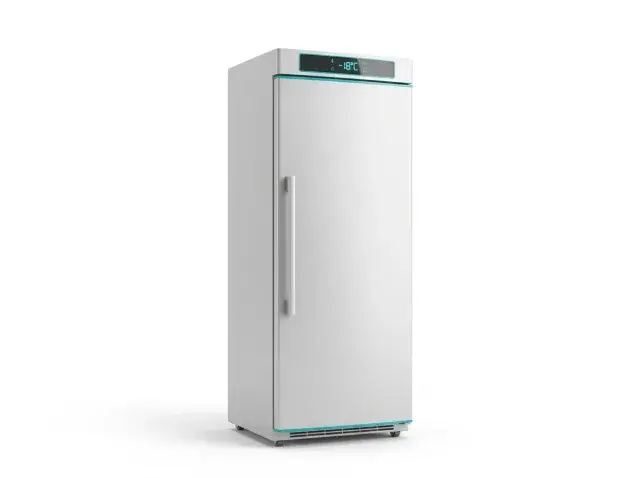
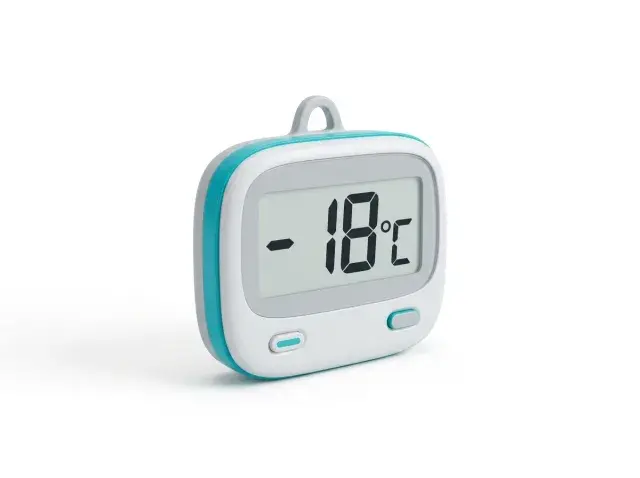
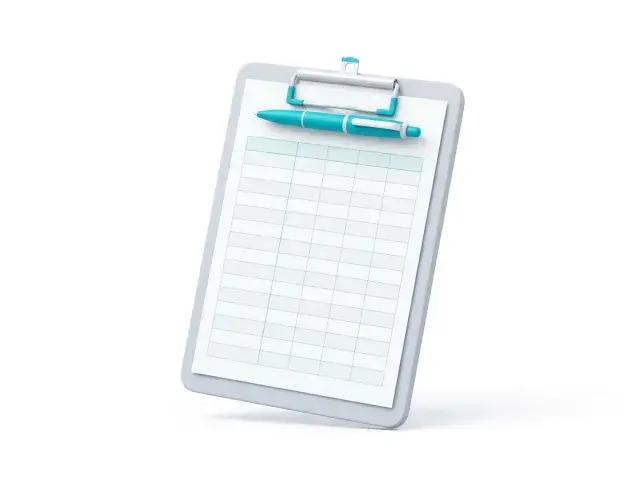
An alarm adds cover between checks, so look at what kind it is: the Elcold EL35SS listing gives a low temperature warning light, which only helps when somebody is there to see it. Some cabinets keep the record for you. The TEFCOLD RF710X1 upright freezer lists a controller with Bluetooth and HACCP compliant data export. Our guide on whether you need a thermometer covers probes and accuracy checks.
4. What should you do when a frozen delivery arrives?
Put it in the freezer straight away. The Food Standards Agency’s rule for businesses is that frozen food goes into the freezer “as soon as it is delivered”.
- 1Make room first. Clear space below the load line before the delivery is due.
- 2Know your reference points. If your procedures include a temperature check on delivery, the figures to measure against are −18°C, and the −15°C the regulations allow quick-frozen food in transport.
- 3Date it on the way in, newest to the back. A labelled, dated pack can be rotated properly, and the older stock in front of it gets picked first.
5. How should you organise frozen storage?
Organise frozen storage so that anybody on the team can find the right item, oldest first, without holding the door open.
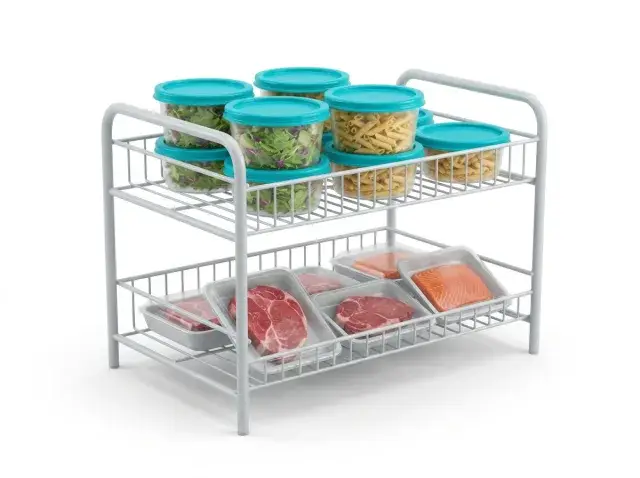
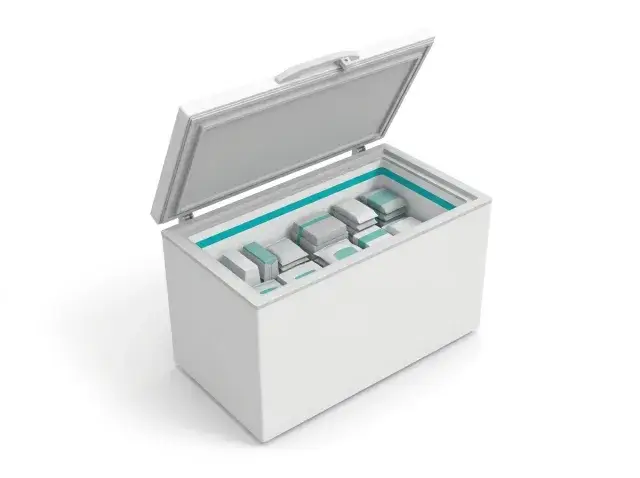
Arrange stock by food type and by how often you use it, with the items you reach for most at the front or top. The longer the door or lid stays open, the harder the freezer works.
Do not overload the freezer: air has to move around the stock to hold an even temperature. The often-quoted line that freezers are most efficient when 75% full has no source we could find, so go by the load line in your own manual.
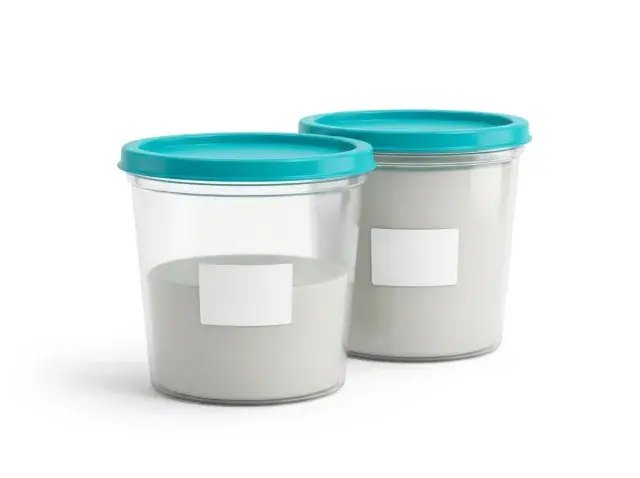
Labels drive the rotation. As a minimum a freezer label needs:
- 1Item name.
- 2Date of freezing.
- 3Expiry date.
- 4How quickly to use it after thawing.
- 5Any relevant allergens.
6. How long can frozen food be stored, and what about thawing?
Frozen food stays safe while it stays frozen, so storage times are about quality. The Food Standards Agency calls freezing a “pause button”: bacteria are not killed, but they cannot grow. The short answers are below; the detail is in our six things about storing frozen food.
| Question | Short answer | Source |
|---|---|---|
|
How long does frozen food keep?
|
For quality, meat is best eaten within 2 to 3 months, and baked goods, fruit and vegetables within 3 to 4 months | FSA advice for the home |
|
Can food be frozen on its use-by date?
|
Yes, on or before the date. Use it within 24 hours of defrosting | GOV.UK food labelling |
|
How should it be defrosted?
|
In the fridge, in a sealed container under cold running water, or on the microwave’s defrost setting | FSA advice for businesses |
|
Can defrosted food be refrozen?
|
Once it has been cooked, yes. Then reheat it once only | FSA advice for the home |
Sources: FSA, how to chill, freeze and defrost food safely; GOV.UK, chilling and freezing; GOV.UK, best before and use-by dates.
Longer storage times are quoted in many places. We found no UK authority behind them, so we do not print them.
7. Commercial frozen food storage: which freezer does the job?
For commercial frozen food storage, choose a chest freezer for bulk stock you reach into once or twice a day, and a solid door upright when several people use the freezer through the day. Watch how your staff use the freezer you have before you buy.
Four freezers from our commercial frozen storage range show the main choices. Each name links to its product page and live price.
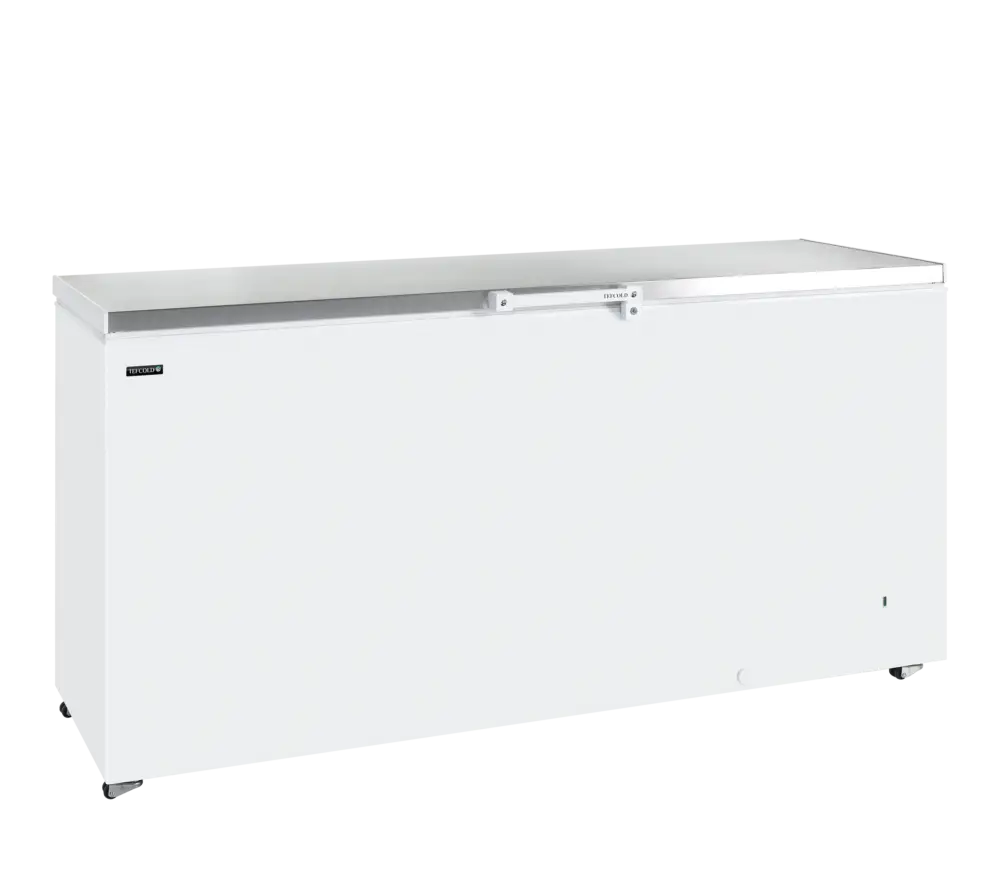
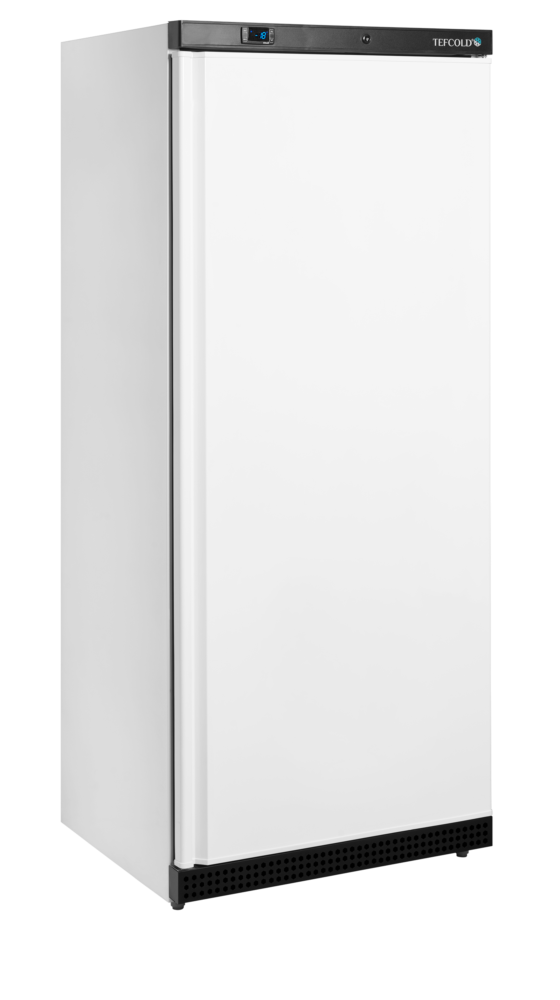
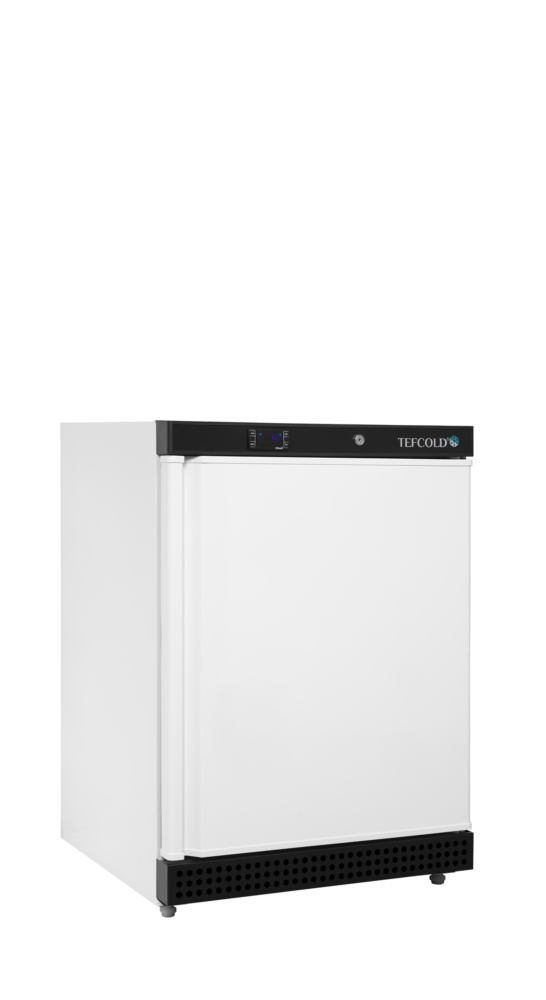
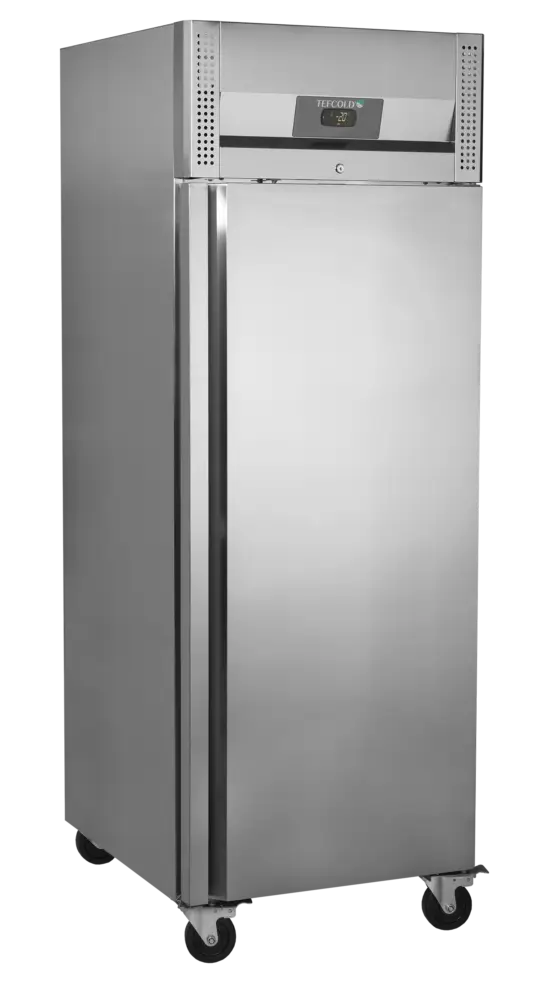
What does a storage freezer cost to run? Tefcold gives the UF200 as 1.2 kWh per 24 hours. At 27p/kWh the sum is 1.2 × 365 = 438 kWh a year, and 438 × £0.27 = about £118 per year. A bigger freezer will use more, so check the data sheet for your model.
Where it stands matters. Tefcold’s manual for its supermarket freezers asks for a room between 16°C and 32°C, 150 mm between a free-standing cabinet and the wall, and about 4 hours running empty before you load it. That manual covers display freezers, so check your own model. The UF200’s climate class 4 means 30°C and 55% relative humidity.
To freeze cooked food in bulk, a blast freezer does the work: our listing for the TEFCOLD BLCB5X1 gives +70°C to −18°C for 14 kg in 240 minutes; see what a blast freezer is. For more stock than cabinets can hold, see our freezer rooms.
8. How do you clean and defrost a storage freezer?
Wipe the surfaces down with warm soapy water, dry them thoroughly, and defrost before the ice gets thick. Ice and a faulty seal both waste energy.
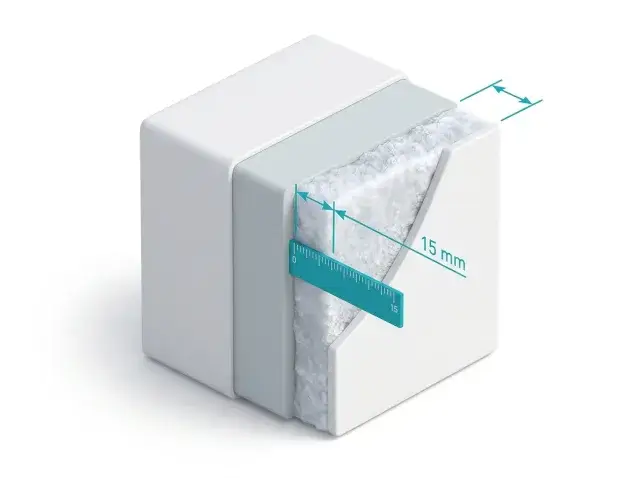
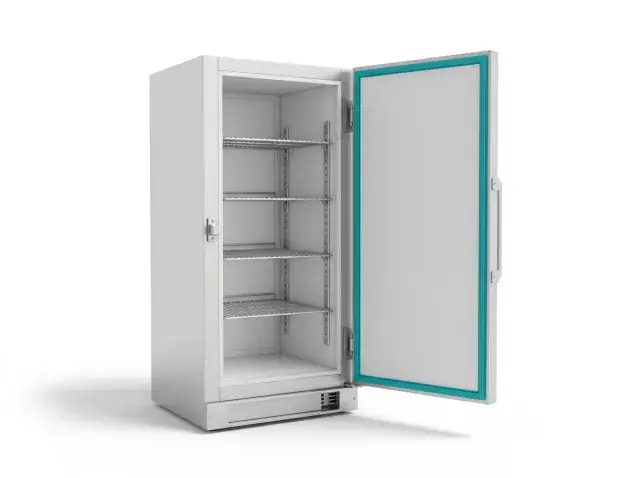
For hygiene, Tefcold’s supermarket freezer manual says to clean models with semi-automatic defrost every 3 months and automatic defrost models every 6. Those intervals belong to that range, so follow your own manual. Know which kind of defrost you have. The UF200 is manual defrost. Tefcold’s Gastro-Line uprights defrost automatically at pre-set intervals and evaporate the melt water in the compressor bay; holding the defrost key for more than 3 seconds starts a manual defrost.
9. What goes wrong with frozen storage, and what do you check?
Three problems come up most: ice building up, a temperature that will not hold steady, and new noises. Check the simple causes yourself, then call a qualified refrigeration engineer; FridgeSmart does not repair or service freezers.
| What you see | Likely cause | What to do |
|---|---|---|
|
Ice on the walls or coils
|
A defrost is due, or the vents are blocked | Defrost the freezer fully and check nothing is blocking the vents |
|
Temperature goes up and down
|
The freezer is overloaded so air cannot move, or the thermostat is at fault | Bring the stock below the load line. If it still swings, call an engineer |
|
Strange noise
|
A motor or fan may be failing | Have it inspected before it gets worse |
If the freezer stops, think about the food first. Once food is defrosting, the defrosting rules apply: bacteria can grow between 8°C and 63°C, and use-by food must be used within 24 hours.
For a display freezer on the shop floor, see how to tell if your shop freezer is properly refrigerated. The freezer temperature guide covers power cuts and a freezer that will not get down to temperature.
10. How does good frozen storage cut food waste?
Good frozen storage cuts waste because food that is frozen in time, labelled, wrapped and rotated gets used. WRAP’s key facts for July 2025 put UK food waste at 10.2 million tonnes. Hospitality and food service accounts for 11% of it, and the edible part of that is 800,000 tonnes, worth £3.21bn at 2021 prices.
Two habits do most of the work. Freeze surplus before its use-by date, portioned and labelled, and defrost only what a service needs.
Frozen food should be stored at −18°C or colder. That is the UK standard. No general law sets a temperature for a business’s own freezer: the Quick-frozen Foodstuffs Regulations 2007 apply −18°C or colder to quick-frozen food placed on the market, with −15°C allowed in transport and −12°C in a retail display cabinet. Every food business must still prevent harmful deterioration and contamination, and keep HACCP-based records. In practice: read the display regularly, check it against a second thermometer, put deliveries away at once, rotate first in, first out, keep raw below cooked, load below the load line and defrost before ice reaches 15 mm. Tefcold’s UF200 costs about £118 per year to run at 27p/kWh.
Frequently Asked Questions
▼
▼
▼
▼
▼
▼