What’s the best way to maintain temperature in a walk-in cold room?
- Fridgesmart
A walk-in cold room offers a fantastic alternative to standard storage refrigeration. But if you’ve noticed temperatures creeping up, fluctuating or taking too long to recover, you might be worried about your stock.
The good news is that maintaining a stable temperature in your cold room usually comes down to a few practical habits, alongside regular refrigeration maintenance. Here are a few practical steps for you and your team to take.
Set the right temperature for your walk-in cold room
The best way to maintain a steady cold room temperature is to start with the right set point for the products you store. It sounds obvious, but setting the controller colder than necessary won’t make the room more reliable. It can increase energy use, put extra strain on the system and even freeze sensitive stock. Once you’ve chosen the correct temperature, check that it remains consistent throughout the room, not just on the controller display. Leave a temperature probe in the cold room to identify a potentially faulty thermostat or temperature-setting panel.
Keep walk-in cold room doors closed as much as possible
Every time the door opens, warm air enters and cold air escapes. Of course, opening the door is the point of a cold room, so don’t be too strict on this. However, unnecessarily repeated door openings throughout the day make the refrigeration system work much harder. Encourage your staff to check what they need before entering so they can carry everything out in one go, stock the cold room as quickly as possible during or immediately after deliveries, and check that self-closing doors are actually closing fully.
Keep airflow moving inside your commercial cold room
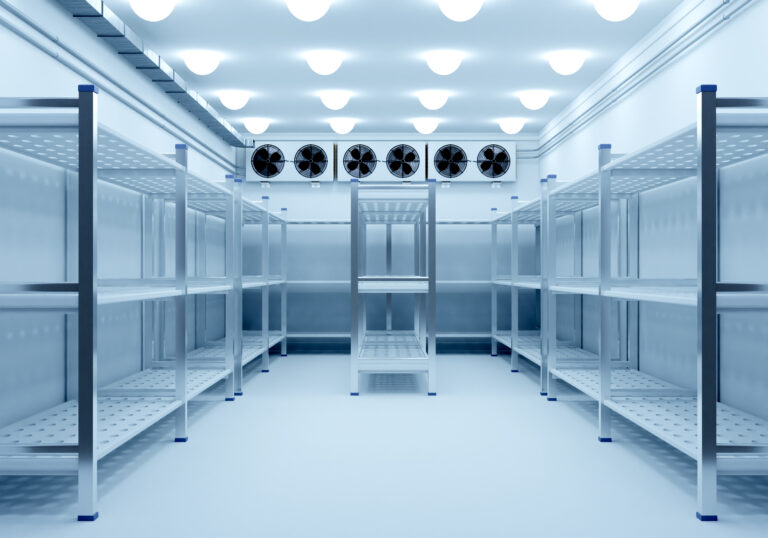
A cold room can only maintain an even temperature when cold air can move freely around the space. Stock piled too tightly against walls, shelves, evaporators or air returns can create warmer areas and make the refrigeration system less efficient. So, leave clear gaps around stored goods where possible, don’t block fan units, and avoid packing the room so tightly that staff can’t move through it without shifting stock around. Once again, though, a cold room is designed to hold significant quantities, so there’s no need to lower your stock levels unless the space is very overcrowded.
Avoid loading warm stock into a walk-in cold room
A cold room isn’t a blast chiller. It’s designed to hold chilled stock at temperature, rather than quickly lowering the temperature of warm products. As such, warm deliveries, freshly prepared food or recently cooked ingredients may raise the temperature of the room and put unnecessary pressure on the system. Whenever possible, cool your products appropriately before storage. For freshly cooked ingredients or dishes, we recommend investing in a blast chiller to improve efficiency and food safety.
Check cold room door seals, insulation, and panel condition
Small gaps around a cold room door can let in more warm, humid air than you might expect. Check the door seals regularly for splits, flattening, looseness or dirt that prevents them from closing. Check that a piece of paper or £5 note stays where it is if you close it between the seals. It’s also worth looking for damaged wall panels, loose joints, condensation, frost or water around the entrance. Any of these problems may point to insulation or sealing issues that are making your cold room work harder than it should. You may need to replace the seals, insulation or panels.
Maintain the evaporator and condenser in your cold room
If you notice unexplained temperature fluctuation or poor recovery, the refrigeration system itself might be struggling. Ice around the evaporator, dirty condenser coils, blocked drains, poor airflow or a failed defrost cycle can all reduce how well your cold room holds temperature. If the system seems to run constantly, makes unusual noises or keeps icing up, it’s time to arrange professional refrigeration maintenance rather than waiting for a breakdown. This is the cheapest option in the long run, as a breakdown may lead to significant stock spoilage.
Use cold room temperature monitoring, records, and alarms
A quick manual temperature check is useful, but it won’t show what happens overnight, during busy periods or when nobody is on site. Temperature monitoring involves real-time thermometer readings to give you a clearer picture of how your cold room is performing over time. It can also help you identify gradual issues before they affect your stock. And if you’re storing valuable or sensitive products, alarms and remote monitoring, provide a little extra peace of mind.
Train staff in everyday walk-in cold room best practice
Your cold room is only as reliable as the way it’s used each day. Your staff should know not to leave doors open, block evaporators, overload shelves or ignore condensation, frost or alarm warnings. Keeping stock organised also helps, as people can find what they need quickly without standing in the doorway searching. A few simple routines passed along in a formal or informal training environment can reduce energy waste, protect stock and prevent avoidable refrigeration call-outs.
Know when to call a commercial refrigeration engineer
If you’re still unsure why your cold room can’t reach temperature or keeps fluctuating without an obvious reason, call a commercial refrigeration engineer. Unexplained ice build-up, water leaks, constant running or regular alarm triggers may also require expert assistance. Acting early often prevents stock losses and more expensive repairs later.
Keep your walk-in cold room reliable with planned servicing
Planned servicing is one of the best ways to maintain your cold room. During a service visit, a refrigeration engineer can identify issues such as dirty condensers, poor airflow, ice build-up, worn door seals, blocked drains or other components beginning to fail. Getting these fixed will help your cold room hold a stable temperature throughout daily operation.
Need a new, larger, or upgraded walk-in cold room?
If your existing cold room is significantly damaged, no longer offers enough capacity, or is becoming increasingly difficult to maintain, it may be time to consider a replacement or upgrade. Here at Fridgesmart, we can help you plan a new cold room that better suits your stock levels, available space and day-to-day operations. We can also advise you on sensible maintenance and service schedules for your current cold room.
Contact our team on 01792 677169 or by emailing hello@fridgesmart.co.uk for expert advice on what to do next. Our focus is your success, so we’ll never sell you anything you don’t need. We look forward to hearing from you.