What to look for in an upright fridge for a small kitchen
- Fridgesmart
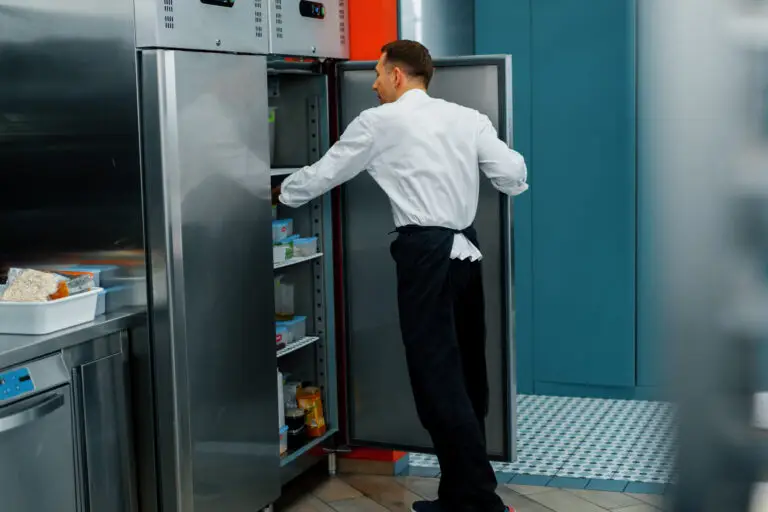
Kitchens are high-pressure environments, as you know all too well.
As soon as there’s any bottleneck, anywhere from the fridge and prep stations to the chefs and waiting, the tension can mount quickly. And when you’re working in a small commercial kitchen, that all gets amplified exponentially. You have even less room for mistakes.
There’s one kind of fridge you’ll find in pretty much any commercial environment, and that’s the trusty old upright. Commercial upright fridges can make or break your small kitchen’s workflow and operations, which means it’s so important to choose the right one.
In this blog, our team at Fridgesmart has put together an explanation of what to look for in a commercial upright fridge for a small kitchen, and how to find the best one for your business.
How does size shape workflow in tight kitchens?
‘I need to get something out of the fridge’.
Simple. Well, at least, it should be simple.
Unfortunately, the wrong fridge, especially when combined with poor organisation, stock-rotation and placement, can make this straightforward task far more complex.
A good commercial upright fridge in your small kitchen can be the difference between a few efficient seconds and a hectic interruption lasting minutes, impacting the rhythm of your service.
When it comes to the size of your fridge, you need to know two things: the space you have available, and the storage capacity you require.
- Available space – measure the space in your small kitchen where you intend to place your fridge. Talk to your staff so you can use this opportunity to rearrange, if needed. Make sure the fridge’s door won’t impede an aisle when it’s open, and that there’s ample room around the unit for ventilation.
- Required storage capacity – know how much space you need inside the fridge, and how many ingredients need storing. There’s no sense in getting a fridge that’s too big (a waste of energy) or one that’s too small (because that’s no use to you at all).
Use these two data points to help narrow down your options in online upright fridge catalogues, such as ours here at Fridgesmart.
What features make for a good upright fridge in a small kitchen?
Of course, the primary function of your solid door upright fridge is to keep your produce cold, whether that’s ingredients, sauces, pre-prepared meals or drinks. Fridges use a heat exchange system similar to an air conditioner to remove heat from inside the appliance and send it into your kitchen environment. A thermostat tells the compressor when to turn on and off, and fans keep the air circulating to avoid humid hotpots.
Now, modern upright fridges are much more efficient than older models. You must also make sure that your model is specifically designed for commercial settings. That’s because residential refrigerators aren’t designed for the frequency of door openings that your small kitchen requires.
Look for models that can quickly recover from hot-air intrusion. That means powerful compressors and high-spec insulation qualities. This is obviously more relevant if you run a kitchen where your staff need to access the fridge more often.
There are so many more things to consider. For example, a small kitchen like yours likely depends on keeping costs as low as possible. That means looking for an energy-efficient model and, where relevant, perhaps a lower upfront cost (although it’s better to pay more initially in exchange for lower running costs).
You might also consider noise, as loud appliances can be quite a nuisance in small kitchens, especially if your kitchen directly faces your customers.
How to use an upright fridge in your small kitchen
By now, you likely know where your new upright fridge is going to go, and may even have decided which model you’re going to choose. That’s fantastic. Now there are a few principles to keep in mind to maximise its performance and effectiveness:
- Implement a strict FIFO system. The best upright fridge in the world doesn’t matter one bit if your old stock is pushed to the back and left to waste. First-in, first-out is simple to understand and easy for your staff to consistently follow.
- Organise shelves to match your prep flow. Place the items you reach for most during service at mid-height and reserve the upper and lower shelves for bulk stock or ingredients you don’t use as often. However, don’t compromise the general principles of cold storage (raw meat at the bottom, fresh veg and pre-prepared foods at the top).
- Protect the internal and external airflow. Keep containers away from the rear wall and vents so the fridge maintains even temperatures across all shelves during intense prep periods. Make sure the space around the unit’s exterior isn’t blocked either.
- Limit unnecessary door openings. Encourage your staff to gather ingredients in small batches rather than making repeated trips to grab single items.
- Restock between service peaks. Fill the shelves during quieter gaps so the fridge stays organised.
- Maintain strict cleanliness routines. Wipe spills as soon as they occur, clean handles and gaskets each day, and rotate stock at close.
- Check temperatures at key points in the shift. Log the readings at opening and closing, and review them if the door stays open for long periods. Some fridges do this automatically for you.
Your small kitchen needs a reliable upright fridge. That means door gaskets that seal well, smooth interior liners, easy-access components, adjustable wire shelving and a reliable servicing partner.
Here at Fridgesmart, we help businesses with small kitchens like yours find the best upright fridges for their space. We’ve devoted ourselves to helping you succeed, which is why we’ll never sell you something you don’t need. Call us on 01792 677169 today for a commitment-free chat about your business goals and to discover which upright fridge is best for you.