
Last reviewed: November 2026 · Lisa Craven, Managing Director, FridgeSmart
Size a serveover counter by the run of floor you have and the range you display, then check depth, height and the door it must pass through.
The serve-over counters we list run from 953 mm to 3,798 mm long, 826 to 1,120 mm deep and 1,190 to 1,271 mm high overall. As a rule of thumb, which is our judgement and not a standard, about 1.0 to 1.3 m suits one server and 1.9 m or more suits two.
- Length: 953 mm (BRABANT 100) to 3,798 mm (SOCA37590B)
- Depth and height: 826 to 1,120 mm deep and 1,190 to 1,271 mm high overall, not 900 mm
- Display area: 0.6 m² on the TAVIRA II 100 up to 3.31 m² on the SOCA37590B
- Pans: a GN 1/1 pan is 530 x 325 mm; the SPID100 takes 2, the SPID150 takes 4 and the SPID250 takes 6
- Getting it in: the SOCA18790B is packed at 2,100 x 1,250 x 1,400 mm and weighs 250 kg net
- Running cost: £293 to £1,419 per year across the models in this guide, at 27p/kWh
For delis, butchers, cafés, bakeries and sandwich shops measuring up for a chilled serve-over counter.
This guide is about size only. To choose between the types, read our chilled serve-over counter guide, and for the sales case see five reasons to invest in a serveover counter. Every dimension here is from the Tefcold datasheet for that model.
1. How do you measure the space for a serveover counter?
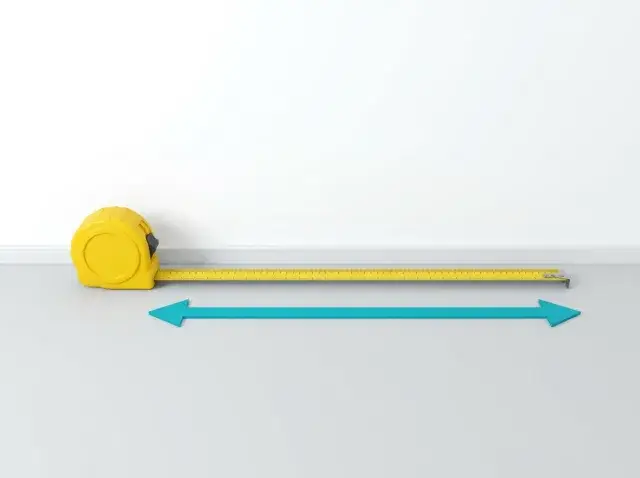
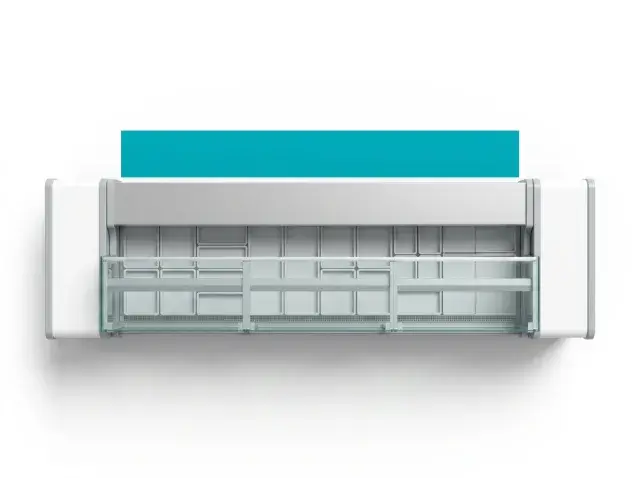
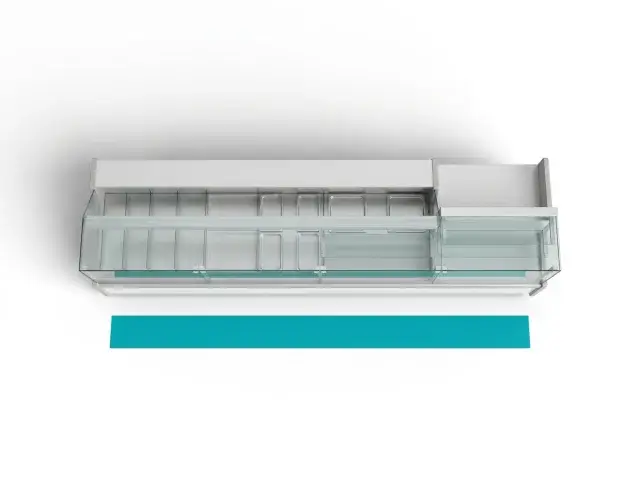
Measure four things, not one: the run of floor, the space behind for the team, the space in front for the queue, and the reach you need to clean it. Get the tape measure out before you set your heart on a model.
2. What lengths do serveover counters come in?
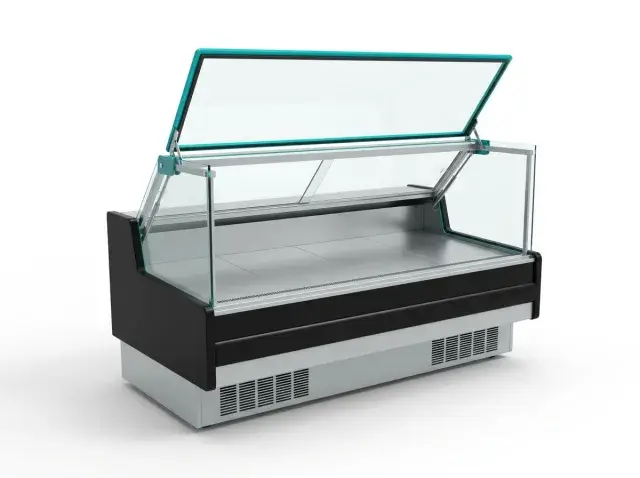
The serveover counters we list run from 953 mm to 3,798 mm long. The table gives the external size of eleven models from four Tefcold families, shortest first.
| Model | Length | Depth | Height | Price (ex. VAT) |
|---|---|---|---|---|
| 953 mm | 973 mm | 1,235 mm | £1,828 | |
| 980 mm | 826 mm | 1,271 mm | £1,366 | |
| 1,025 mm | 960 mm | 1,235 mm | £2,518 | |
| 1,280 mm | 826 mm | 1,271 mm | £1,564 | |
| 1,298 mm | 1,120 mm | 1,190 mm | £4,203 | |
| 1,505 mm | 960 mm | 1,235 mm | £3,252 | |
| 1,923 mm | 1,120 mm | 1,190 mm | £4,749 | |
| 1,923 mm | 1,120 mm | 1,190 mm | £3,956 | |
| 2,465 mm | 960 mm | 1,235 mm | £4,459 | |
| 2,548 mm | 1,120 mm | 1,190 mm | £5,857 | |
| 3,798 mm | 1,120 mm | 1,190 mm | £7,373 |
The families differ in more than length. TAVIRA II and BRABANT counters use static cooling and run at +2 to +8°C. SPID counters are ventilated, run at -1 to +5°C and are built around gastronorm pans. SOCA and SOCB counters are ventilated deep-deck counters that run at 0 to +4°C.
3. What is the smallest serve-over counter?
The smallest serve-over counter we list is the TEFCOLD BRABANT 100, at 953 mm long. If you are looking at tiny counters for a small shop, three chilled models come in at about a metre.
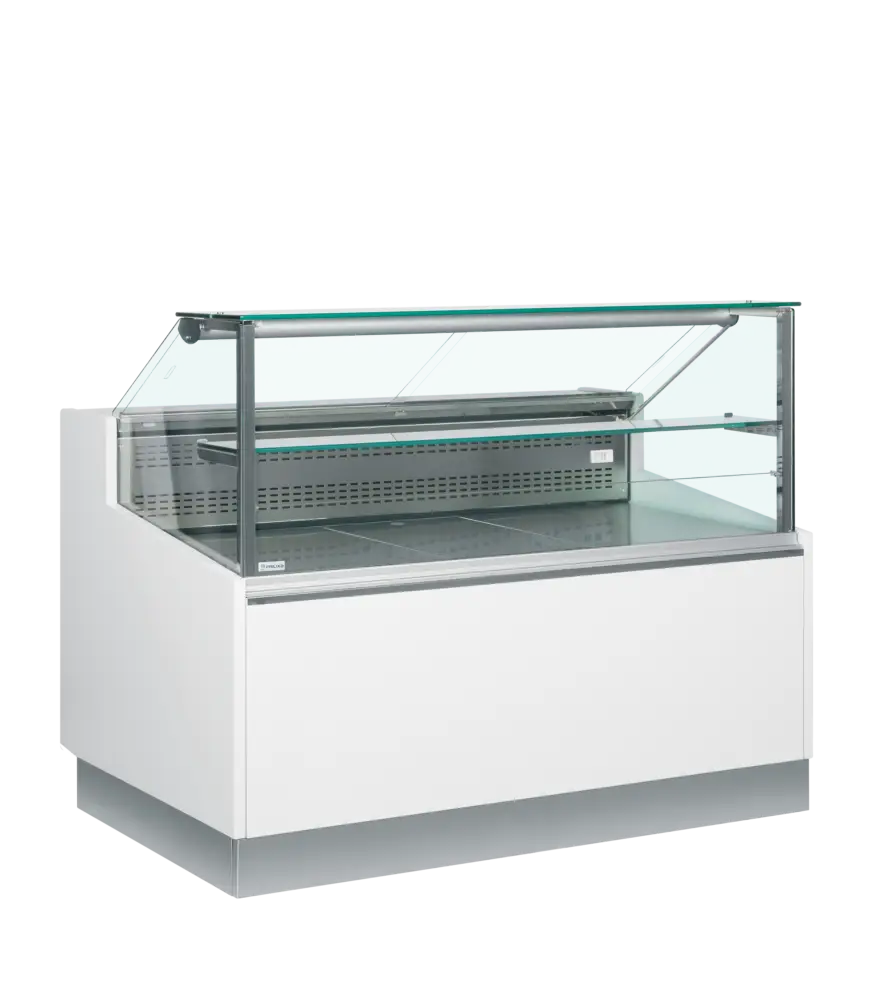
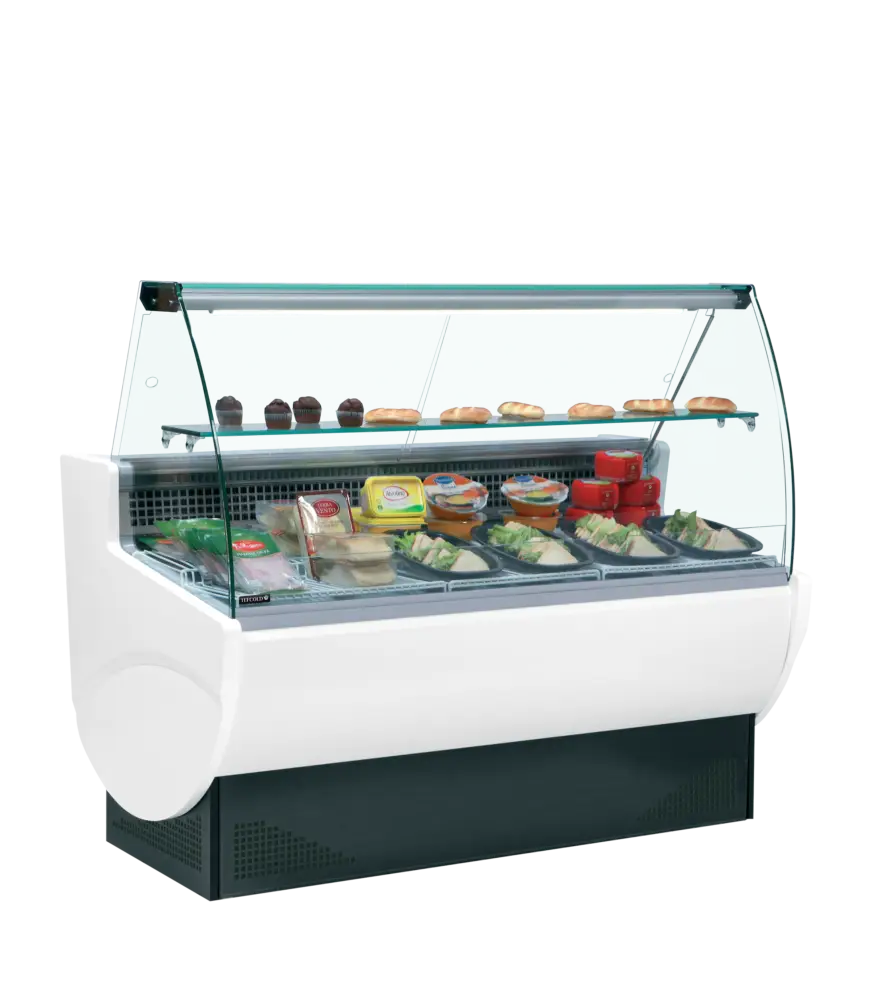
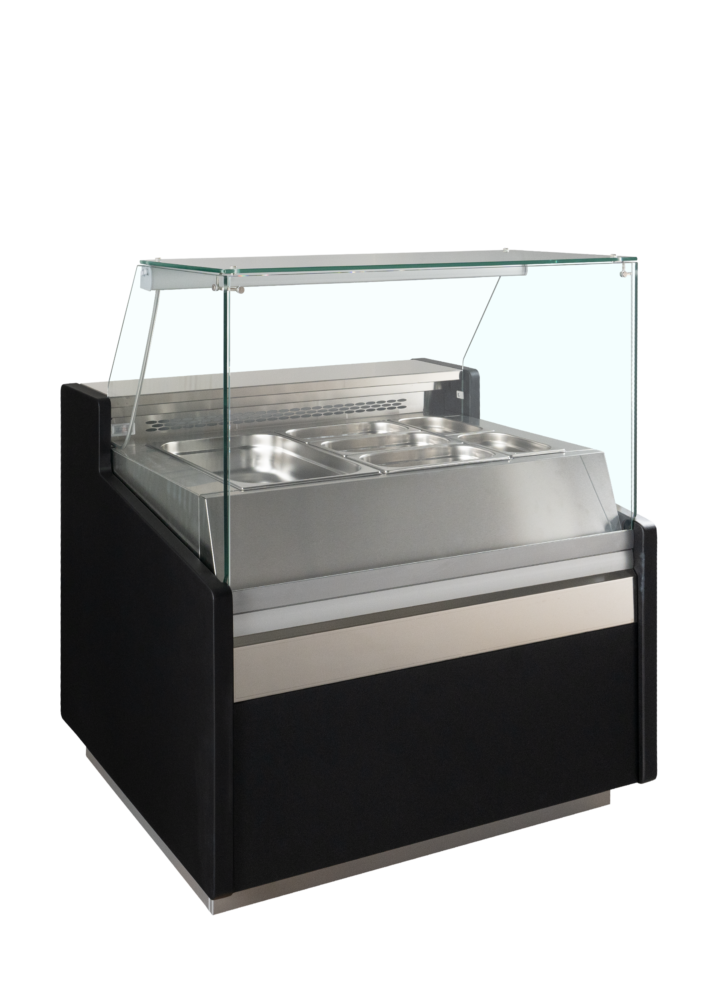
The biggest mistake is going too small to save money. Going too big hurts as well: a massive counter in a tiny shop is like wearing your dad’s suit to a job interview.
4. How deep and how high is a serve-over counter?
A glass-topped serve-over counter in our range is 826 to 1,120 mm deep and 1,190 to 1,271 mm high overall. Counters are often described as about 900 mm high and 700 to 900 mm deep, and that is wrong for these.
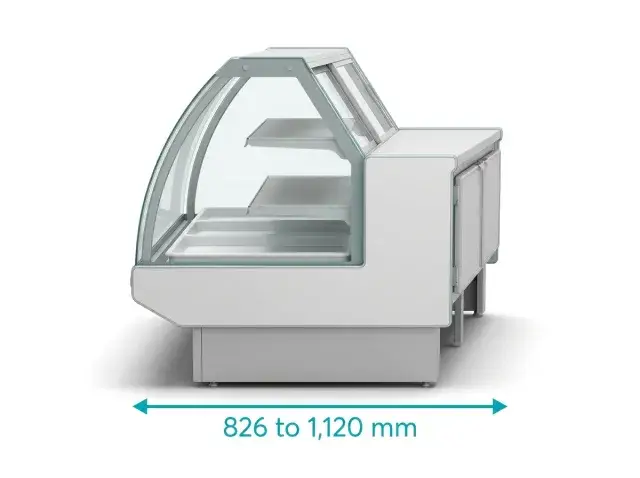
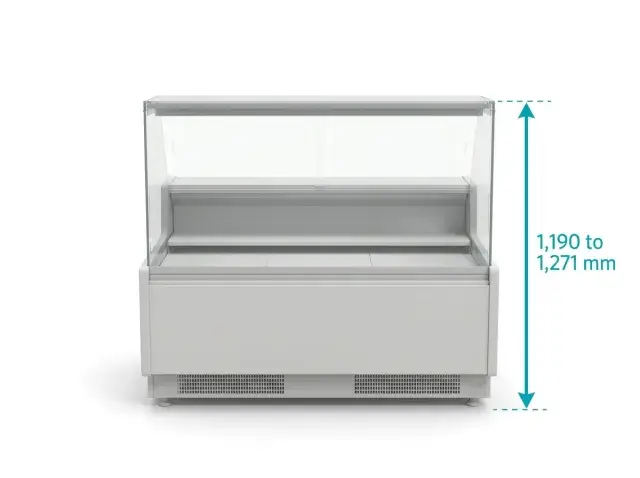
External depth is not the same as the deck you display on. The SOCA has a 900 mm deep stainless steel deck inside a 1,120 mm body, and the SOCB has an 825 mm deck inside the same body. The 900 mm height figure only fits unglazed bases such as the Chopin Mesa 700 till counter.
5. How much display area and stock does each length hold?
The datasheets give display area in square metres for every model, and a pan count for the SPID family only. Start from what you sell: list every line you want behind the glass at once, then match it to the area or the pans.
| Model | Display area | Energy per year | Electricity per year at 27p/kWh |
|---|---|---|---|
|
BRABANT 100
|
0.77 m² | 1,084 kWh | £293 |
|
TAVIRA II 100
|
0.6 m² | 1,494 kWh | £403 |
|
TAVIRA II 130
|
0.80 m² | 1,680 kWh | £454 |
|
SPID100
|
0.76 m² | 2,081 kWh | £562 |
|
SPID150
|
1.14 m² | 3,212 kWh | £867 |
|
SPID250
|
1.90 m² | 5,001 kWh | £1,350 |
|
SOCA12590B
|
1.27 m² | 2,190 kWh | £591 |
|
SOCA18790B
|
1.77 m² | 2,738 kWh | £739 |
|
SOCB18782B
|
1.77 m² | 2,573 kWh | £695 |
|
SOCA25090B
|
2.29 m² | 3,650 kWh | £986 |
|
SOCA37590B
|
3.31 m² | 5,256 kWh | £1,419 |
SPID counters are sized in gastronorm pans. A GN 1/1 pan is 530 x 325 mm, and two 1/2 pans, three 1/3 pans or six 1/6 pans fill the space of one 1/1. The SPID100 takes two GN 1/1 pans, the SPID150 four and the SPID250 six. The SPID130 takes three pans and the SPID200 takes five. Pans are not supplied with the counter.
Compare display area within a family, not across families. By our arithmetic, SPID counters give 0.74 to 0.77 m² for each metre of length, and SOCA and SOCB counters give 0.98 m² a metre at 1.3 m, falling to 0.87 at 3.8 m.
The datasheets give no weight of stock or number of portions for any length, so we will not guess one. Do not overfill a short counter to make up: Tefcold says overloading blocks the airflow and can add up to 30% to energy use.
6. Which serve over counter suits a butcher?
For a butchers serve over counter, look at the TEFCOLD SOCA family first: its listing says the range is “perfect for butchers and delis”.
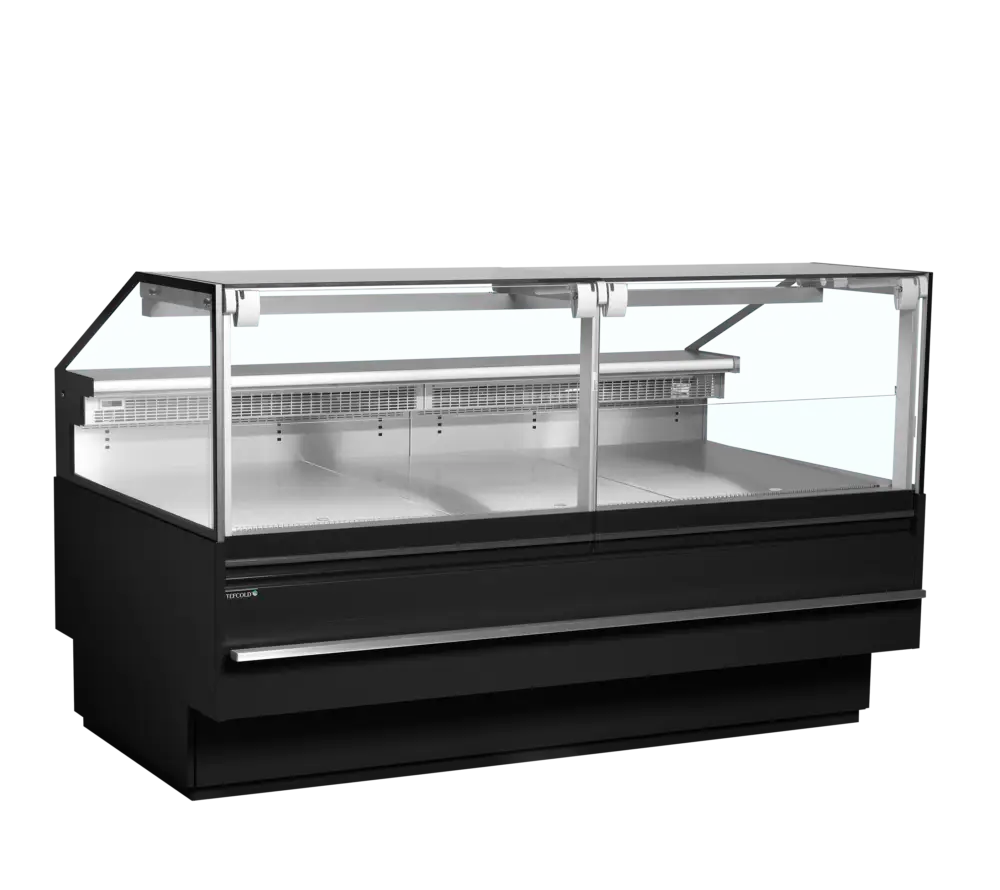
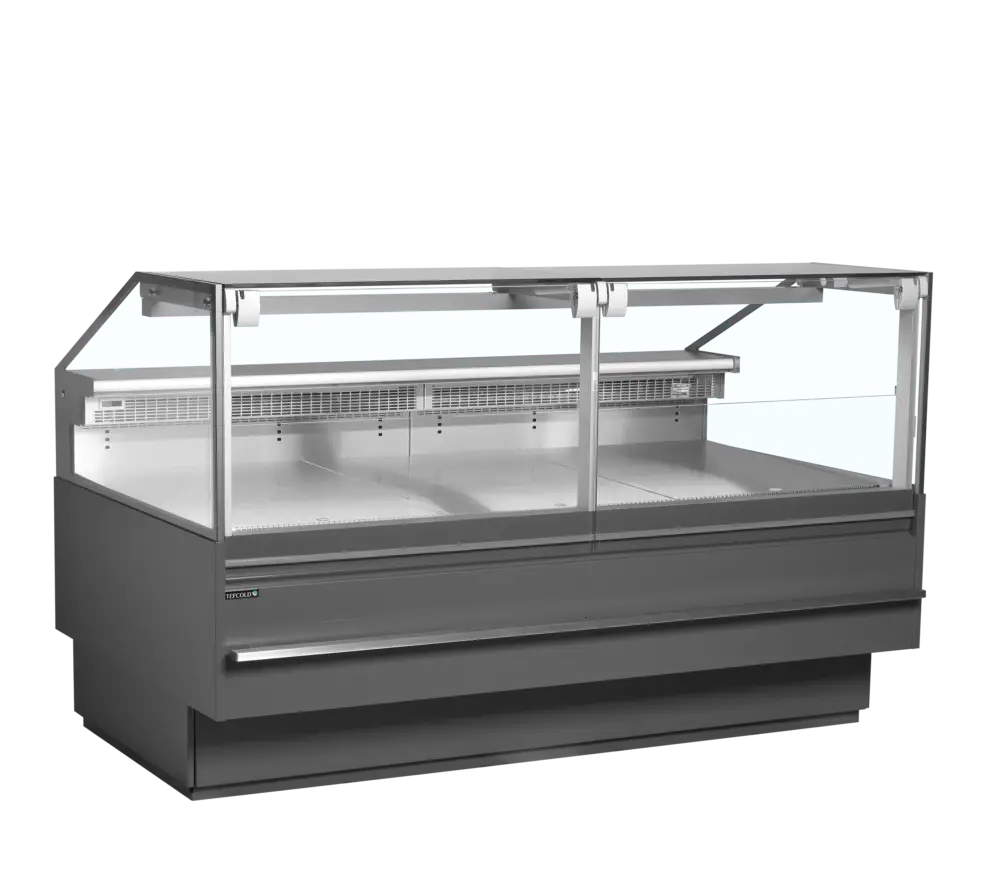
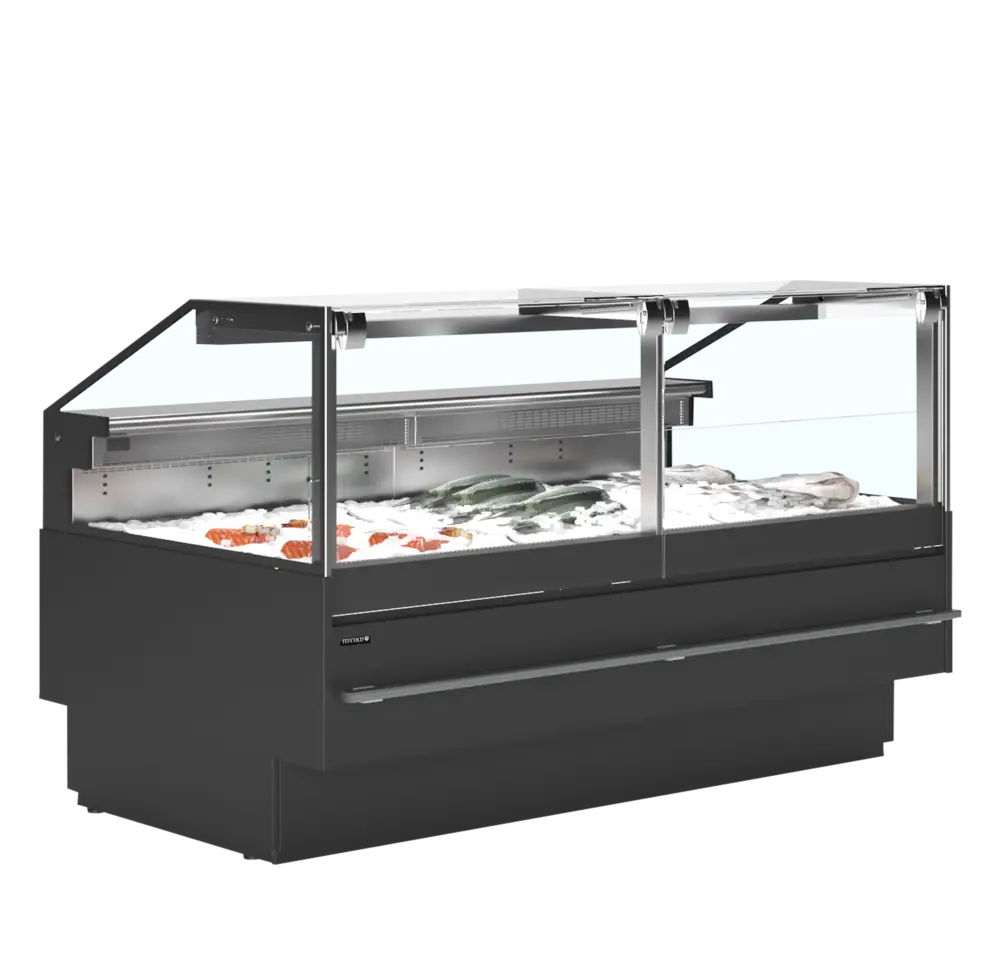
A butcher needs deck, because you cannot stack chickens on top of each other the way you can stack sandwiches. The SOCA comes in four lengths from 1,298 mm to 3,798 mm, and the understorage takes E2 boxes.
Chilled food must be kept at 8°C or below by law in England, Wales and Northern Ireland, and GOV.UK says to set fridges to 5°C or below. The SOCA’s 0 to +4°C range sits inside that. The TAVIRA II and BRABANT run at +2 to +8°C.
7. Do cakes and hot food need a different counter?
Yes: patisserie and hot food each have their own cabinet. If you sell both hot and cold food, plan two units and add their lengths together.
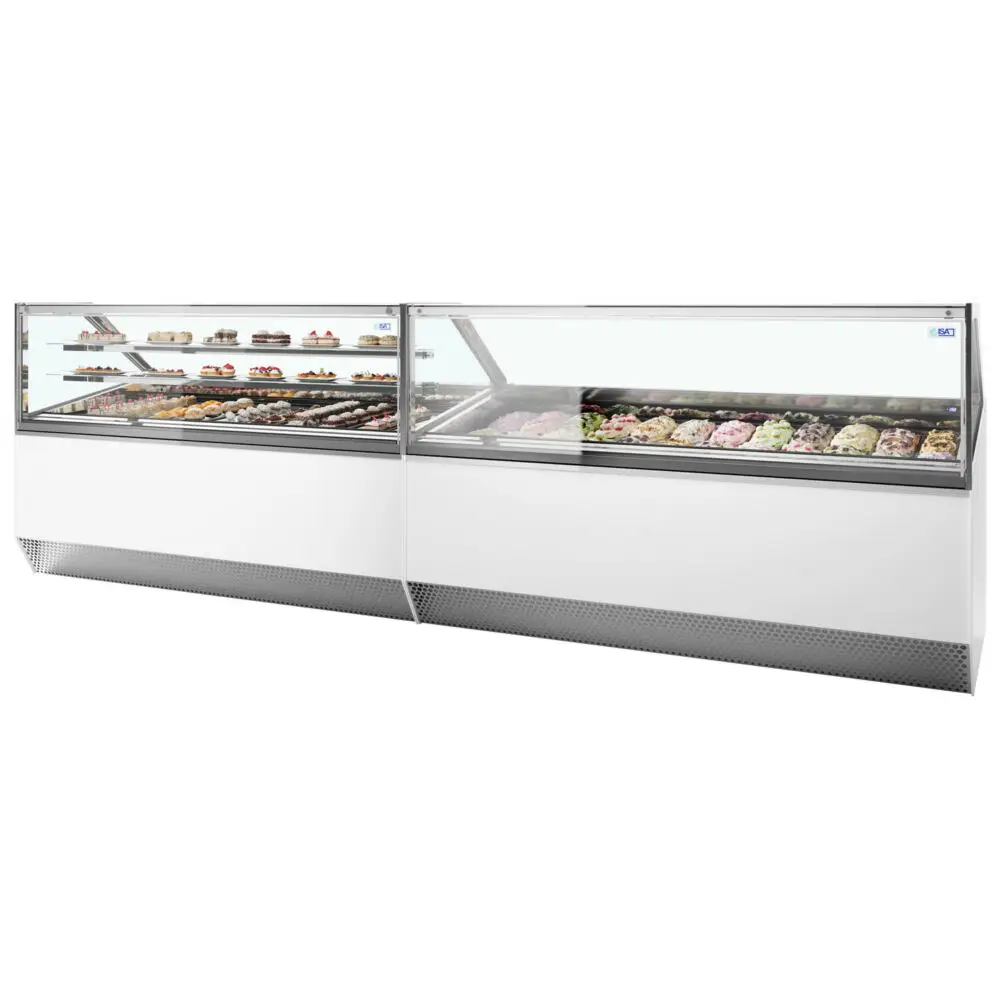
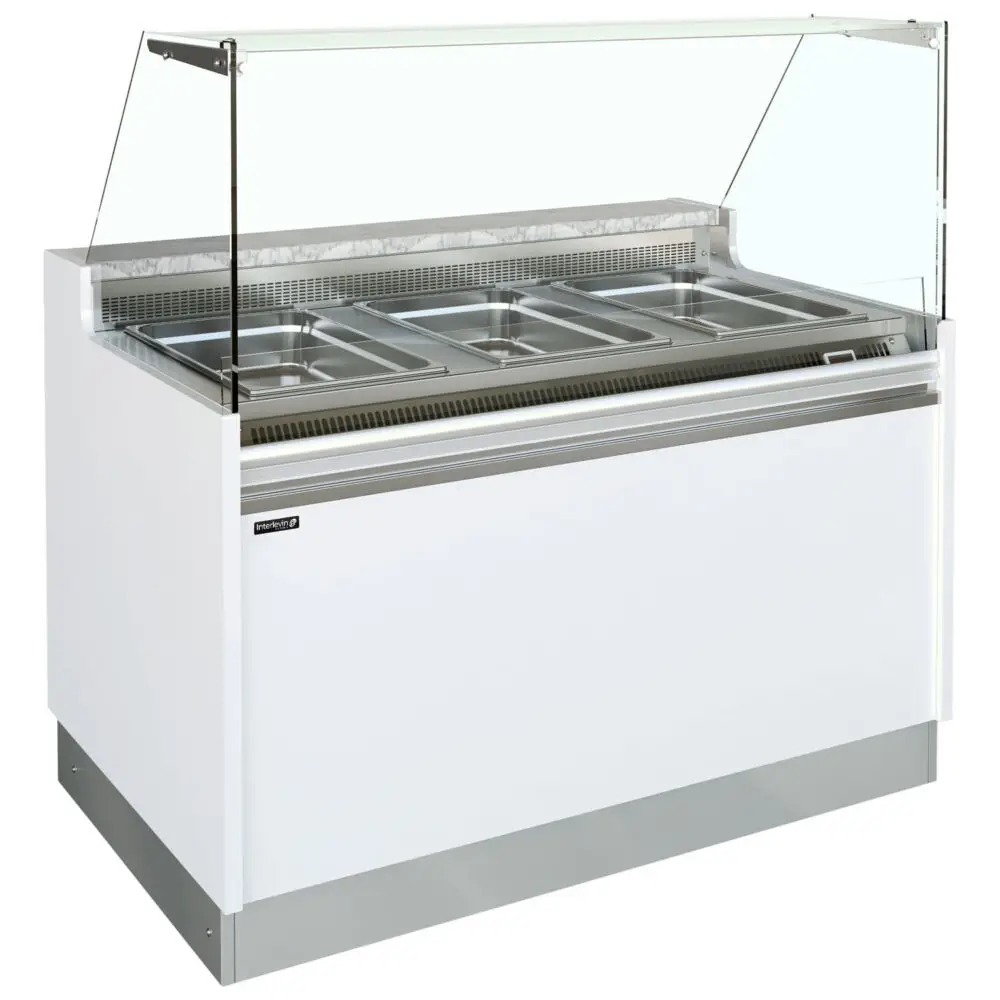
Hot holding has its own rules, covered in our guide to heated serveover counters.
8. How much room do you need behind the counter?
No regulation sets a distance behind a serve-over counter. The Workplace (Health, Safety and Welfare) Regulations 1992, regulation 10, asks for “sufficient” floor area and unoccupied space, and regulation 17 asks for traffic routes “suitable” for the people using them. The 1.5 to 2 m you see quoted online is a forum rule of thumb, not a requirement.
Cleaning is the other reason to leave room. Retained Regulation (EC) 852/2004, Annex II, Chapter V expects equipment to be cleaned at a frequency “sufficient to avoid any risk of contamination”. SOCA glass lifts up, and SOCB, SPID and BRABANT glass opens or hinges forward.
These counters also need to breathe. Leave room for air around the unit and follow the instructions for the model.
9. Will the serveover counter fit through the door?
Check the packed size, not the counter size, against the narrowest point on the way in. The long models are big and heavy: the SOCA37590B is packed at 4,000 x 1,250 x 1,400 mm and weighs 470 kg net.
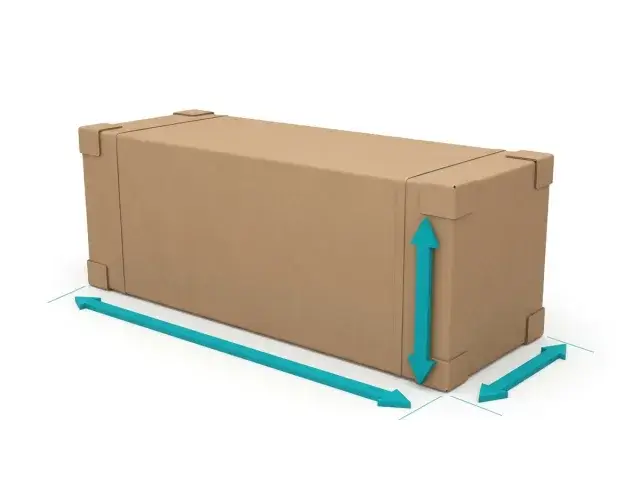

Look at the two smaller figures, because those must clear the opening. Every packed SOCA is 1,250 mm deep and 1,400 mm high, and the counter itself is 1,120 mm deep and 1,190 mm high. The BRABANT 100 is packed at 1,100 x 1,100 x 1,380 mm and weighs 190 kg. The TAVIRA II 130 is the slimmest here: 1,390 x 890 x 1,100 mm packed, 143 kg.
10. Can you join serveover counters in a run?
Yes, in the SOCA and SOCB families: their datasheets say the counters “can be multiplexed with kit (POA)”, which means joined side by side with a kit priced on application. Corner modules turn a SOCA run through 45 or 90 degrees for an L-shaped counter.
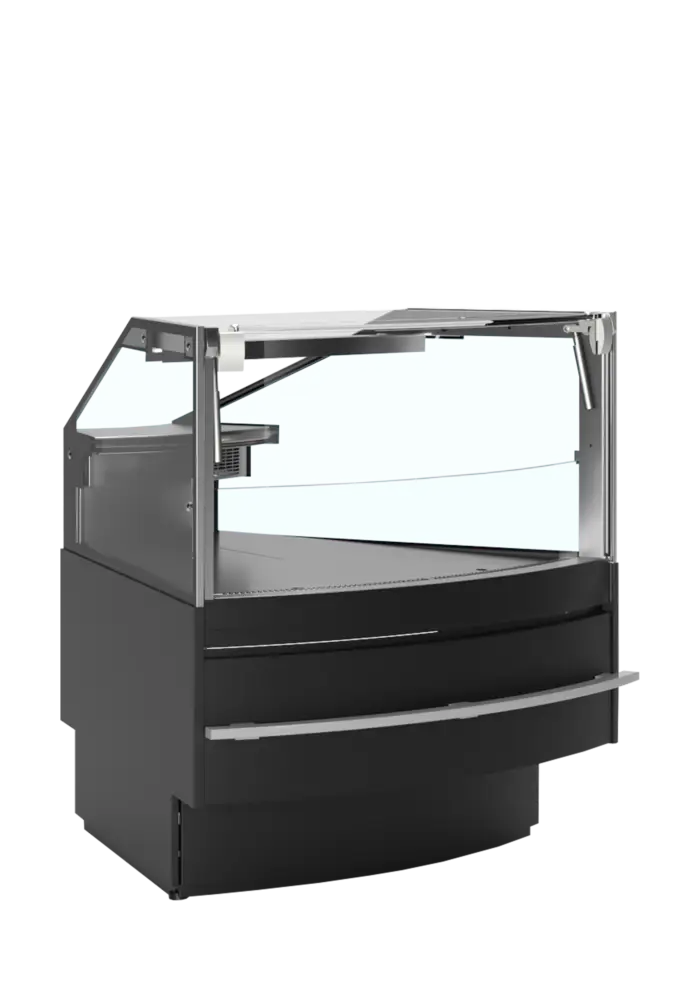
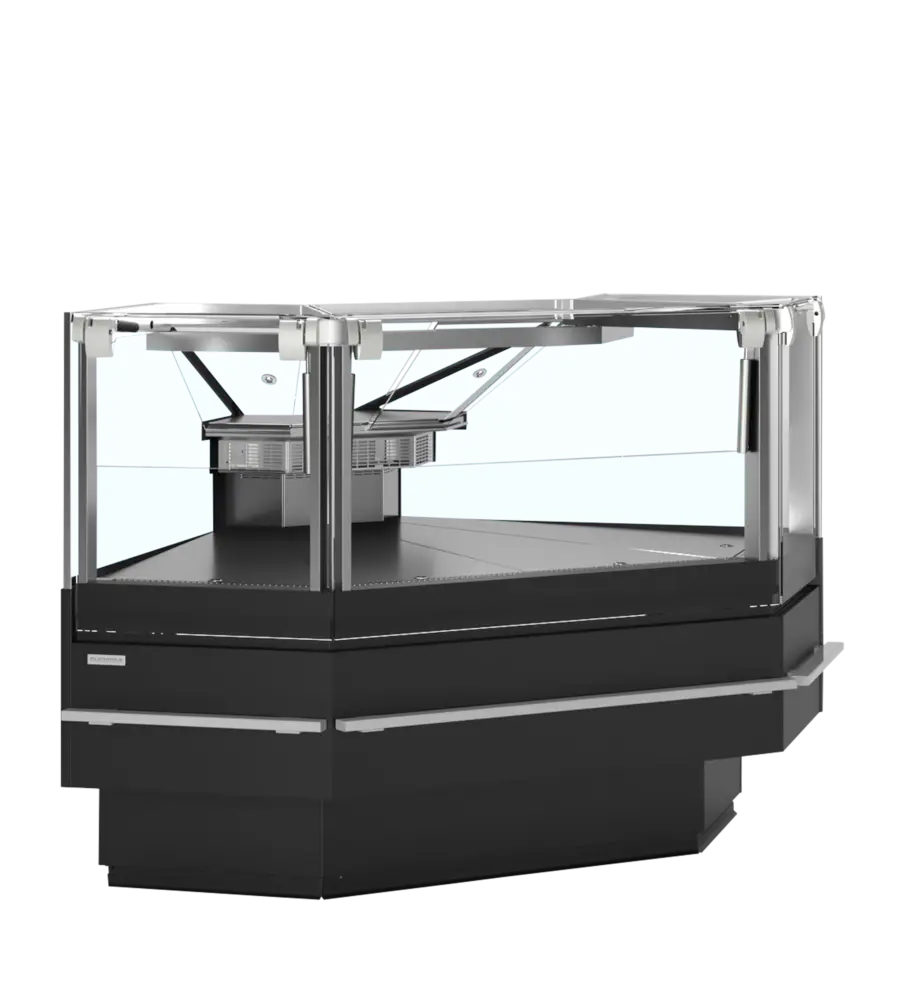
Three things to know first. The corner modules are only suitable alongside SOCA counters. Where a corner module sits next to another SOCA counter, you cannot open the front glass on both at the same time. And the corner datasheets give no external width, so confirm it before you fix the layout.
The TEFCOLD Chopin range is the other way to build a run. Its listing says you can mix refrigerated serve counters, such as the CHOPIN 1250 FV-VP, with Mesa till counters to make a complete counter run. If you expect to grow, pick a family you can extend.
11. What does a longer serve-over counter cost to run?
A longer counter uses more electricity, so size it to the range you sell and not to the wall. The sum is the datasheet’s kWh a day x 365 x £0.27. For the SPID100 that is 5.7 x 365 = 2,081 kWh a year, and 2,081 x £0.27 = £562 a year at 27p/kWh.
The table in section 5 gives the figure for every model, from £293 a year for the BRABANT 100 to £1,419 for the SOCA37590B. Going from the SPID100 to the SPID150 doubles the pans from two to four and adds £305 a year, about £6 a week.
Input power across these models runs from 223 W to 1,284 W. We found no rule that requires a dedicated circuit, so check the datasheet figure with your electrician.
Size a serveover counter by the run of floor you have and the range you display. The counters we list run from 953 mm (BRABANT 100) to 3,798 mm (SOCA37590B), and are 826 to 1,120 mm deep and 1,190 to 1,271 mm high overall, not 900 mm. About 1.0 to 1.3 m suits one server and 1.9 m or more suits two, which is our judgement. Count your lines in GN 1/1 pans (530 x 325 mm) for a SPID, or in square metres of deck for a SOCA, the family listed for butchers. Check the packed size, such as 2,100 x 1,250 x 1,400 mm and 250 kg for the SOCA18790B, against your narrowest doorway. SOCA and SOCB counters can be joined in a run. Running cost rises with length, from £293 to £1,419 a year at 27p/kWh.
Frequently Asked Questions
▼
▼
▼
▼
▼
▼