Last reviewed: November 2026 · Lisa Craven, Managing Director, FridgeSmart
A fridge night blind is a roller blind you pull down over the open front of a multideck at closing time, so less warm shop air gets in overnight.
Refrigeration night blinds save energy only while they are down. Tefcold’s Galaxy+ manual says night curtains on open cabinets can save “up to 30%” outside working hours, and that is the only figure we can stand behind. The cabinet stays switched on all night, and the food still has to be at 8°C or below when you raise the blind.
- What it is: a flexible fabric blind on a roller, pulled across the open front of a display fridge when the shop is shut
- The claim: Tefcold’s Galaxy+ manual says up to 30% energy savings from night curtains outside working hours; it is Tefcold’s own figure, with no hours stated
- The test: the government Energy Technology List tests blinds with 12 hours down in a 24 hour run at 25°C and 60% humidity
- Ceiling in pounds: 30% of the Galaxy+ GP10’s 3,953 kWh a year is about £320 per year at 27p/kWh, an illustration and not a promise
- Hours down: a shop trading 7am to 10pm has the blind down for about 9 hours; a 24 hour shop gets none
- Which models: the open Galaxy+ GP10, GP14, GP20 and GP26 list a soft closing night blind; the doored Galaxy+ cabinets do not
For shop, forecourt, deli and café owners who run an open multideck, or are about to buy one.
1. What is a fridge night blind and what does it do?
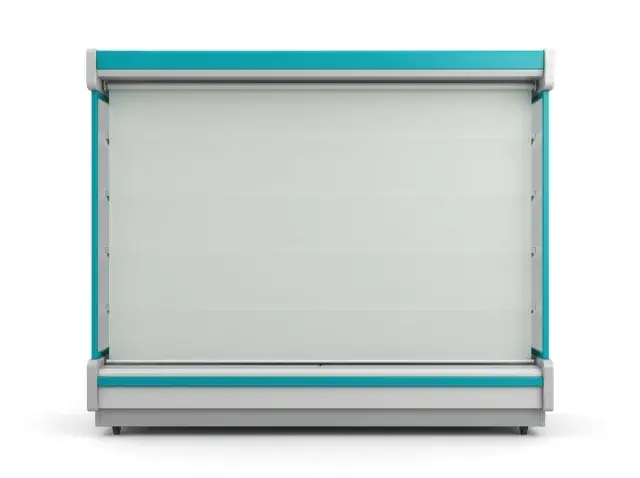
A fridge night blind is a pull-down blind fitted to an open-fronted multideck, which covers the open front while the shop is closed. It is also called a night cover or a night curtain; Tefcold’s listings say “soft closing nightblind”.
The government’s Energy Technology List describes a night blind as flexible fabric mounted on a roller mechanism. Staff pull it down over the shelves at closing time and raise it before opening.
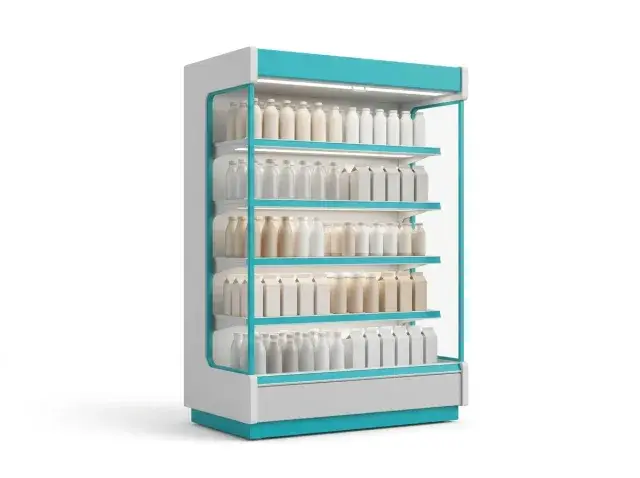
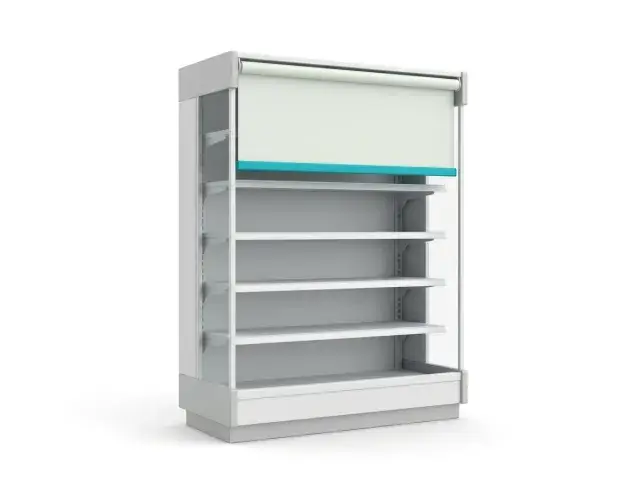
A night blind does not make a perfect seal. It is a flexible barrier, not a door, and there is a gap around its edges. The Energy Technology List asks for an air gap of less than 20 mm around the edges of a blind. Even so, the cabinet keeps far more of its cold air with the blind down.
2. How do refrigeration night blinds cut your energy bills?
Refrigeration night blinds cut your energy bills by reducing the warm shop air the cabinet has to keep cooling while you are shut. Without a blind, an open multideck works through the night exactly as it does in the day, losing its cooled air to the warmer shop around it.
That loss is worth paying for during trading hours, because the open front is what lets customers see and reach the stock. There is no reason to pay for it when the shop is shut.
How big is the loss? A Brunel University PhD thesis from 2013 reports an estimate that 70% to 80% of an open cabinet’s cooling load is due to ambient air getting in.
So why is the saving from a blind far below 70%? This is our reading, not a measured result. There are three reasons.
- 1It only works while it is down. For every trading hour the front is open and the blind saves nothing.
- 2It never fits perfectly. Some warm air still gets round the edges.
- 3Parts of the cabinet carry on regardless. The fans and the defrost cycles still run behind the blind. Tefcold’s Galaxy+ manual gives the defrost as 16 minutes every 3 hours.
3. How much energy does a night blind save?
Tefcold says a night blind can save up to 30% on an open cabinet, and no independent UK figure we could read in full is firmer than that. The honest answer is “up to 30%, depending on how many hours the blind is down”.
The maker’s figure. Tefcold’s Galaxy+ manual says up to 30% energy savings can be achieved by using night curtains outside working hours on open cabinets. It is Tefcold’s own claim. The manual does not give the hours, the room temperature or the starting figure behind it, so treat it as a ceiling.
The government test. The nearest thing to a standard is the Energy Technology List’s test method for blinds fitted to open cabinets. It measures the cabinet over 24 hours as it stands, then over 24 hours with the blind fitted, and compares the two.
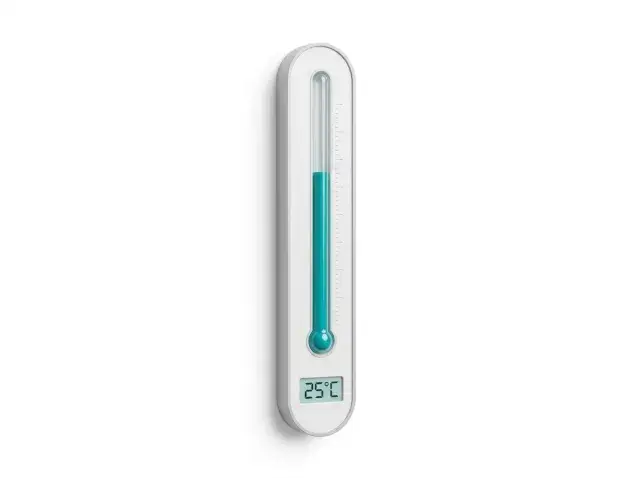
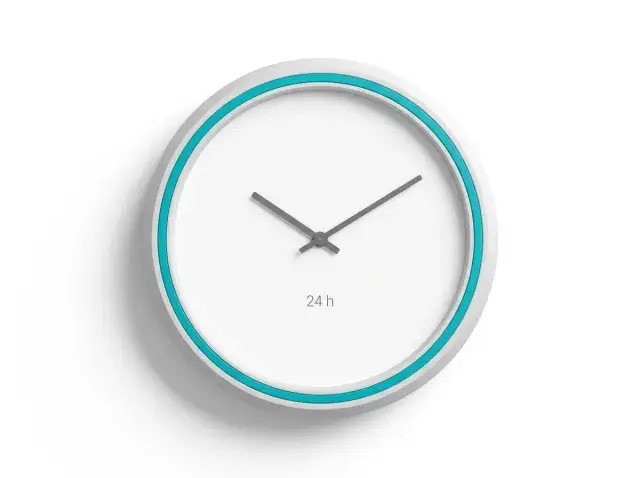
So a percentage from that test means “blind down for 12 hours at 25°C”. Suppliers report a saving for each blind model, and the list sets no minimum. The blind must also let the cabinet keep its temperature classification.
Other published figures. They are thin, and they disagree. A Defra-funded retail display fact sheet says in its text that well-fitted night blinds can save “up to 75%” of the energy used, while its own summary table gives 20% for night blinds and covers. Published figures therefore run from about a fifth to “up to 75%”, with Tefcold’s at “up to 30%”. Only the government test gives the hours and the room temperature together.
4. What is that worth on your electricity bill?
On a Tefcold Galaxy+ GP10, Tefcold’s ceiling of up to 30% would be worth about £320 per year at 27p/kWh. That is an illustration, not a measured saving.
Here is the sum. The open GP10’s datasheet gives 10.83 kWh a day. 10.83 × 365 = 3,953 kWh a year, and 3,953 × £0.27 = £1,067 per year. The 27p/kWh rate is our assumption; the official DESNZ average for non-domestic electricity in Q2 2026 was 24.51p. The table takes 10%, 20% and 30% off that figure.
| Saving off the GP10 | kWh saved a year | Worth per year at 27p/kWh |
|---|---|---|
|
10%
|
395 | £107 |
|
20%
|
791 | £213 |
|
30% (Tefcold’s “up to” figure)
|
1,186 | £320 |
Only the bottom row has a source, and it is a ceiling. The table in section 6 gives the figure for each cabinet size.
One thing we cannot tell you: the GP10 datasheet lists a night curtain but does not say whether its 10.83 kWh a day was measured with the blind up or down. The energy label regulation does not say either. So treat the saving as a ceiling, not a forecast.
A night blind is one of several ways to bring the bill down. The rest are in our tips to reduce your refrigeration energy costs.
5. How many hours will the blind be down in your shop?
The blind is down for 24 hours minus your trading hours, so the longer you are shut, the more it has to work on. The ACS Local Shop Report 2025 gives typical convenience store hours as 7am to 10pm. It puts the average at 13.7 hours a day Monday to Saturday and 12.7 hours on a Sunday, with 12% of stores open 24 hours.
| Shop pattern | Trading hours | Blind down |
|---|---|---|
|
Open 24 hours (12% of stores)
|
24 | 0 hours |
|
Long day
|
18 | 6 hours |
|
Typical store, 7am to 10pm
|
15 | 9 hours |
|
Monday to Saturday average
|
13.7 | 10.3 hours |
|
Sunday average
|
12.7 | 11.3 hours |
|
Government test, for reference
|
12 | 12 hours |
Does the saving shrink in step with the hours? Nobody has shown that it does, so this is our guess. If Tefcold’s 30% were for a 12 hour night, and if savings scaled with hours, then 9 hours down would be about 22.5%, or about £240 per year on a GP10. Six hours down would be about 15%, or about £160 per year. Both “ifs” are unknown.
A shop that trades 24 hours has no closed hours, so a night blind has nothing to work on. For that shop, glass doors are what cut the bill. Our guide to energy efficient multidecks for convenience stores covers the choice for a local shop.
6. Which multidecks have a night blind?
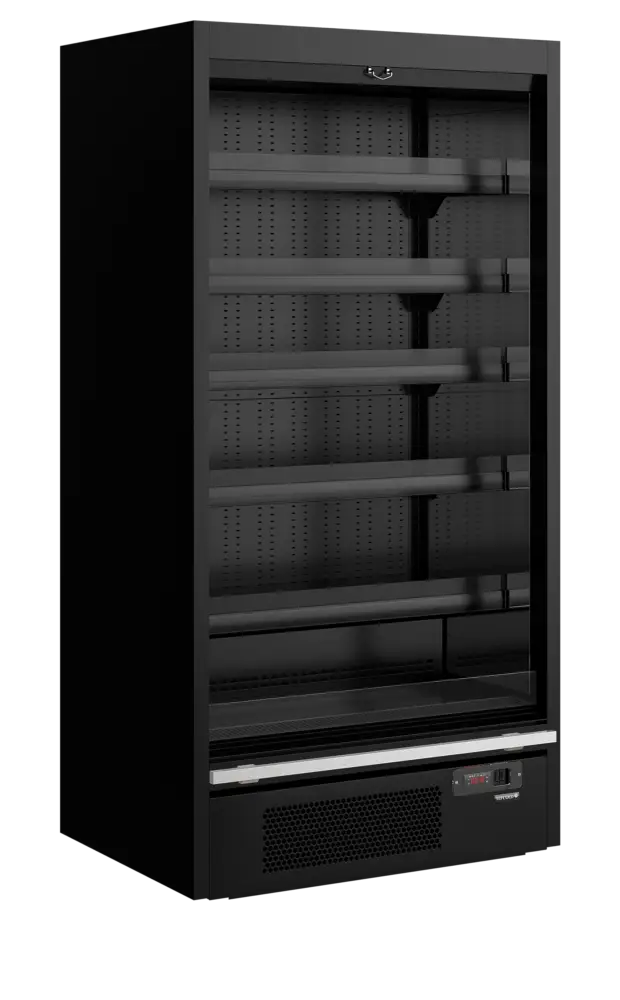
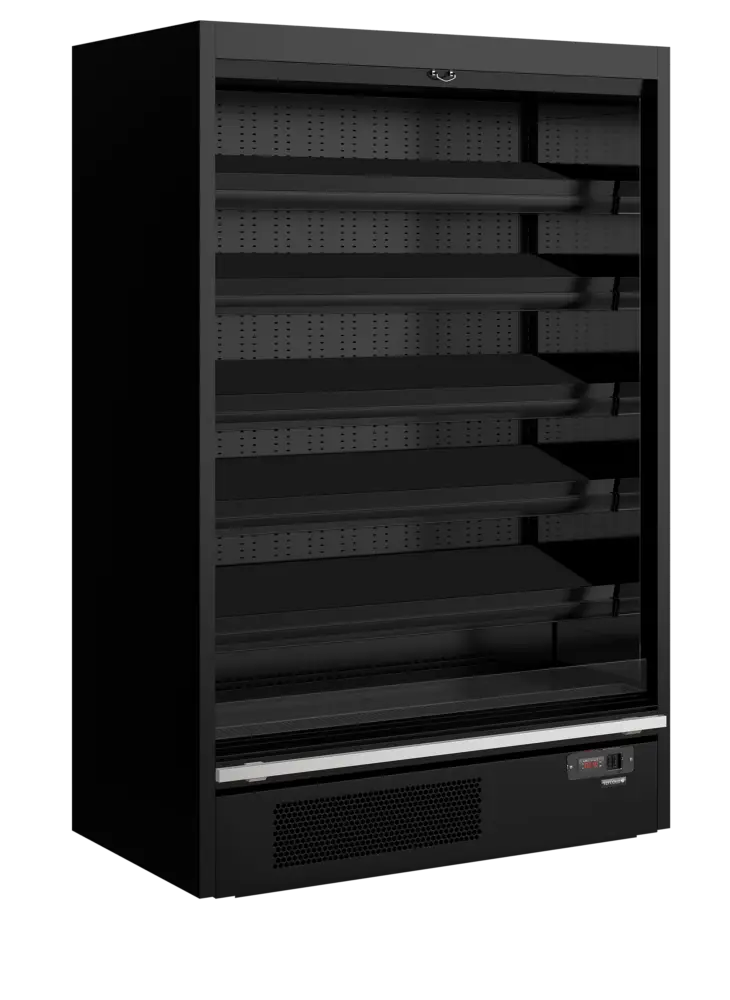
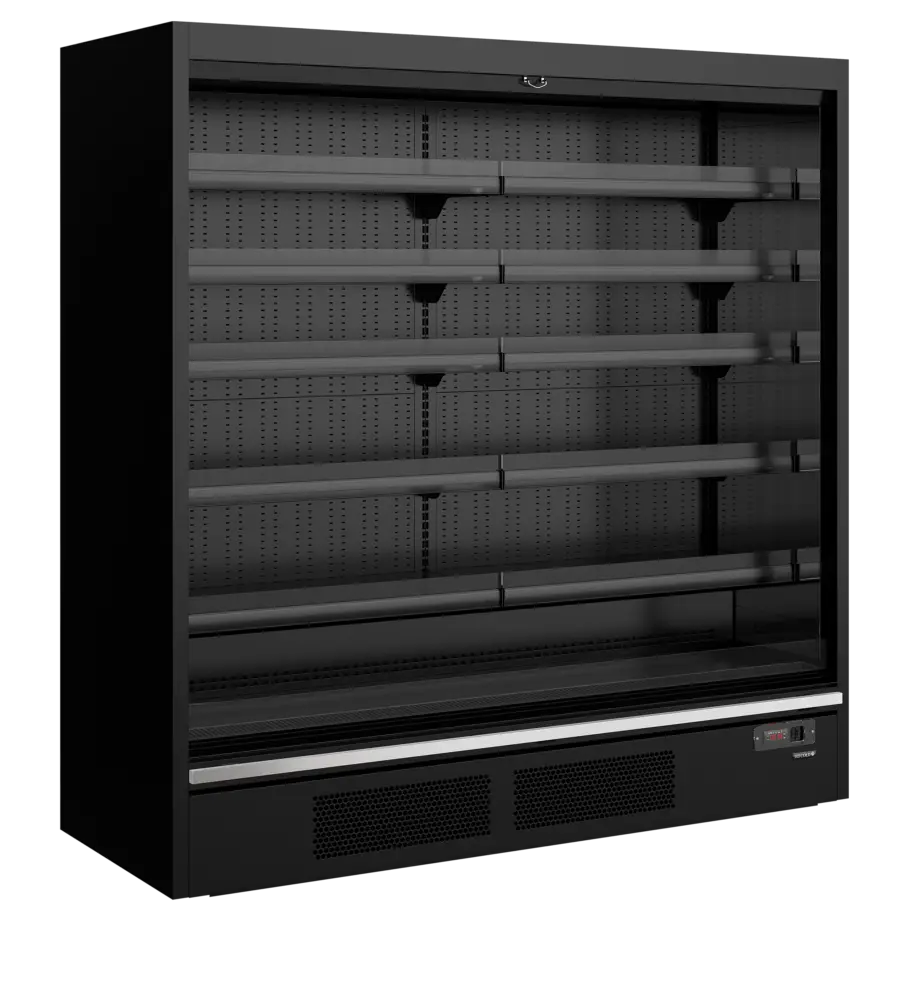
In our range, the open Tefcold Galaxy+ GP multidecks list a night blind: the GP10, GP14, GP20 and GP26. Each listing says “Soft closing nightblind”, and each size comes in white, black and stainless steel. The table shows the black cabinets. The “up to 30%” column is Tefcold’s ceiling applied to each datasheet figure.
| Model | Night blind on the listing | Energy use (kWh a year) | Energy class | Running cost per year at 27p/kWh | Up to 30% of that, per year | Price (ex VAT) |
|---|---|---|---|---|---|---|
| Soft closing night blind | 3,953 | D | £1,067 | £320 | £2,780 | |
| Soft closing night blind | 6,077 | D | £1,641 | £492 | £3,231 | |
| Soft closing night blind | 7,928 | D | £2,141 | £642 | £4,625 | |
| Soft closing night blind | 10,793 | E | £2,914 | £874 | £5,886 | |
| Night blind / curtain | No figure | No figure | No figure | No figure | £4,767 | |
| No blind: lockable security shutter | 3,865 | E | £1,044 | No figure published | £3,017 | |
| No blind: glass doors | 1,186 | B | £320 | Does not apply | £3,122 |
ISA serve-overs. The ISA Millennium LX and ST patisserie serve-over counters list a “Night blind / Curtain” too. We have no energy figure for them, so we show no saving. Some ISA scoop ice cream displays list a rear night curtain “to maintain temperature”, which is a different item for a different job.
MCX multidecks. The Tefcold MCX90M and MCX130M have a rigid, lockable security shutter. The listing says it is there to prevent access to the product when food is not being served. It is sold as security, and no energy saving figure is published for it, so we do not claim one.
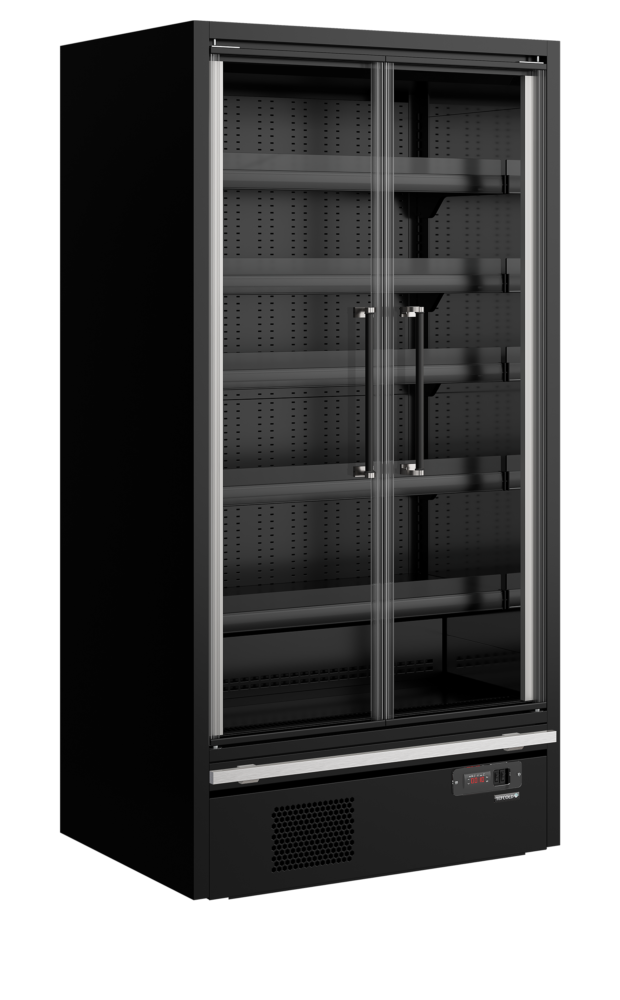
No night blind listed. The doored Galaxy+ FGD cabinets, the low-height Galaxy+ GPL, the PC-B multidecks with doors and the Framec Super Sunny do not list a night blind.
7. Is a night blind as good as glass doors?
No. A night blind helps only while the shop is shut, and glass doors help every hour of the day. On Tefcold’s datasheets the doored GP10FGD uses 1,186 kWh a year against 3,953 kWh for the open GP10, which is 70% less. Tefcold’s figure for a blind is up to 30%, in closed hours only.
30% of the open GP10’s 3,953 kWh is 1,186 kWh, which happens to be the GP10FGD’s figure for the whole year. That does not make an open cabinet with a blind as efficient as a doored one.
The full case for open fronts against doors, with the figures, is in are multidecks energy efficient?
8. How do you use a night blind each day?
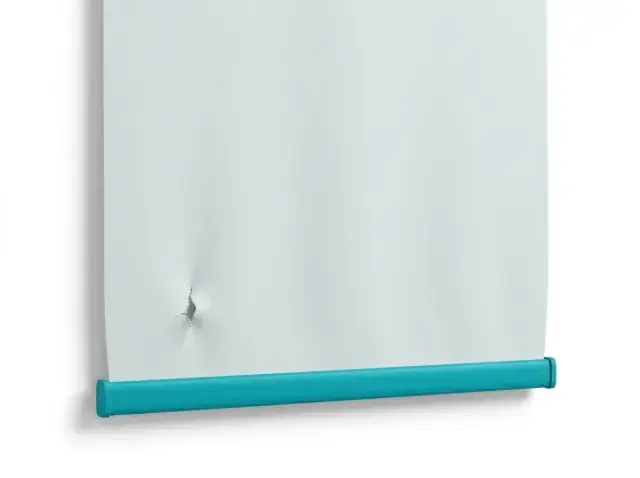
Pull the blind down when you close and raise it before you open, every day. A night blind that stays rolled up saves nothing, so the routine matters as much as the blind.
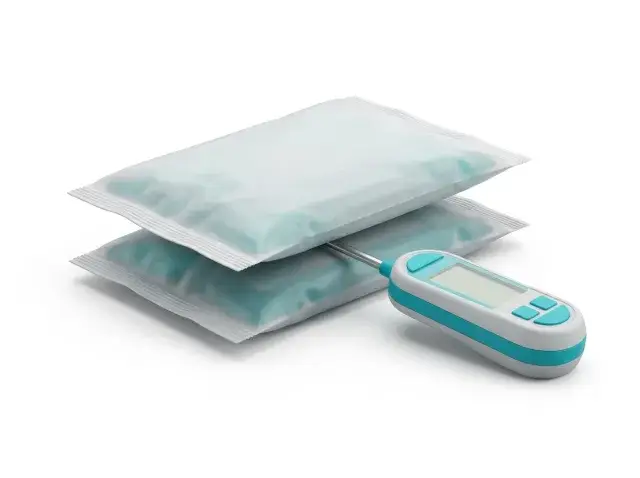
Does a blind work with the cabinet lights left on? We could not verify it either way. The government test runs with the lights off while the blind is down.
9. Can you replace a night blind, or add one?
On a Galaxy+ you can replace it. Tefcold’s GP10 datasheet lists a spare “Night Blind” as Item 42500, and spare parts can be ordered through FridgeSmart. We do not fit or repair blinds ourselves.
For an open cabinet from another maker, we cannot promise a blind that fits. The Energy Technology List does list night blinds as a retrofit measure for open-fronted display cabinets, so they exist as an add-on.
To check a model, call 01792 677169 or email hello@fridgesmart.co.uk.
A fridge night blind is a roller blind pulled down over the open front of a multideck while the shop is closed, so less warm air gets in. Tefcold’s Galaxy+ manual says night curtains can save up to 30% on open cabinets outside working hours. It is Tefcold’s own figure and a ceiling. The government test for blinds runs with 12 hours down at 25°C, so any percentage needs its hours. On a Galaxy+ GP10 using 3,953 kWh a year, 30% would be about £320 per year at 27p/kWh. A shop trading 7am to 10pm has the blind down for about 9 hours, and a 24 hour shop gains nothing. The open Galaxy+ GP10, GP14, GP20 and GP26 list a soft closing night blind. Never switch the cabinet off, check the blind for damage, and make sure food is at 8°C or below when you raise it.
Frequently Asked Questions
▼
▼
▼
▼
▼
▼