How do you maintain a commercial freezer for long-term reliability?
- Fridgesmart
You’re preparing for a busy evening when someone notices that the freezer temperature is rising. Your team now has to find safe alternative storage for the stock, determine whether you need to discard anything, contact an engineer and work out how to continue serving your customers.
Although the breakdown feels sudden, you then learn that the door had been closing unevenly for weeks, frost was forming around the seal and the freezer was running for longer than usual. Yet no one recognised these changes as warnings or knew they should be reported.
It doesn’t have to reach that point. Routine checks, proper use and planned servicing can help you catch developing problems before they disrupt your business. Here’s how to maintain your commercial freezer for long-term reliability.
Keep air moving through your commercial freezer
Cold air needs a clear route around your stock. Don’t cover internal fans, return-air grilles or outlets, and keep products below any marked load line. Overfilling the cabinet can create warmer areas and slow its recovery after the door opens.
Air must also circulate around the outside of the freezer so the condenser can release heat. Maintain the clearances stated in the user manual and don’t block vents with boxes or nearby equipment.
Check the model’s maximum ambient temperature. A freezer beside an oven, grill or sunny window may struggle even when it’s working correctly. Lowering the thermostat won’t compensate for an unsuitable location.
Check whether your freezer is designed to freeze unfrozen products or only hold stock that is already frozen. If you regularly need to freeze batches of cooked food, you may need a blast freezer.
Check commercial freezer doors, lids and seals
A damaged seal allows warm, moisture-laden air into the cabinet, leading to temperature fluctuations and frost.
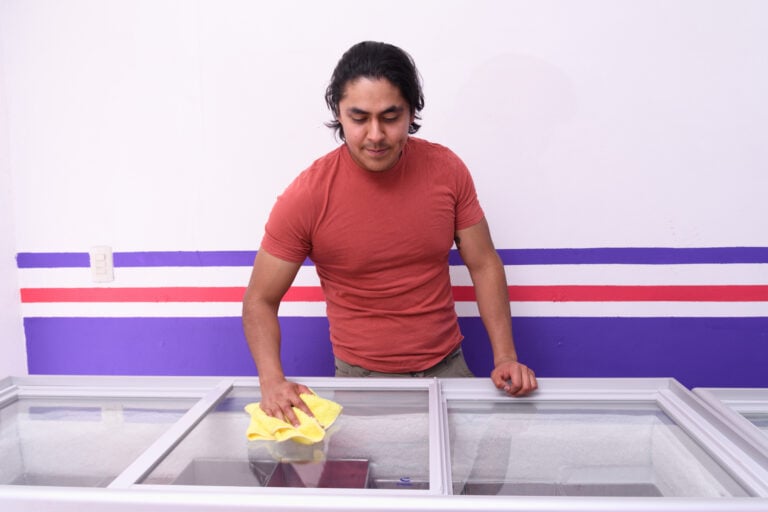
Clean the seals as directed by the manufacturer, paying attention to the folds where food and grease collect. Look for splits, hardened sections or gaps between the seal and cabinet.
Check the closing action as well. Does the door drop on its hinges? Does a self-closing door stop before reaching the frame? Does a chest freezer lid close without obstruction? Replacing a worn gasket or repairing a misaligned hinge or faulty closer could prevent a future breakdown.
Investigate ice that returns soon after defrosting or forms around one part of the cabinet. It may indicate a damaged seal, blocked airflow or a fault with the automatic defrost system.
Clean the condenser
The condenser transfers heat from the refrigeration system into the surrounding air. Dust and grease can restrict airflow and reduce its ability to do this.
Cleaning frequency depends on the model and environment. A freezer in a bakery, takeaway or busy kitchen may collect debris faster than one in a storeroom, so follow the manufacturer’s schedule.
If the condenser grille is accessible and the manual permits staff cleaning, isolate the freezer as instructed and use the recommended method, such as a vacuum cleaner or soft brush. Don’t bend the fins, spray water towards electrical parts or remove service panels unless you’re trained to do so.
Clean user-accessible drains, shelves and interior surfaces at the specified intervals too. Use suitable cleaning products and dry the cabinet before restarting it. Never chip away ice with a knife or another sharp tool. It could slip or break and cause a serious cut or puncture wound. You could also damage the freezer lining or puncture concealed refrigeration pipework.
Monitor your commercial freezer’s temperature and performance
Check and record freezer temperatures in line with your food safety system. Use an independent thermometer or probe where your procedure requires one, rather than relying only on the cabinet display.
A single reading won’t reveal every developing fault, so look for changes over time. Is the freezer taking longer to recover after restocking? Are alarms, frost or unusual noises becoming more frequent? Does the compressor appear to run for longer?
These signs can help you identify a problem while the freezer still holds temperature. Read our guide to checking whether a commercial freezer is refrigerating properly for further checks.
Create a commercial freezer maintenance schedule
Base your schedule on the manufacturer’s instructions, the freezer’s environment and how heavily you use it. Assign each task to a named person so it doesn’t get forgotten during a busy week.
Your schedule might include the following:
- Each shift: check the temperature, respond to alarms and confirm that doors or lids close as they should
- According to your cleaning schedule: clean the interior, shelves and accessible drains
- Weekly: inspect the seals, check for frost, leaks or damage and clear nearby vents
- At the manufacturer’s interval: clean accessible condenser components and other listed parts
- At planned service intervals: ask a refrigeration engineer to inspect components your staff can’t assess safely
Record completed maintenance and any action taken. Keep the manual, model and serial numbers, warranty details and service history together so they’re readily available if you need technical support.
Choose a reliable commercial freezer and plan for its maintenance
Routine maintenance can extend a freezer’s working life, but there comes a point when replacement is your best option. Recurring faults, unstable temperatures or a unit that no longer suits your capacity and operating environment can all indicate that it’s time to invest in a new model.
Fridgesmart can help you choose a commercial storage freezer or commercial display freezer suited to your stock, premises and workload. We can also help you understand its maintenance requirements and arrange ongoing servicing with a refrigeration engineer.
This helps your new freezer provide reliable performance for years. Read our service and maintenance guidance or contact our team to discuss what your business needs.